
Last updated November 18, 2026
 AC repair
 Furnace & heating
 Heat pumps
 Ductless mini splits
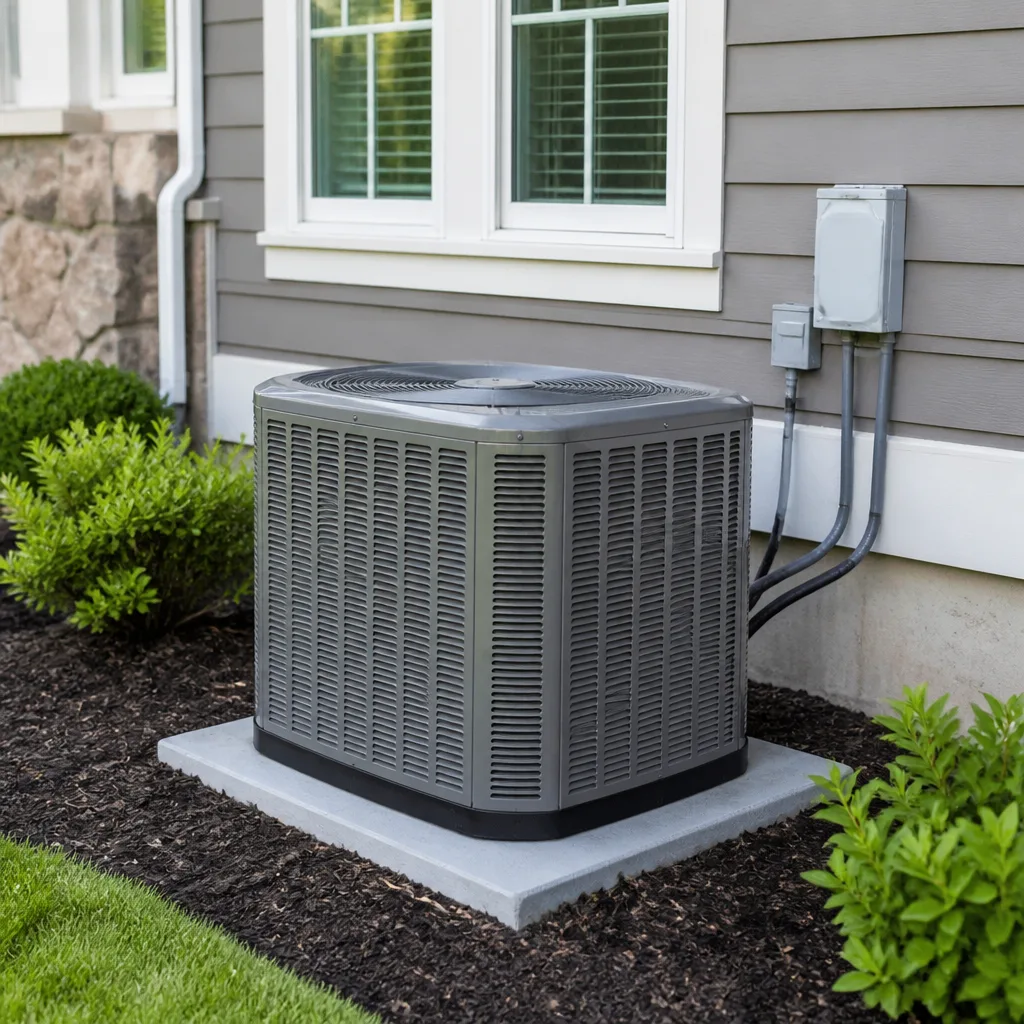 Carrier
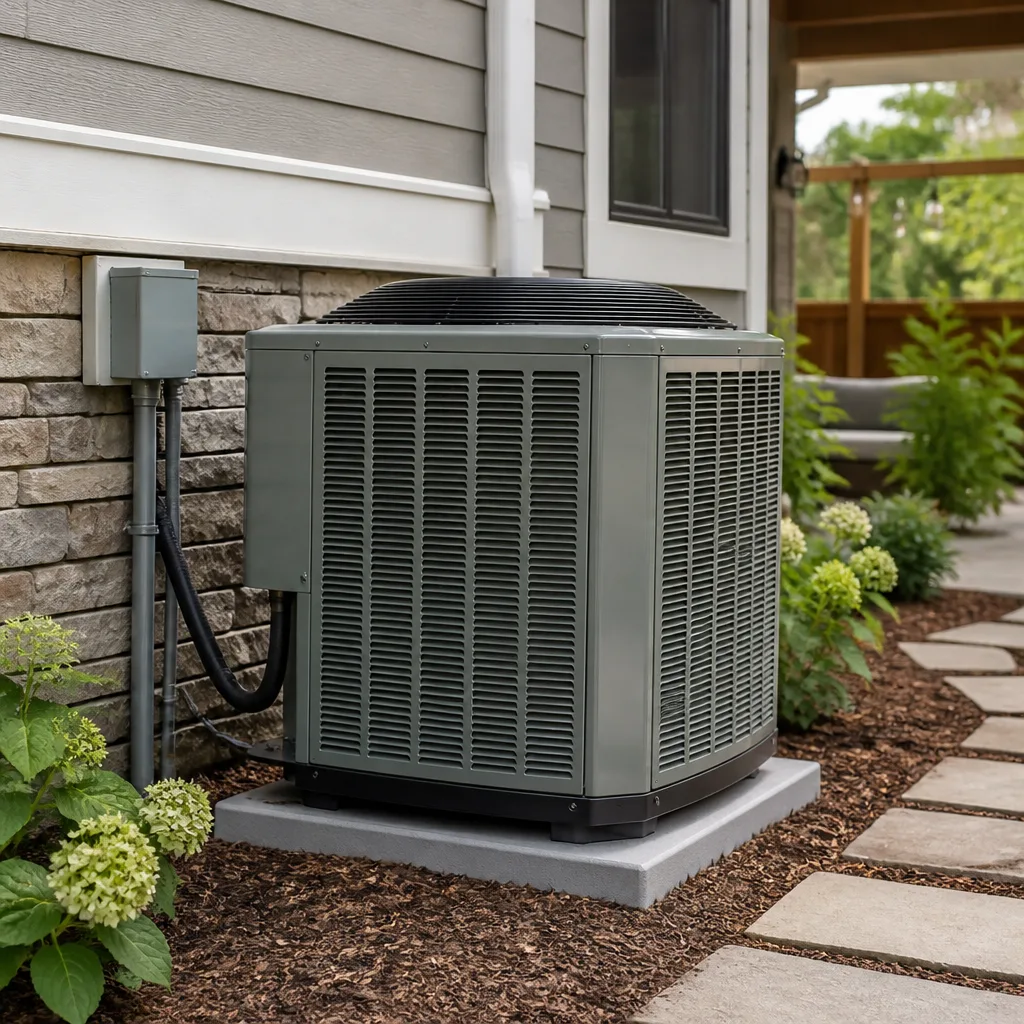 Trane
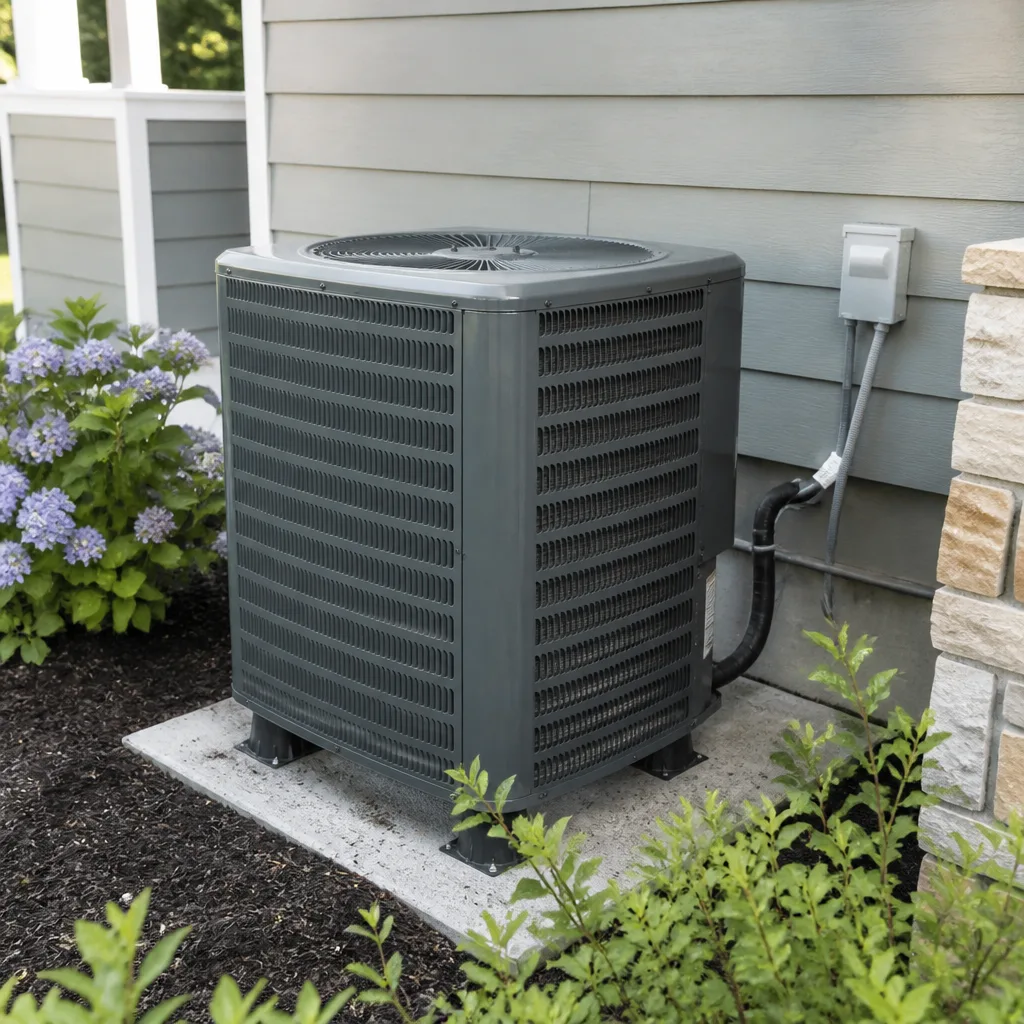 Goodman
Seasonal tune-up and full diagnostic on your Carrier, Trane, or Goodman system - readings shown to you before any repair is proposed
Diagnosis first, numbers second - you approve the repair price before a single part goes in.
Get your free estimateThe Complete Emergency & Commercial HVAC Guide for Whitney Homeowners
Here’s a scenario that plays out in Whitney more often than most people realize. It’s 2 p.m. in July, the thermometer reads 105, and the rooftop unit on your strip mall has quit. You pull up a list of contractors and start dialing. Three voicemails, one “we can get to you Thursday,” and one franchise dispatcher who can’t tell you a price. There’s no fifth and sixth call to make, because Whitney doesn’t have the service bench that Las Vegas does. What you do in the next thirty minutes and the next few hours matters more than most owners think. This guide covers what an actual HVAC emergency is, what separates it from a repair you can schedule, what you should do while you wait, and how to keep a commercial building in Whitney cool when the temperature swings here from freezing January mornings to triple-digit afternoons.
Quick Answer
A true emergency is an HVAC failure that threatens people, property, or perishables, and it needs a call the moment it happens, not a message left for morning. In Whitney, most commercial emergencies come from failed rooftop units during extreme heat or a heating failure after a cold snap, and the right first move is to shut off the failed equipment, protect the space, and call a line that a live person answers. Everything else, from a weak cooling zone to a noisy compressor, is urgent but schedulable and can wait for a normal business-hours appointment.
Styles & brands we work with
- AC repair
- Furnace & heating
- Heat pumps
- Ductless mini splits
- Carrier
- Trane
- Goodman
Table of Contents
- What Counts as a True HVAC Emergency vs. an Urgent Repair
- Whitney Factors: Heat, Cold Snaps, Rooftops, and Parts
- The First 30 Minutes of a Commercial HVAC Failure
- What Staff Can Safely Adjust and What Requires a Licensed Contractor
- How Commercial Service Differs From Residential
- Preventing Emergencies Before Summer and Winter Hit
- Documentation, the 90-Day Promise, and What It Covers
What Counts as a True HVAC Emergency vs. an Urgent Repair
The word “emergency” gets used for everything, and that costs owners money. Emergency after-hours rates are higher because a technician is pulled out of bed, a parts house is opened, and the job carries real risk. Knowing where the line sits keeps you from paying emergency pricing for a repair that could have waited until Tuesday morning.
A true emergency has one of three conditions attached: a threat to health, a threat to property, or a threat to a business that can’t operate without conditioned air. Here’s how that splits out in practice.
- True emergency: No cooling in a space with people who can’t safely leave (a care facility, a crowded retail floor on a 108-degree afternoon), no heat in a building during a hard freeze that risks burst pipes, a gas smell or a unit cycling on a safety limit, a compressor that’s tripping the breaker every few minutes, or water pouring from a ceiling unit onto merchandise.
- Urgent but schedulable: One zone out of four running warm, a rooftop unit that’s short-cycling but still cooling, an unusual noise from a condenser fan, a thermostat that reads wrong but the system still runs, or uneven temperatures between a front office and a stockroom.
- Routine: Filters due, a belt that’s starting to squeal, a seasonal tune-up on a system that’s running fine, or a setpoint that keeps getting changed by staff.
We’ve seen owners pay weekend rates for a zone problem that would have been a Monday appointment at half the cost. We’ve also seen a $300 bearing replacement turn into a $4,000 compressor swap because nobody called on a Friday. The distinction isn’t about being cheap. It’s about matching the response to the risk, and any honest contractor will tell you which one you’re in when you call.
Whitney Factors: Heat, Cold Snaps, Rooftops, and Parts
Whitney sits in a stretch of the valley where the temperature does two things that punish HVAC equipment: it climbs hard in summer and it swings sharply in winter, with cold mornings that catch systems mid-cycle and hard freezes that arrive with little warning. A building here can go from needing full cooling at noon to needing heat by 6 a.m. two days later. That kind of swing stresses compressors, reversing valves on heat pumps, and every seal and connection on the roof.
Most commercial buildings in and around Whitney run rooftop packaged units. That’s normal for the valley, but it means the equipment sits in direct sun all afternoon with the condenser coil baking, and it means the service access is a ladder and a roof hatch rather than a closet door. Two consequences follow.
- Parts availability is thinner than in Las Vegas. A common compressor or control board may not be on a shelf within twenty minutes. A contractor with strong local supplier relationships can often source same-day; a company that has to order from out of state can leave you down for days. Ask before you schedule.
- Rooftop access limits who can respond fast. Not every outfit carries the equipment, harnesses, and crew to safely service a rooftop unit in July heat. That’s part of why the local service bench is thin, and it’s a reason to establish a relationship before you need one.
If your building runs heat pumps or ductless mini-splits, the swing matters just as much. Our Heat Pump & Mini Split in Whitney page covers how these systems handle the seasonal transition and what to watch as the seasons turn.
The First 30 Minutes of a Commercial HVAC Failure
What you do in the first half hour decides whether a failed unit is a repair or a cleanup. The goal is simple: stop the damage, protect the people, and get a real technician on the phone. Here’s the sequence we walk property managers and owners through.
- Turn the system off at the thermostat and, if you can reach it safely, at the disconnect. A unit that’s short-cycling or running with a bad blower can cause more damage continuing to run. If the disconnect is on the roof or inside a locked electrical panel, don’t force it. Just set the thermostat to off and leave it.
- Check for water and shut off any condensate or supply line feeding the failed equipment. Ceiling water damage spreads fast and gets into inventory, drywall, and electrical. If water is pooling, kill the breaker that serves the air handler before you do anything else, then call.
- Open the space and move people. Get staff and customers into the coolest available part of the building, open doors and windows if the outside air is cooler than indoors, and bring in portable fans. If it’s a heat failure in cold weather, keep interior doors open so the building shares what heat it has.
- Call a number that a live person answers and describe the failure in plain terms. Tell them the equipment type (rooftop packaged, split, mini-split), how many units are down, and whether anyone is at risk. A dispatcher who picks up on the first ring can tell you what to do next and what the call will cost. A voicemail tree can’t.
- Write down what happened and when. Time of failure, thermostat reading, any noise or smell, and what you turned off. That log makes the diagnosis faster and helps if you need to file an insurance claim.
One more thing: don’t send staff up a ladder to poke at a rooftop unit. More injuries on commercial HVAC happen from the roof access than from the equipment itself. Let the crew handle it.
What Staff Can Safely Adjust and What Requires a Licensed Contractor
Some things a property manager or maintenance person can do, and should. Others are genuine safety hazards and belong only with a trained technician. Getting this wrong is how people get hurt.
Staff can safely:
- Change air filters on equipment that’s designed for occupant access.
- Adjust thermostats and program schedules within the manufacturer’s normal range.
- Reset a tripped circuit breaker once, and only once, if the panel is labeled and the person is comfortable working around electricity.
- Clear debris from around exterior condenser units at ground level.
- Check that supply and return vents are open and unobstructed.
- Turn the system off and call for help.
Leave it to a licensed contractor:
- Anything inside an electrical panel beyond flipping a clearly labeled breaker once.
- Refrigerant work, which is regulated and requires certification.
- Gas line inspection or anything that touches a gas valve or heat exchanger.
- Climbing on a roof to open a unit or reach a disconnect.
- Compressor, blower motor, or control board replacement.
- Any wiring, and any diagnosis of a unit tripping a breaker repeatedly.
We’ll say this plainly because it matters: electrical panels, gas-fired heating equipment, and high-pressure refrigerant systems can injure or kill an untrained person. If you’re unsure whether something is safe, it isn’t. Shut it off and call. That’s the right call every time.
How Commercial Service Differs From Residential
The phone rings at the same number, but the work isn’t the same. When we take a commercial call in Whitney, the scope is different, the paperwork is different, and what the customer needs us to prove is different.
Scope. A house has one system. A strip mall or small office building has multiple rooftop units, a common area, tenant spaces, and often a building automation system that ties them together. A commercial call means figuring out which unit serves which zone before anyone touches a screwdriver, because the wrong guess sends the crew to the wrong roof.
Documentation. Commercial customers need something to show a landlord, a corporate office, or an insurance adjuster. That means a written report of what was found, what was done, what parts were used, and what the system’s condition is going forward. We put that in writing on every commercial job, because a verbal summary isn’t enough when money and downtime are on the line.
Brand coverage. Commercial rooftops in this market are often Bryant, York, or Daikin packaged units, alongside the residential brands homeowners see. Our technicians are trained on all nine major brands including Carrier, Trane, Lennox, and Rheem, and we’ve handled the packaged rooftops that dominate small commercial buildings in Whitney.
Continuity. Commercial customers don’t want to re-explain the building every time. Once we’ve serviced your property, we know the layout, the equipment list, and the history. That shortens every future call, and in a market where response times run long, a shorter call matters.
Preventing Emergencies Before Summer and Winter Hit
Almost every commercial HVAC emergency we see in Whitney had a warning it ignored. The bearing was squealing in March. The filter was overdue in May. The unit short-cycled once in June and nobody wrote it down. Prevention is unglamorous, but it’s the cheapest thing you’ll ever do to your equipment.
- Schedule a seasonal tune-up twice a year, spring and fall. Spring catches problems before the first real heat wave. Fall catches them before the first freeze. Our $89 seasonal tune-up covers a full inspection and a written report of what was found, so you know exactly what you’re walking into.
- Change filters on a schedule that matches the building, not the calendar. A restaurant with a fryer and a busy retail floor need filters changed more often than an office. A dirty filter raises operating pressure, strains the compressor, and cuts efficiency. That’s how a filter turns into a compressor.
- Wash condenser coils on the rooftop before summer. Coils clog with dust and cottonwood here, and a clogged coil on a 105-degree afternoon means high head pressure and a unit that’s working twice as hard to cool half as much.
- Have the roof units inspected for refrigerant charge and electrical connections. Loose connections arc and fail. Undersized charge causes overheating. Both show up in an inspection long before they show up as a breakdown.
- Keep a log of every complaint, however small. A pattern of “that zone runs warm on hot afternoons” is a diagnosis waiting to happen. When a technician sees the log, the repair gets faster and cheaper.
If you want to know what a proper tune-up on your specific equipment looks like, our AC Repair & Installation in Whitney page walks through what our technicians check. If your building runs gas-fired heating, Heating & Furnace in Whitney covers the safety checks that matter most before winter.
Documentation, the 90-Day Promise, and What It Covers
Here’s where commercial work gets real. A failure at 2 a.m. is only half the problem. The other half is what happens in the weeks after, when you’re trying to get someone back out on a callback and can’t get a straight answer about whether it’s covered.
We back every job, commercial and residential, with the 90-Day Done Right Promise: if the work isn’t done right, we make it right in writing, without arguing about paperwork or billing. For commercial customers that means the same written report goes with the same guarantee. If a compressor we replaced fails in the window, you’re covered. If a repair we made doesn’t hold, you’re covered. That’s the promise, and it’s the standard we work to on every call.
Our phones are answered by a live person 24 hours a day, every day of the year. That’s not a marketing line. It’s the difference between an owner leaving a voicemail at 2 a.m. and an owner talking to someone who can tell them what to do next. We’ve been asked many times whether that call means a premium price. Our pricing is upfront: we quote the price, and that’s the price you pay. No overtime charge surprises, no dispatch fee that reappears at the end. And for commercial customers making a decision on repair versus replacement, the free second opinion on any written estimate is there for a reason.
Common Mistakes to Avoid
- Paying emergency rates for a schedulable problem. A weak zone or a noise that isn’t threatening health or property can wait for business hours. Ask the dispatcher which situation you’re in before you commit to the after-hours call.
- Using a residential contractor for a commercial rooftop. A technician who mostly works on houses may not carry the harness, the equipment, or the packaged-unit experience a Whitney rooftop needs. Ask specifically about commercial rooftop service before you book.
- Letting staff troubleshoot electrical or refrigerant issues. We’ve seen maintenance people open panels and disconnect valves to “see what happens.” That’s how people get seriously hurt. Shut it off and call a licensed contractor.
- Skipping the filter because it’s on the roof or hard to reach. Filters on rooftop units get neglected for exactly this reason, and it’s the single most common cause of premature compressor failure we see in Whitney.
- Accepting a verbal diagnosis without a written report. Get the findings in writing on every visit. A written report is what you need for insurance, for a landlord, and for your own records.
- Calling for emergency service only after something breaks. Owners who hold a relationship with a company in Whitney get faster response than owners calling cold for the first time. Build the relationship before the 105-degree week.
- Assuming a low bid means a good price. If a commercial quote is far below the others, ask what’s excluded. The cheapest bid is often the one you revisit, and revisiting a commercial HVAC failure costs more than the difference.
See the difference
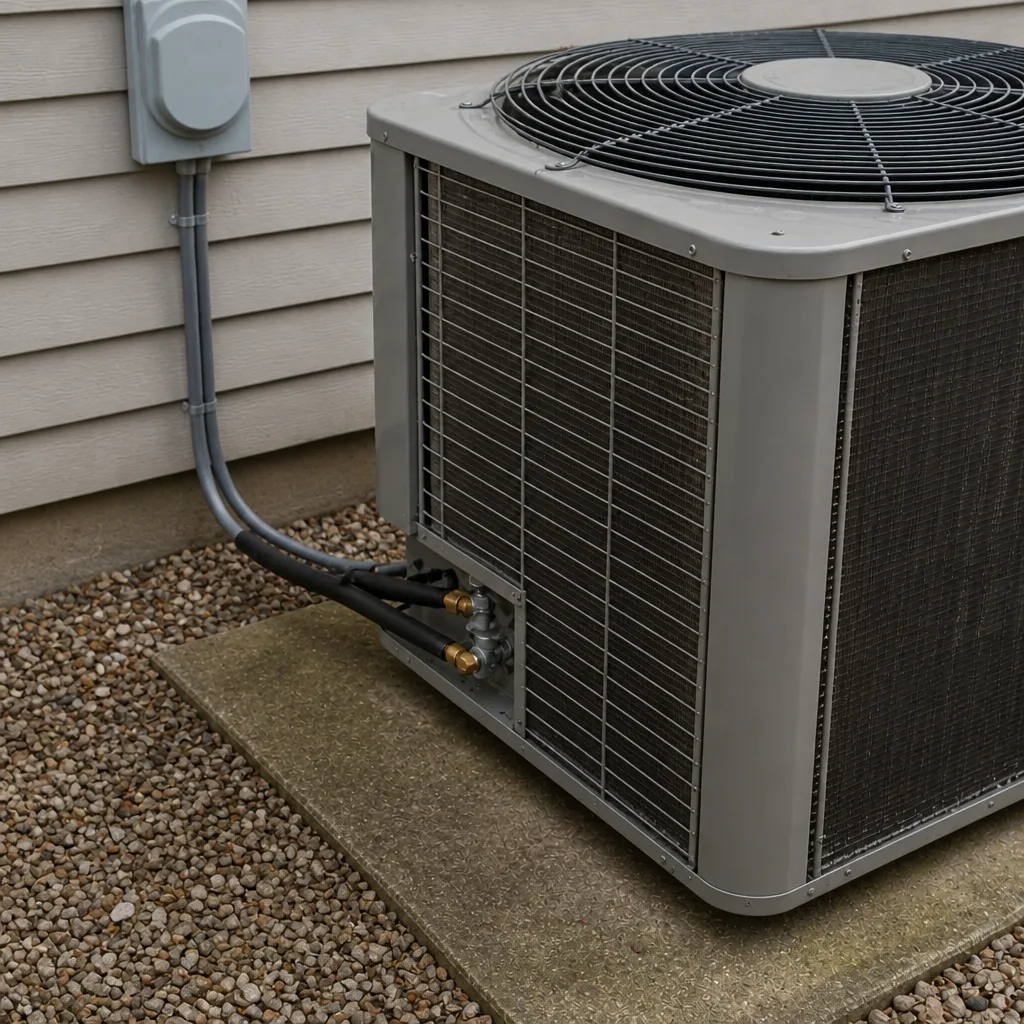
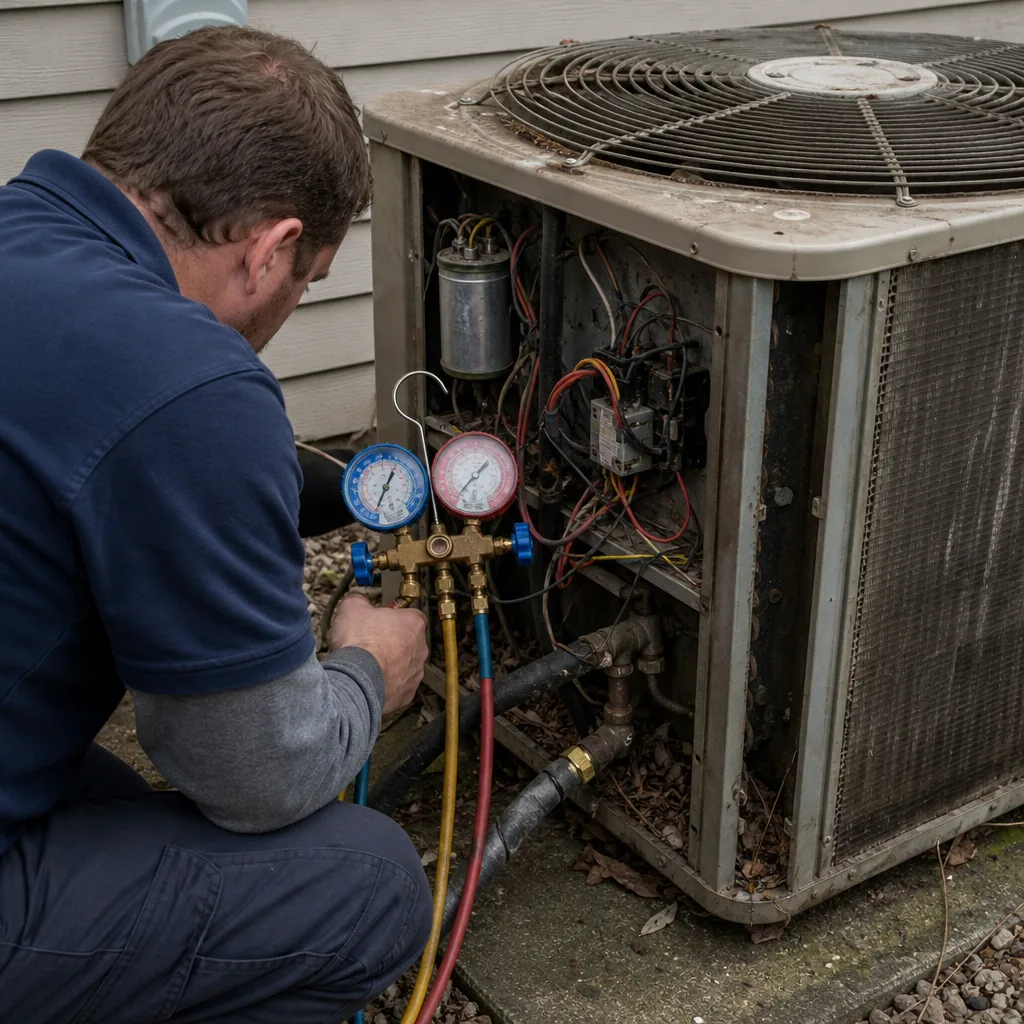 Before
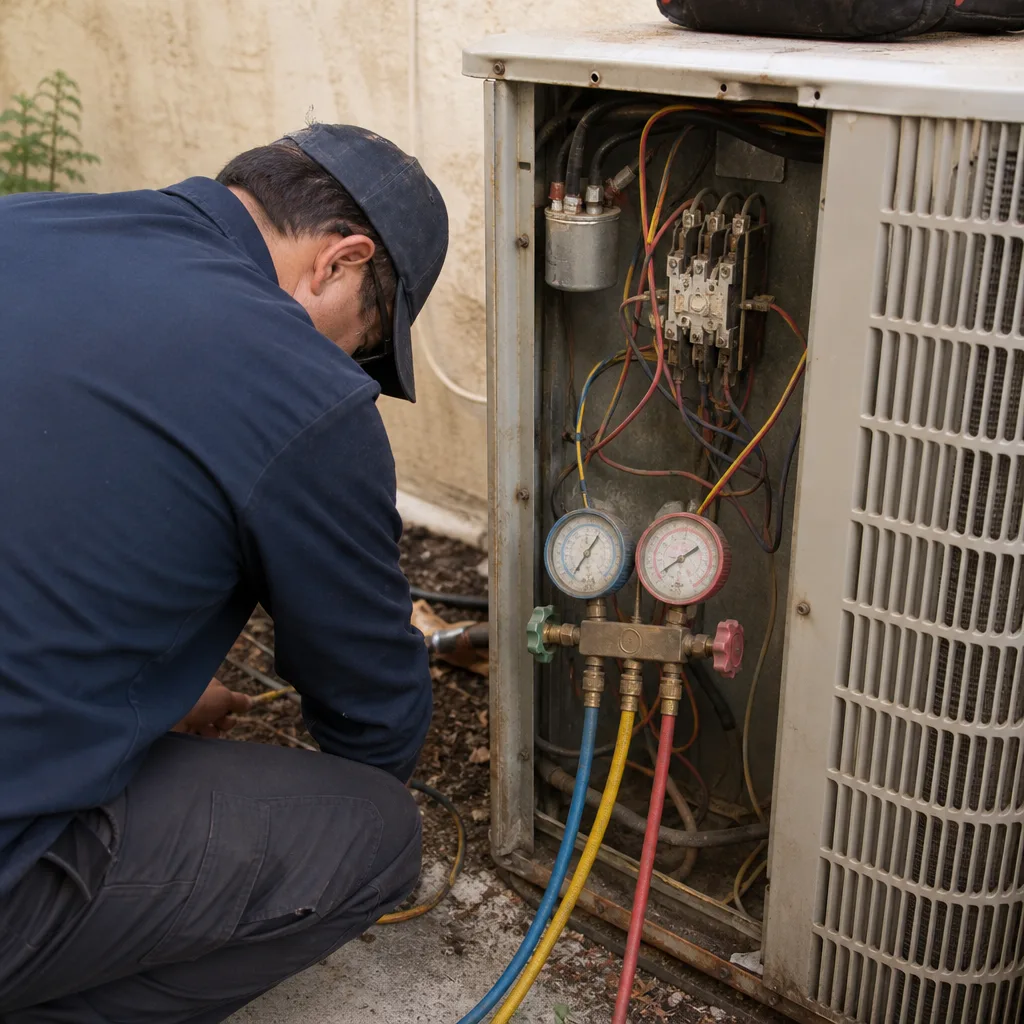
 After
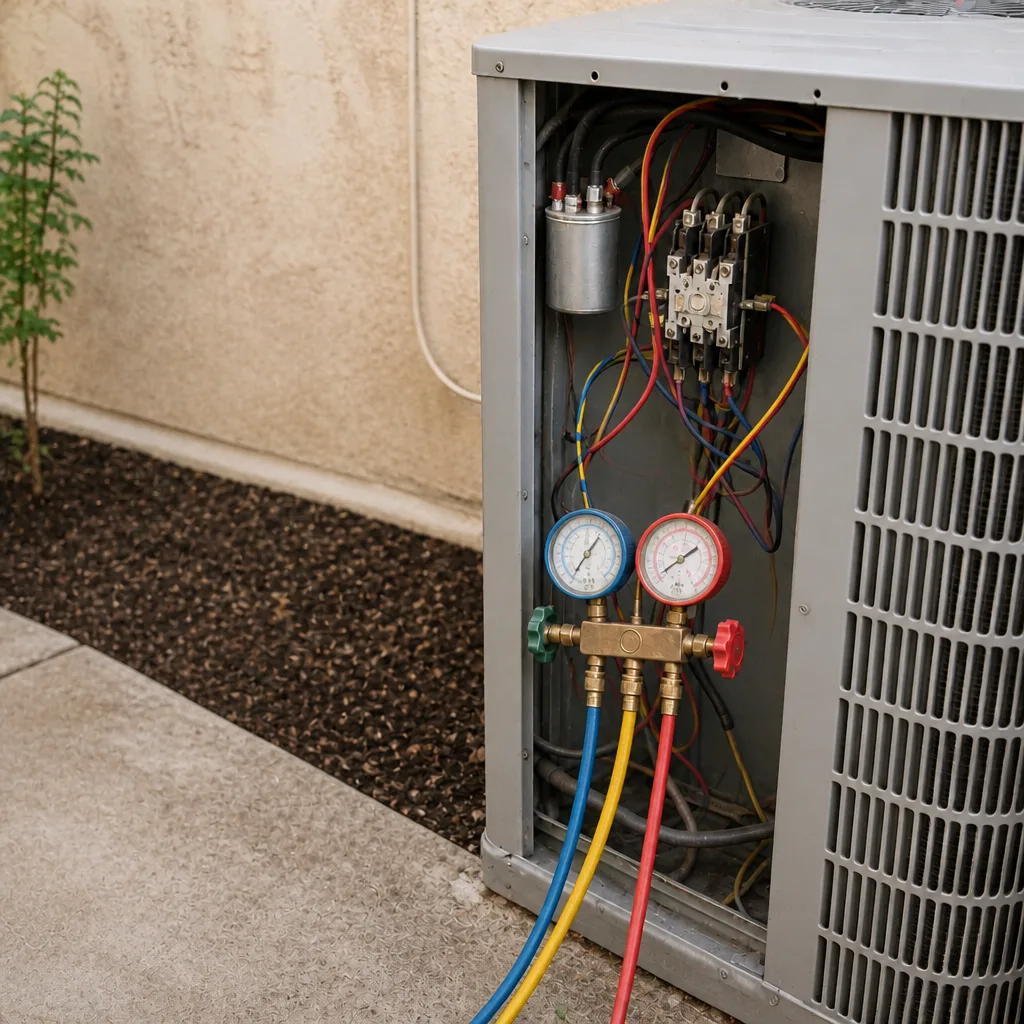
 Before
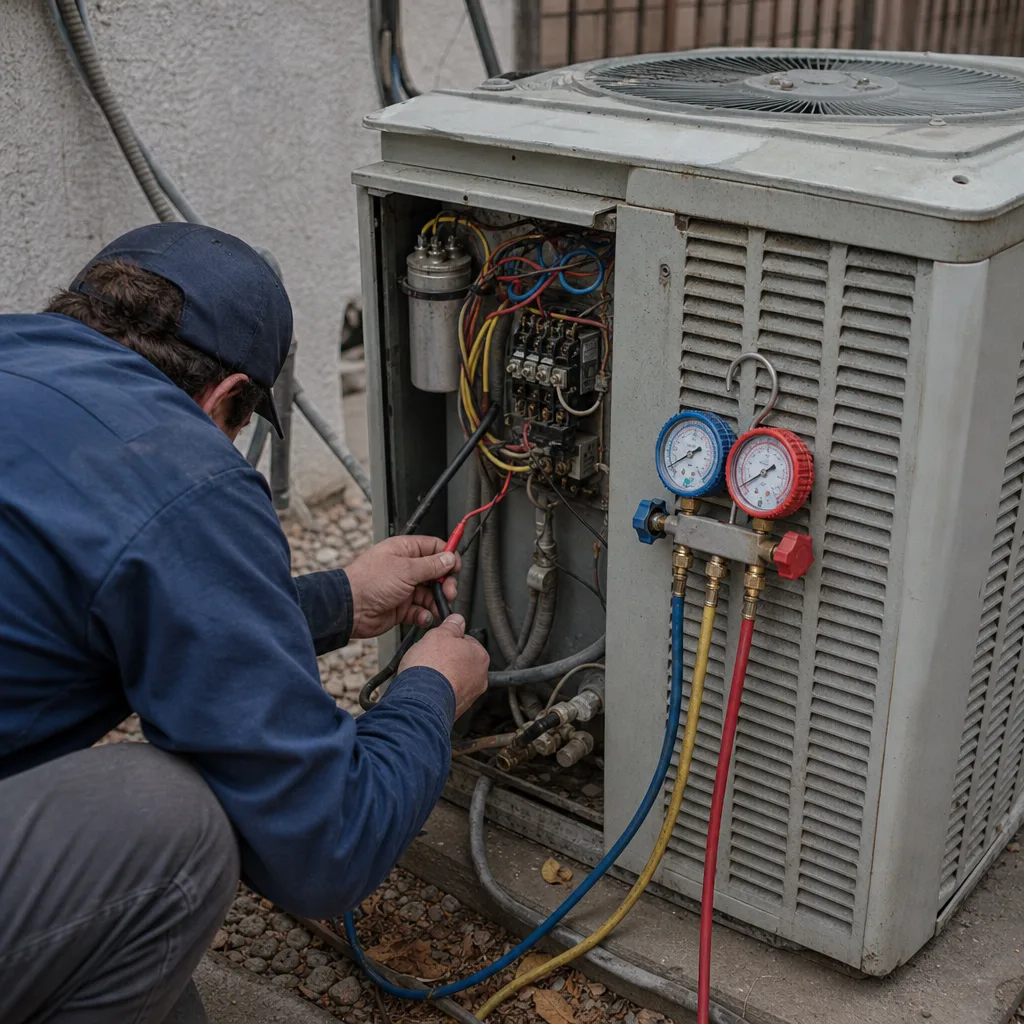
 After
 Before
 After
When to Call a Professional
Call immediately when you smell gas, when equipment trips a breaker repeatedly, when water is coming from a unit, or when the building can’t be safely occupied. Call the same day when a unit is blowing warm air in summer or cold air in winter, when a compressor is short-cycling, or when a zone won’t hold temperature. Call to schedule when you’re seeing a noise, a slow cool-down, or an overdue tune-up. Fireside Heating & Air Co. Whitney takes commercial calls, tells you plainly whether it’s an emergency, and quotes a price before the work begins. If you’re not sure which camp you’re in, ask. Emergency service or scheduled, live person answers the phone and estimates are free. Call (866) 329-8069.
Frequently Asked Questions
An HVAC emergency is a failure that threatens health, property, or the ability to operate, such as no cooling in occupied space on a 105-degree day, a heat failure during a freeze with pipes at risk, water pouring from a ceiling unit, or any gas smell. If you’re not sure, call and describe the situation, and a live person will tell you whether it’s an emergency or a schedulable repair. Call (866) 329-8069 and estimates are free.
Response time depends on the season and the time of day, and we won’t promise same-day on every commercial call because rooftop access and parts availability vary. What we can tell you is that our phones are answered by a live person 24 hours a day, so you’ll know your status the moment you call rather than waiting for a callback. Call (866) 329-8069 to get a real answer for your building.
You can, but ask first whether they carry the equipment and experience for rooftop packaged units, which are common in Whitney. Commercial work involves multiple units, zone mapping, building systems, and written documentation, and not every residential shop has the crew for it. We service both, so we’ll tell you exactly what your building needs. Call (866) 329-8069 for a free estimate.
A breaker that trips repeatedly is a sign of a real fault, most often a failing compressor, a shorted motor, or a loose connection, and it needs a licensed technician before someone resets it one time too many. Do not keep resetting it, and never open the panel to investigate. Call us and we’ll diagnose it safely. Call (866) 329-8069 for an appointment.
The 90-Day Done Right Promise means if the work we did isn’t right, we make it right in writing for 90 days, with no paperwork fights and no arguing. Commercial jobs get the same written report and the same guarantee as residential work. That’s how we’ve operated, and it’s what we stand behind. Call (866) 329-8069 with any questions about a commercial estimate.
Twice a year, once in spring before the heat and once in fall before the cold snap, plus filter changes on a schedule that matches your building’s use. Whitney’s temperature swings stress rooftop equipment, and a seasonal tune-up at $89 catches most problems while they’re still cheap. Call (866) 329-8069 to book yours.
The Bottom Line
Whitney’s commercial HVAC reality comes down to three things: know what an emergency actually is, know what to do in the first thirty minutes, and know who you’ll call before you need them. A rooftop failure at 105 degrees is survivable if the owner shuts the unit down, protects the space, and dials a number a live person answers. It’s a crisis if the owner waits, calls cold, and pays emergency rates for a problem that could have been caught in spring. Prevention is cheap, response is what you pay for at the worst moment, and the difference between the two is a relationship with a company that shows up when it says it will. Fireside Heating & Air Co. Whitney home covers the full scope of what we do, and our team is here for the 2 a.m. call and the spring tune-up alike.
Written by the team at Fireside Heating & Air Co. Whitney.