
Last updated November 18, 2026
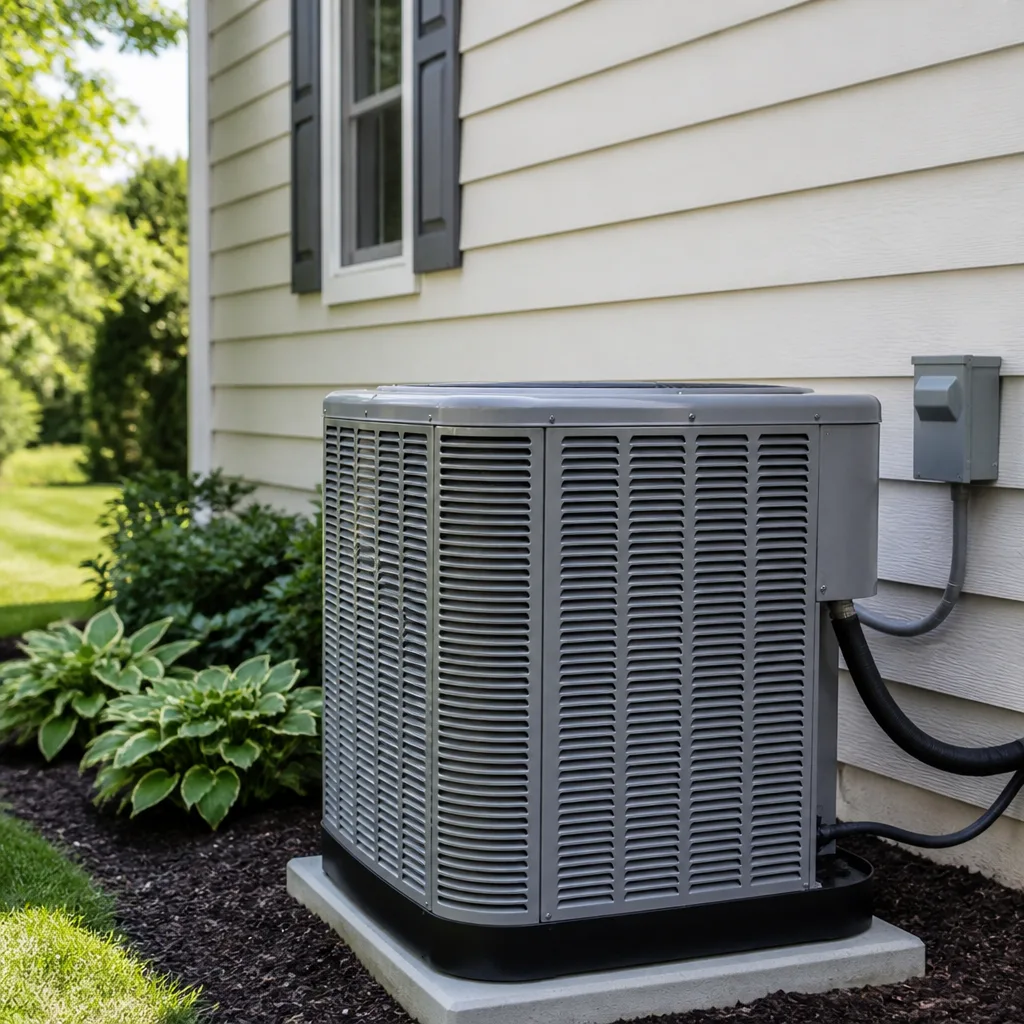 AC repair
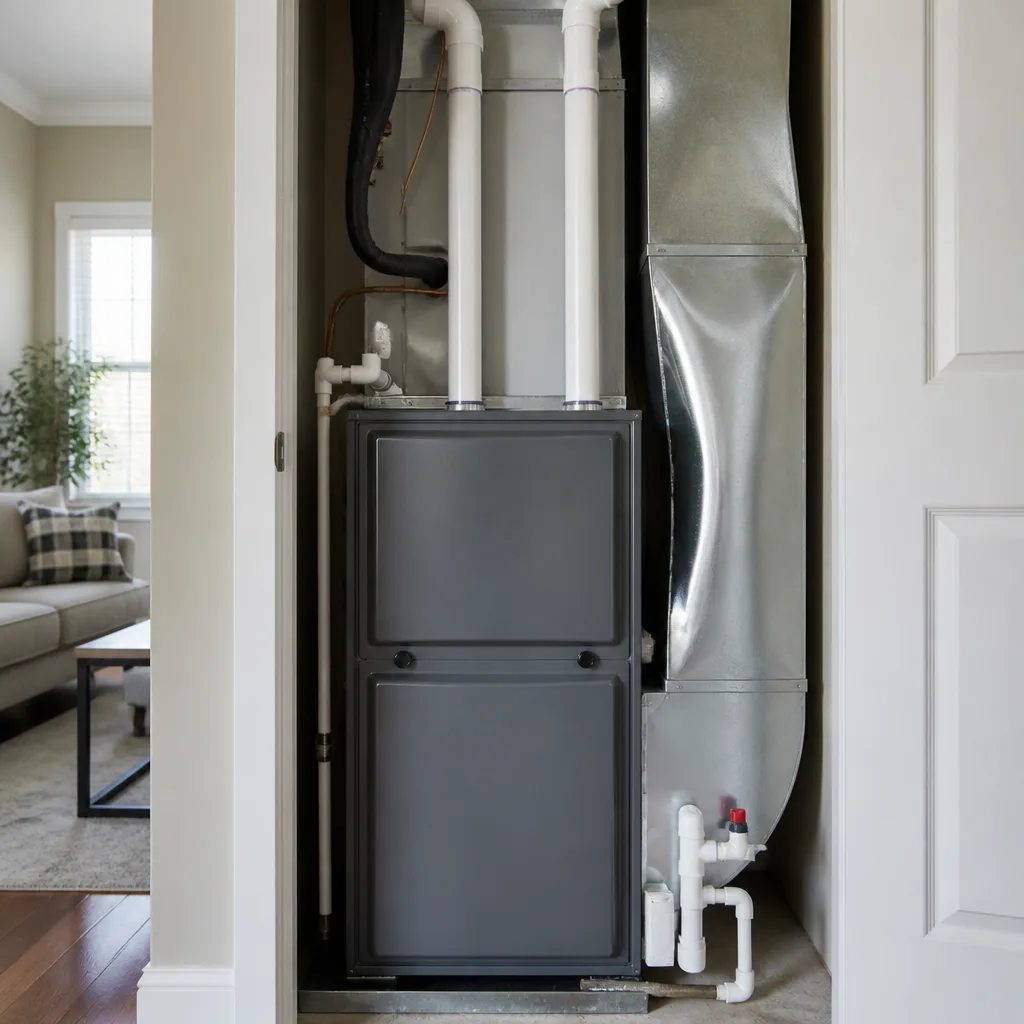 Furnace & heating
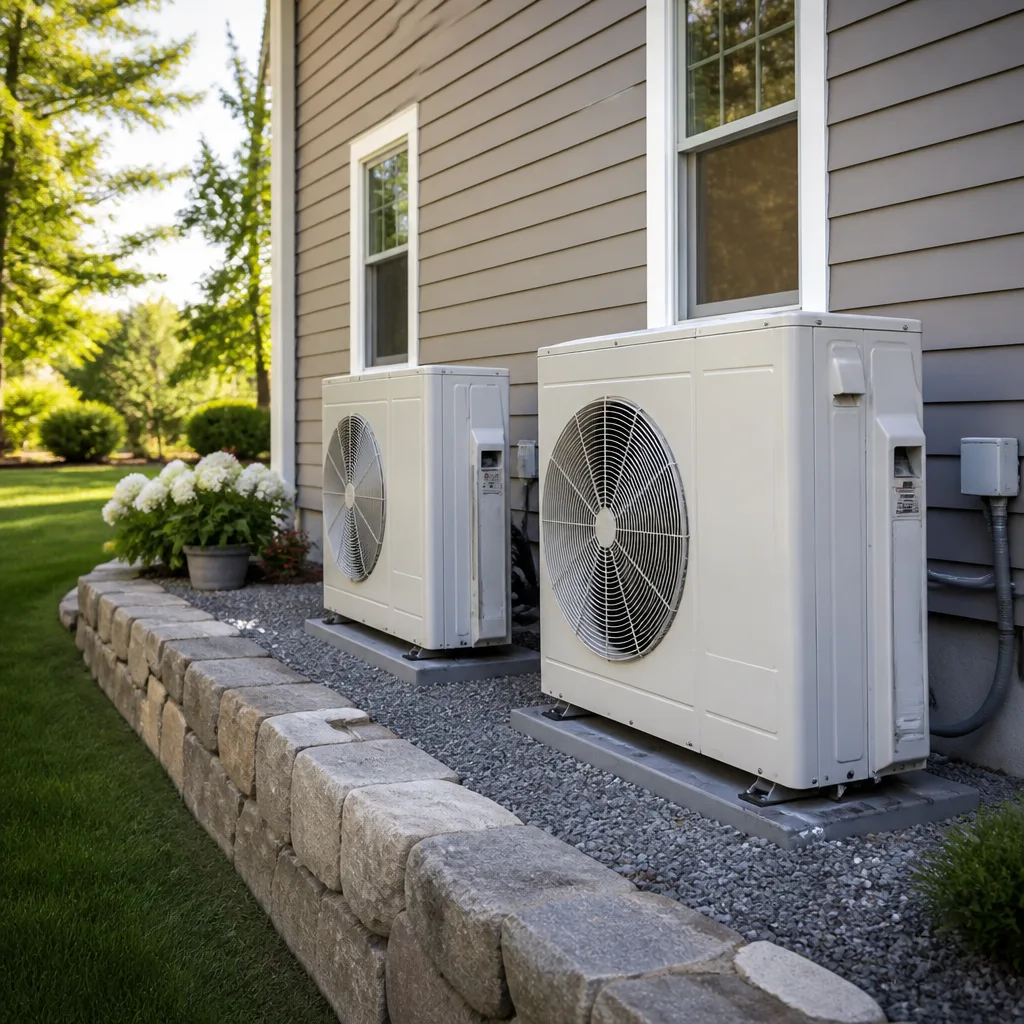 Heat pumps
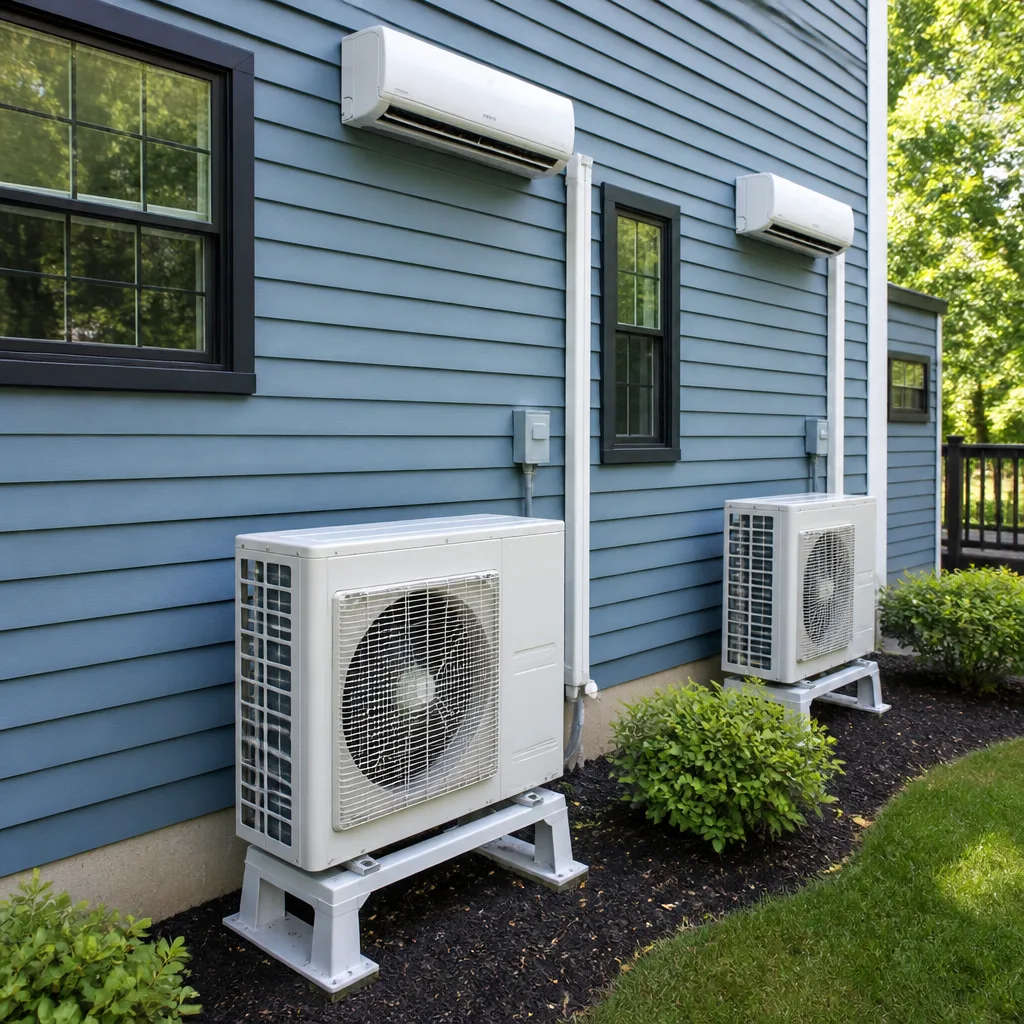 Ductless mini splits
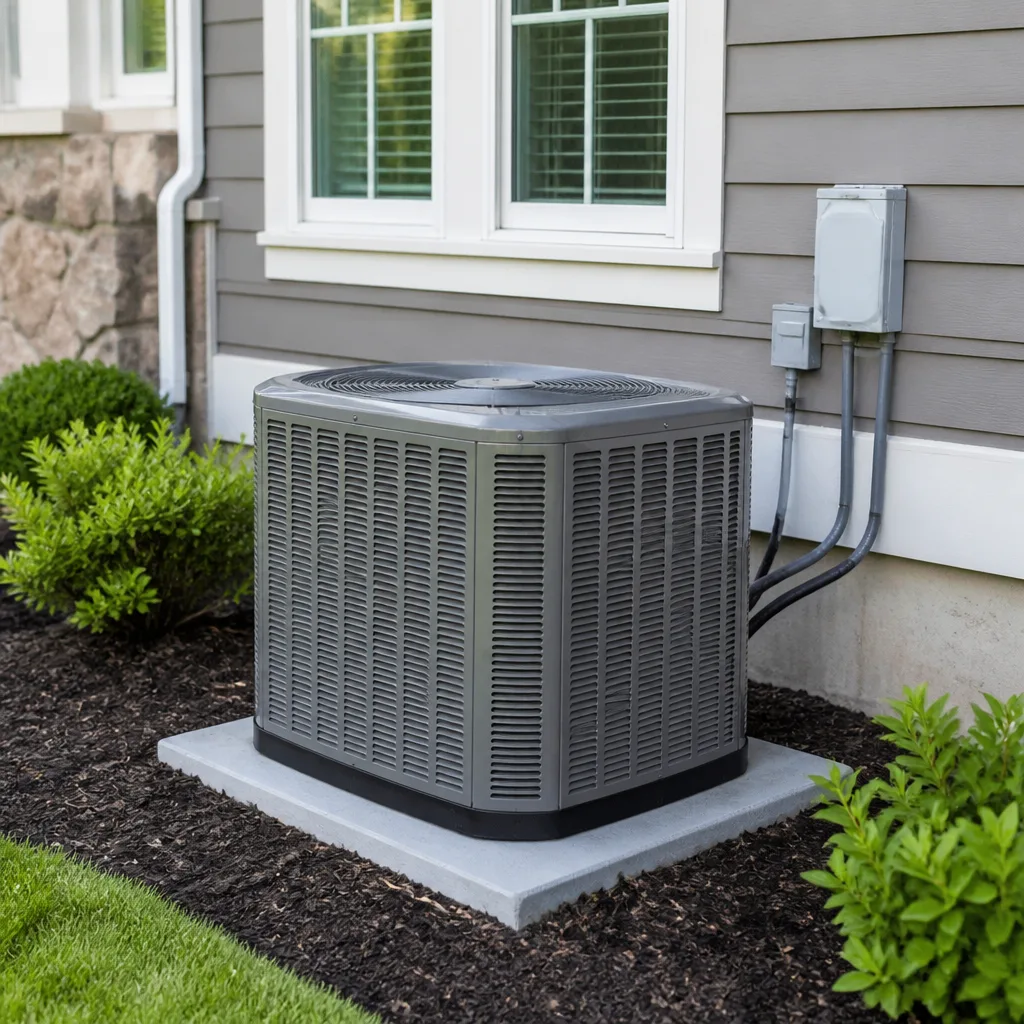 Carrier
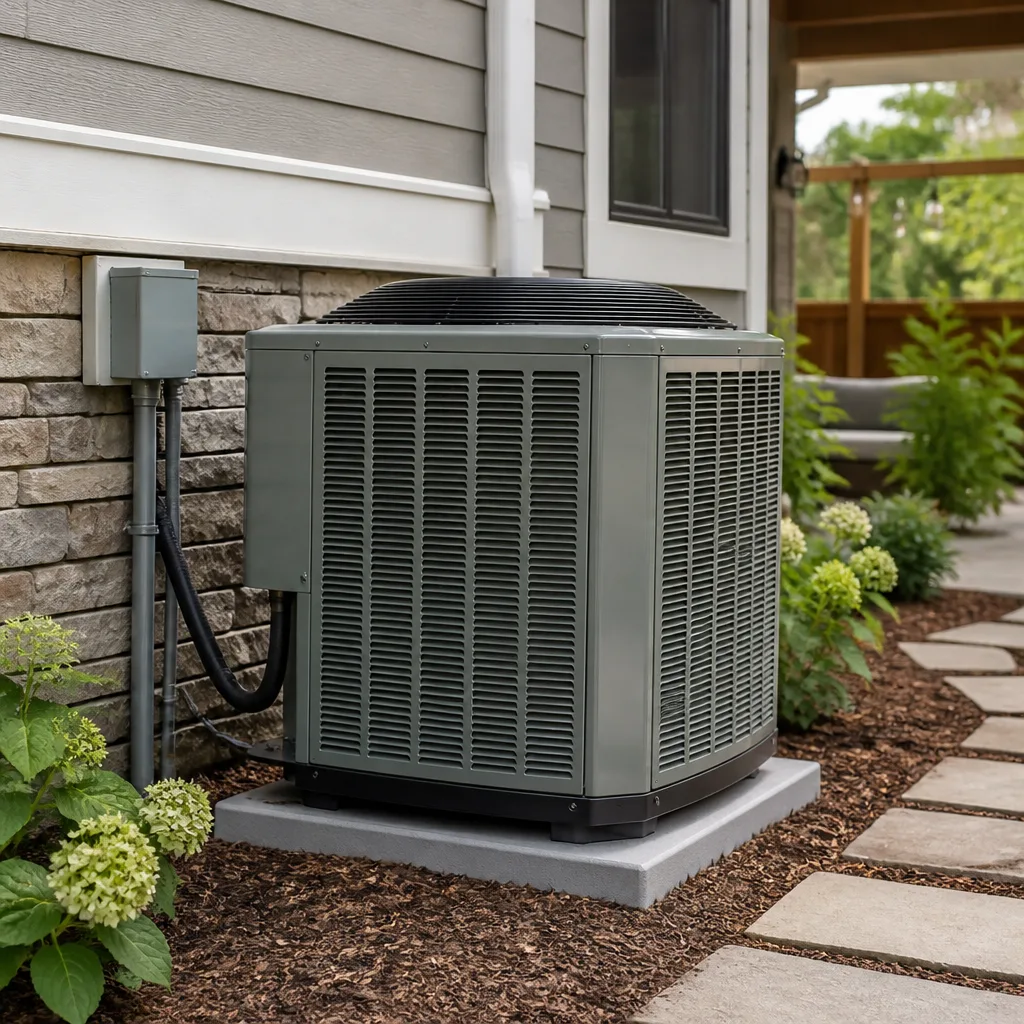 Trane
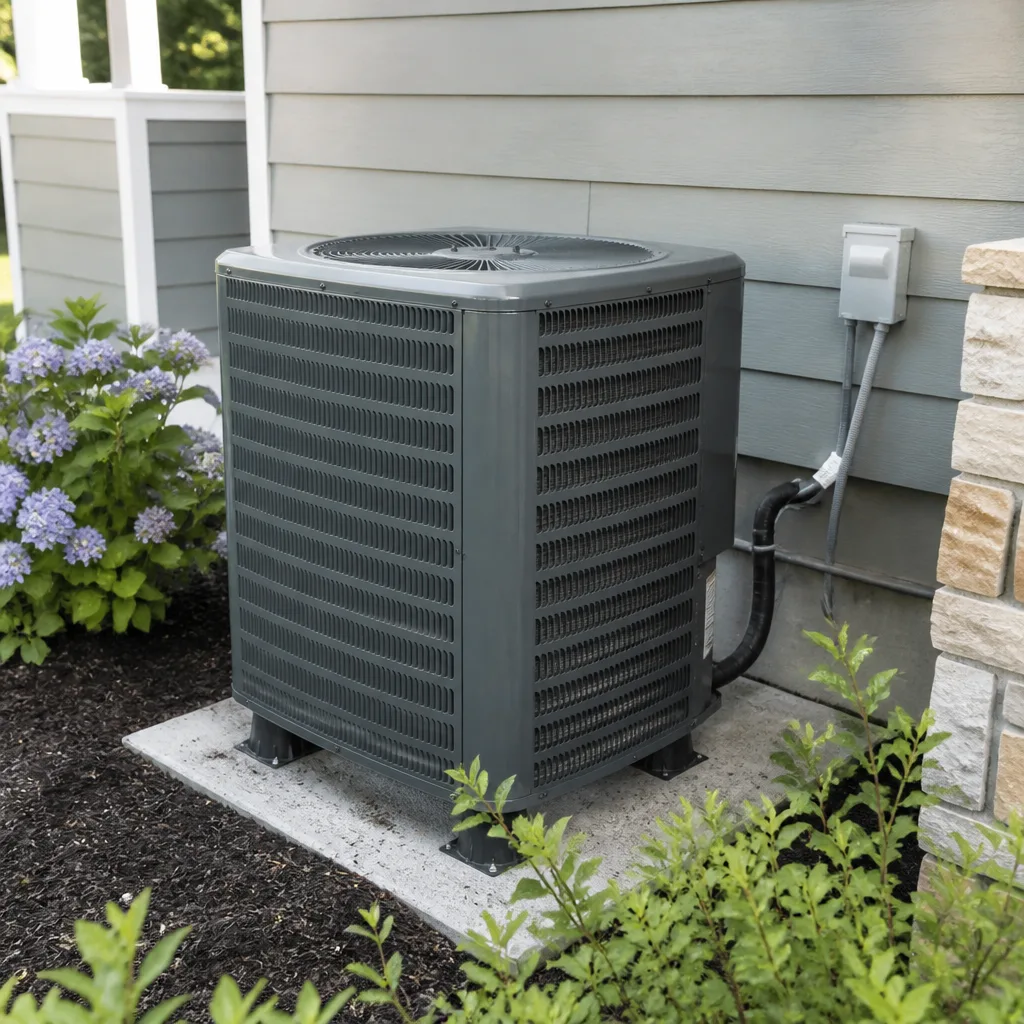 Goodman
Seasonal tune-up and full diagnostic on your Carrier, Trane, or Goodman system - readings shown to you before any repair is proposed
Diagnosis first, numbers second - you approve the repair price before a single part goes in.
Get your free estimateAC Repair & Installation Maintenance Schedule: What to Do and When
Generic maintenance reminders tell you to change the filter every 90 days. In Whitney’s dusty, high-desert conditions, a filter that still looks fine at 60 days can already be choking airflow hard enough to stress the blower motor – a part that runs around $400 to replace. That gap between the calendar on a fridge magnet and the calendar this climate actually keeps is where most avoidable AC failures begin. This guide lays out a maintenance schedule built around Whitney’s real seasons: what to do each month, which tasks you can handle yourself and which need a licensed technician, and how to spot a failing part before it takes the whole system down with it.
Quick Answer
The right AC maintenance schedule in Whitney runs on a desert calendar, not a generic one: a pre-heat-season startup tune-up in April, a mid-summer coil and airflow inspection in July, and shutdown prep in October, with filter checks every 30 to 60 days in between. Five tasks you can do yourself (filters, outdoor unit clearing, thermostat checks, drain line flushing, visual inspections) and four that require a licensed technician (refrigerant, electrical, coil cleaning, and spring-and-bearing work). Skipping the twice-a-year professional visits on a $150 tune-up typically costs more in accelerated part failures than the tune-ups themselves over a typical 10- to 12-year system life.
Styles & brands we work with
- AC repair
- Furnace & heating
- Heat pumps
- Ductless mini splits
- Carrier
- Trane
- Goodman
Table of Contents
- Why Whitney’s Climate Rewrites the Standard Schedule
- The Whitney Month-by-Month AC Calendar
- Five Tasks You Can Do vs. Four That Need a Technician
- Tracking Performance Trends Before Parts Fail
- What a Professional Tune-Up Should Include, Line by Line
- The Compounding Cost of Deferred Maintenance
- When Repair Stops Making Sense: Installation Timing in Whitney
- Common Mistakes to Avoid
- When to Call a Professional
- Frequently Asked Questions
Why Whitney’s Climate Rewrites the Standard Schedule
Most maintenance advice you’ll find online was written for a mild four-season climate where the AC runs maybe three months out of the year. Whitney is not that place. Summer highs in the low triple digits, a shoulder season that jumps thirty degrees between afternoon and evening, and a persistent airborne dust load off the surrounding desert all push an AC harder than the manufacturer’s default maintenance assumptions anticipate. A condenser coil that stays clean for a full year in a wetter climate can be visibly dust-fouled here in six months. That matters because a dirty coil forces the compressor to work longer and hotter to hit the same indoor temperature.
The other piece is altitude and dry air. Whitney sits high enough that air density changes how a system moves heat, and the low humidity means the evaporator coil can run dry and accumulate dust rather than wash itself clean the way it might in a humid climate. We’ve seen Whitney homeowners chasing a “weak” system in August that turned out to be a half-fouled evaporator coil and a blower wheel caked with dust – neither of which a filter change alone would fix. Our AC Repair & Installation in Whitney team sees these conditions daily, and they’re the reason our tune-up checklist here looks a little different from a franchise’s generic one.
The point of a Whitney-specific calendar isn’t to sell you more service. It’s to line the maintenance work up with the moments when the system is under the most stress, so a $150 tune-up catches a $400 blower motor before it seizes, or a failing capacitor before it strands you in a 105-degree afternoon.
The Whitney Month-by-Month AC Calendar
Here’s the schedule we recommend to Whitney homeowners, mapped to how the desert actually behaves. You don’t need to memorize it – the tune-up visits and the filter changes are the load-bearing items.
- March – pre-season check. Clear debris from around the outdoor condenser, replace the filter, and confirm the thermostat responds. Call to schedule your spring tune-up before the first heat wave.
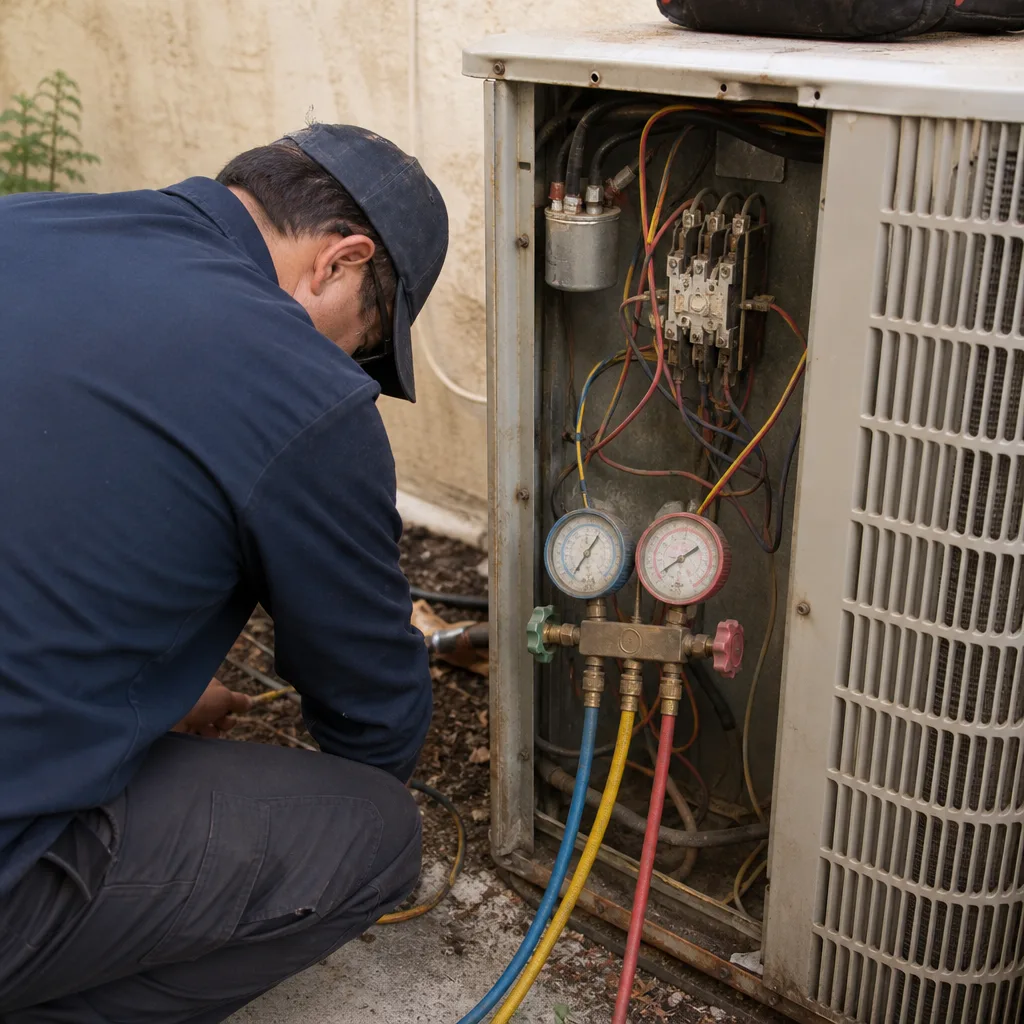
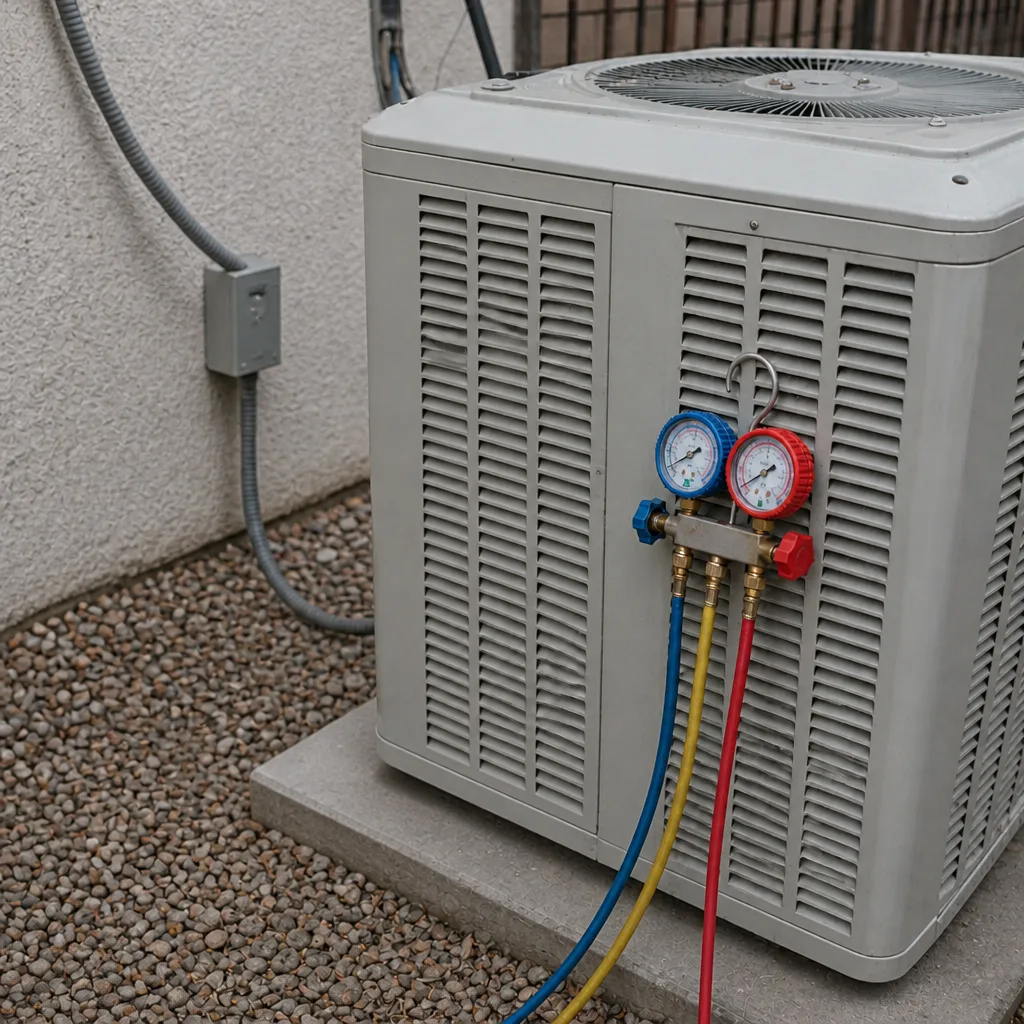
- April – startup tune-up. A licensed technician checks refrigerant charge, cleans the condenser coil, tightens electrical connections, tests the capacitor, and verifies airflow. This is the single most important visit of the year in Whitney.
- May – first filter swap. As dust season picks up, check the filter at 30 days and replace or clean as needed. Do not trust the “looks fine” test alone.
- June – airflow audit. Walk the return vents and registers. Weak airflow at one end of the house is often a duct or blower issue starting, not a system capacity issue.
- July – mid-summer coil inspection. The condenser coil sees its heaviest dust load now. A quick coil rinse and airflow re-check keeps the compressor from overworking in peak heat.
- August – drain line flush. In low humidity, the condensate drain sees less water flow but still collects dust. A monthly flush of a cup of water prevents most drain clogs.
- September – performance check. Note how the system behaves as the load drops. Compare your energy bill to last September’s. This is your trend data.
- October – shutdown prep. Clear the outdoor unit one last time, change the filter, and schedule the fall tune-up that covers heating before the first cold snap.
- November-February – heating season. The AC rests; your heating system takes over. The schedule flips to heating-specific tasks, which we cover in our Heating & Furnace in Whitney guide.
Notice that the calendar has two professional visits built in (April and October) and a homeowner task nearly every month. That split is deliberate, and the next section explains why.
Five Tasks You Can Do vs. Four That Need a Technician
The line between what you can safely handle and what requires a licensed professional isn’t arbitrary – it’s both mechanical and, in Nevada, legal. Refrigerant handling and 240-volt electrical work require licensure. Touching those without it can void your warranty, void your homeowner’s insurance coverage on a related claim, and in the wrong case put you in the hospital. Here’s the split as we practice it.
Five homeowner tasks on your own schedule
- Filter replacement. Every 30 to 60 days in Whitney’s dust season; up to 90 days if you run a high-MERV filter and the house is sealed tight.
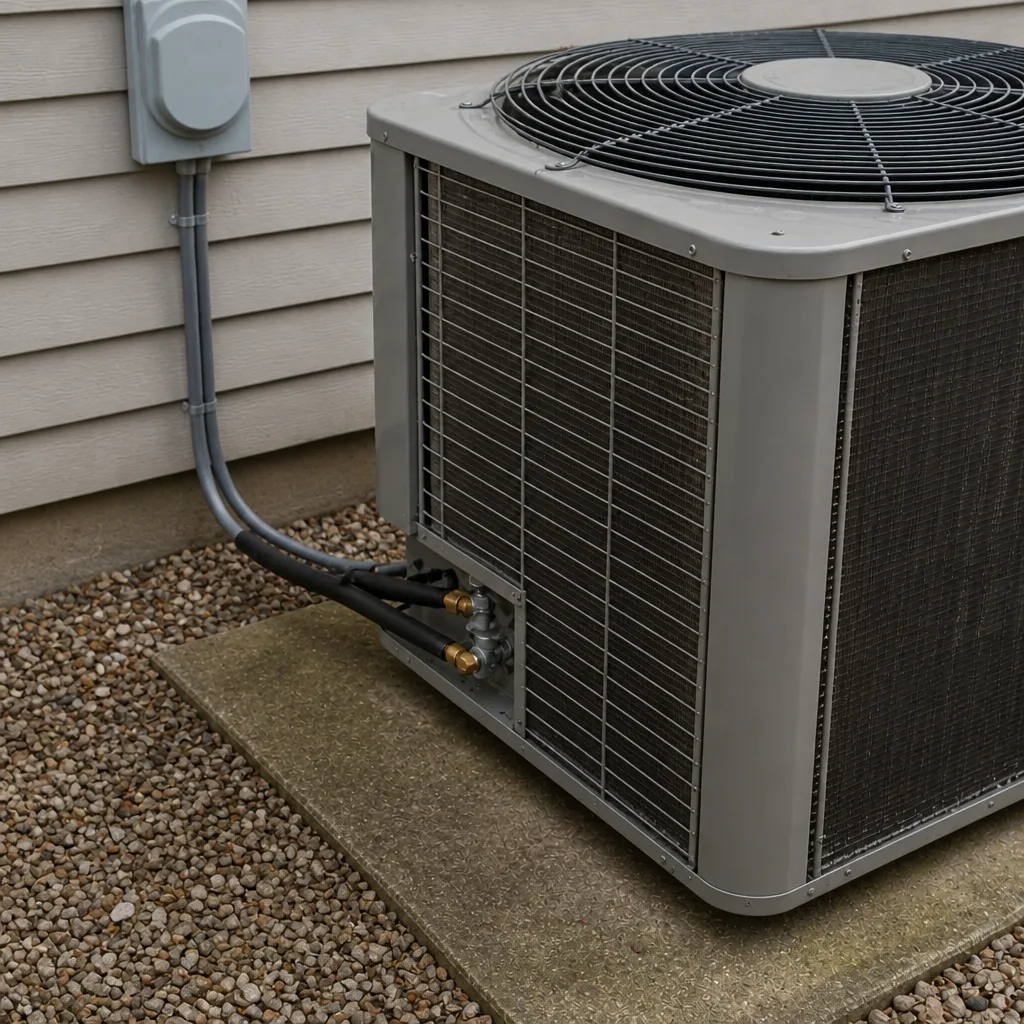
- Outdoor unit clearing. Keep two feet of clearance around the condenser and rinse the fins with a garden hose on low pressure once a month.
- Thermostat checks. Confirm setpoints are holding and batteries are fresh; a failing thermostat mimics a failing system.
- Condensate drain flush. Pour a cup of water or a vinegar solution down the drain line monthly.
- Visual inspection. Look for ice on the refrigerant lines, water pooling around the indoor unit, or unusual noise, and write down what you see.
Four tasks that require a licensed technician
- Refrigerant charge and leak testing. Requires EPA-certified handling equipment and training; improper charging damages the compressor.
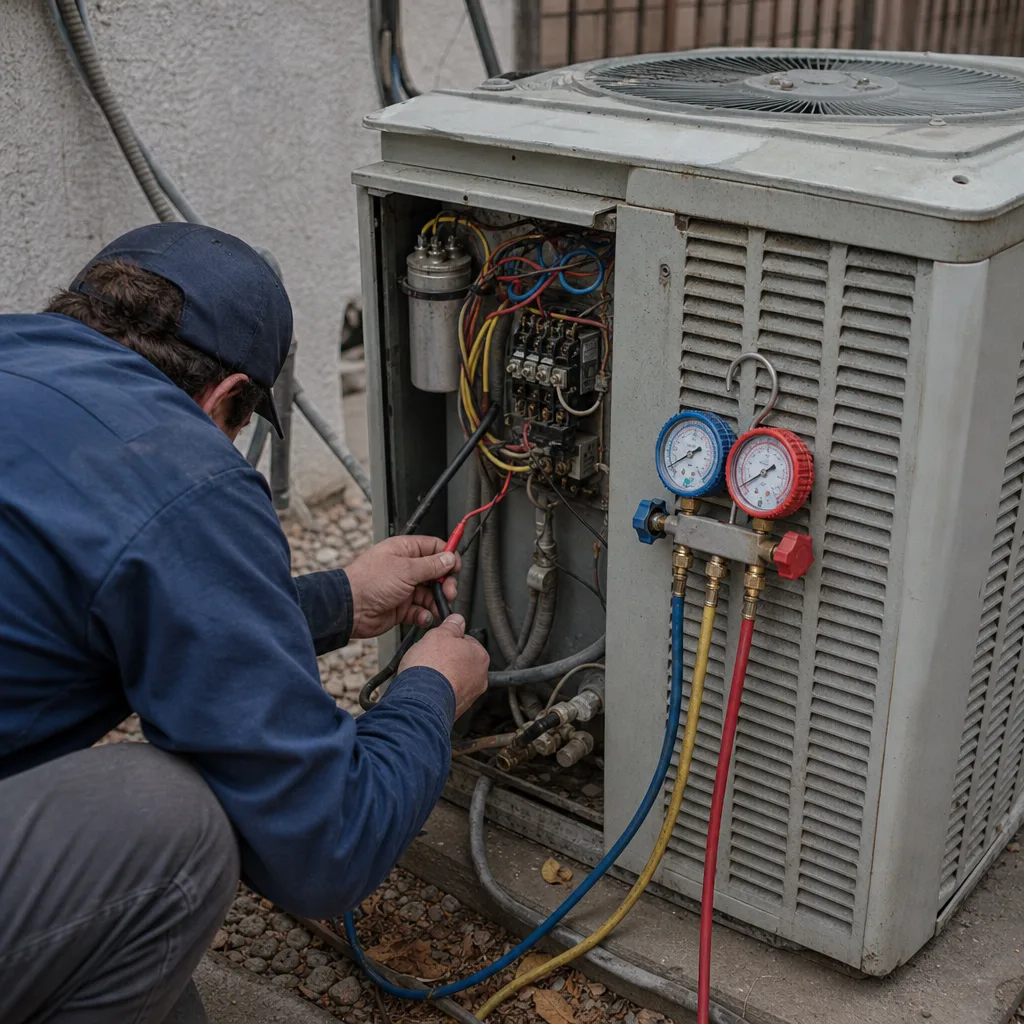
- Electrical component testing. Capacitors, contactors, and motor windings operate at high voltage and hold a charge after power is cut.
- Deep evaporator and condenser coil cleaning. Coil fins are fragile and easy to bend; chemical cleaning requires care and correct products.
- Blower motor and bearing service. This is bearing-level mechanical work; get it wrong and you’re looking at a seized motor and an unbudgeted $400-plus repair.
Understanding this split matters because it lets you do the cheap, high-value work yourself while keeping the expensive, risky work where it belongs. If you’re ever unsure which side a task falls on, ask – our team answers the phone around the clock, every day of the year, and will give you a straight answer.
Tracking Performance Trends Before Parts Fail
HVAC parts rarely fail without warning. They degrade, and the degradation shows up in your runtime, your energy bill, and your comfort long before the system quits. The trick is knowing what to measure and writing it down. In Whitney we recommend a simple homeowner log: a note on your phone or a page on the fridge where you capture three numbers once a month during cooling season.
- Runtime per degree of cooling. On a mild afternoon, note outside temperature, inside temperature, and how many minutes the system runs to drop the indoor reading by two degrees. If that number creeps up month over month, something is loading the system.
- Monthly energy bill versus the same month last year. A 10 to 15 percent rise with no change in habits is a classic early-warning signal – often a dirty coil, a failing capacitor, or a refrigerant leak.
- Comfort spread. Note the temperature difference between your warmest and coolest rooms. A widening spread usually means an airflow or blower problem, not a capacity problem.
Two of the three numbers cost you nothing but a minute a month. The third is just reading your own bill. When you bring that log to a tune-up, the technician has a trend to work from instead of a single snapshot – and a trend tells you whether a part is truly failing or was just having a rough day. That’s how you replace a $150 capacitor before it takes a $1,800 compressor with it, and it’s why we ask Whitney homeowners to bring their log to every service call. If you’ve noticed a slow drift you can’t explain, our Heat Pump & Mini Split in Whitney and standard AC teams can walk you through it.
What a Professional Tune-Up Should Include, Line by Line
A tune-up should be an itemized checklist, not a vibe. When a technician leaves, you should be able to look at the invoice and verify every line was actually performed. Here’s the checklist we stand behind at Fireside Heating & Air Co. Whitney – if a company’s tune-up doesn’t cover roughly these items, it’s a filter change with a markup.
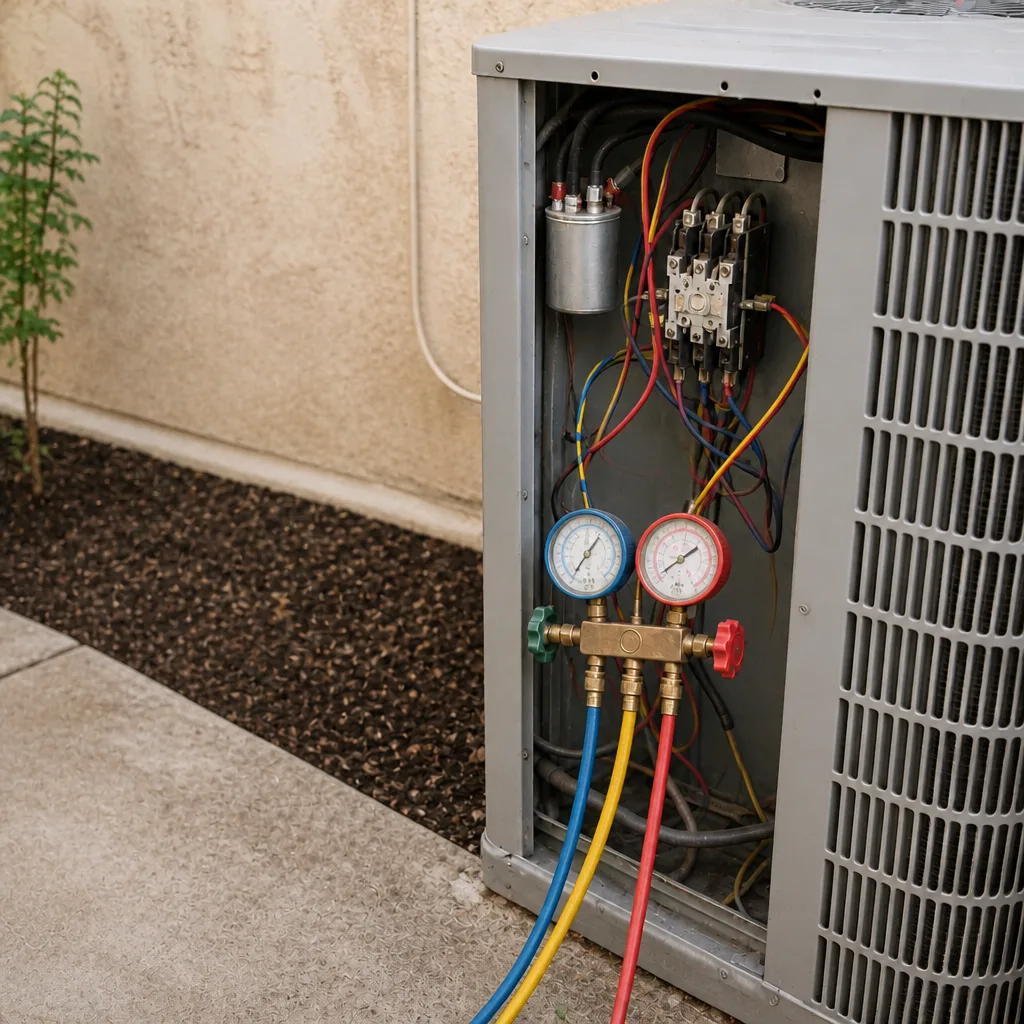
- Refrigerant charge check against manufacturer spec, with superheat/subcool readings recorded.
- Condenser and evaporator coil inspection with before/after condition noted.
- Condensate drain flush and inspection for algae and dust buildup.
- Electrical connection torque check on contactor and disconnect, plus capacitor test.
- Blower motor and belt inspection for bearing noise, wobble, and dust load.
- Filter condition note and a recommendation for next change interval.
- Thermostat calibration and calibration check against a reference thermometer.
- Airflow measurement at the return and key registers, with any restriction noted.
- Combustion or heating-side check (in the fall visit) for gas furnaces.
You should get a written report of what was found, not just a “looks good.” Our $89 Seasonal Tune-Up includes the full checklist above, plus a written summary of anything flagged. And because our technicians aren’t paid on what they sell, the report you get is the report you’d get if you were family. If a technician can’t show you the checklist or explain any line on it, that’s your answer about the quality of the visit.
The Compounding Cost of Deferred Maintenance
The math on skipping tune-ups is simple once you lay it out. Say a proper tune-up runs about $150 a year, and you skip it. Over a 10- to 12-year system life, that’s $1,500 to $1,800 you didn’t spend. Here’s the part most homeowners miss: on a desert system, skipping the twice-yearly tune-ups doesn’t just postpone $150 – it accelerates the parts you eventually have to replace.
A dust-fouled condenser coil and a low refrigerant charge each raise compressor load and lower efficiency. The compressor is the single most expensive component – typically several hundred to over a thousand dollars to replace – and it’s the part that deferred maintenance takes down first. Add a blower motor (around $400), a capacitor (roughly $150 to $300 installed), and the efficiency loss from running a dirty system (often 5 to 15 percent higher energy bills in peak summer), and the arithmetic turns against you fast. A Whitney homeowner who skips three years of tune-ups ($450 saved) and then pays for a blower motor and a capacitor in year four ($550 to $700) is behind – and the compressor risk is still hanging over them.
The other side of the math is lifespan. A system kept on a real tune-up schedule often reaches 12 to 15 years. One that’s chronically fouled and overworked might quit at 8 or 9 – which means the “savings” from skipped tune-ups get spent many times over on premature replacement. If you’re already somewhere in that cycle, our Fireside Heating & Air Co. Whitney home page is a good place to start, or you can just call and we’ll talk it through – including a free second opinion on any written estimate you’ve gotten elsewhere.
When Repair Stops Making Sense: Installation Timing in Whitney
Maintenance is the cheap path. Repair is the middle path. Replacement is the one that hurts – so the goal is to make that decision on your own timeline, not the system’s. In Whitney, a few signals move a system from “repair” to “plan the replacement.”
- Age plus repeat failures. A 10-plus-year-old system that’s had two compressor-adjacent failures in a year is generally a replace, not a repair.
- R-22 refrigerant. If a system still uses R-22, a leak is a much bigger problem – the refrigerant is phased out and expensive, and topping it off rarely makes sense versus replacing.
- Rising bills with no explanation. If a 15-year-old system has seen three straight summers of bill increases and a clean bill of health from a tune-up, the efficiency loss is baked in.
- Comfort complaints that repair won’t fix. A single room that’s always 5 degrees warmer is often a duct or sizing issue, not a repair. That’s an installation conversation, not a parts one.
Replacement work in Whitney is scheduled, not same-day. A proper installation starts with a load calculation, then equipment selection and ordering, then a scheduled install date – and we handle the rebate and financing paperwork so it doesn’t fall on you. If you’re weighing repair against replacement, we’ll give you a straight answer and a free second opinion on any written estimate. Straight talk is the whole point: we’d rather tell you to repair a good system than sell you one you don’t need.
Common Mistakes to Avoid
- Trusting the “it looks fine” filter test. In Whitney’s dust, a filter can be half-loaded and still look clean at 60 days. Hold it up to a light – if you can’t see through it, replace it. A restricted filter is a $400 blower motor waiting to happen.
- Following a generic national calendar. Franchise reminders keyed to a four-season climate will have you tuning up in the wrong month and skipping the July coil check that Whitney summers demand.
- Letting the outdoor unit grow a weed farm. In this climate, tamarisk and goathead seed blow in fast. Two feet of clearance, checked monthly, is the cheapest insurance on the condenser.
- Ignoring small comfort drift. A room that’s slowly getting warmer is a signal, not a quirk. Homeowners who track the spread catch blower and duct problems in the shoulder season, when a repair is scheduled and cheap, not in July, when it’s an emergency.
- Skipping the fall heating tune-up because the AC is what failed last summer. The heating system gets the same desert treatment – dust, temperature swings, dusty coils – and an October tune-up is the difference between a warm November and a cold one.
- Calling a fly-by-night for the emergency and a pro for the tune-up. Consistency matters. A company that sees your system twice a year knows its trend line, and the 90-Day Done Right Promise only works if you know who’s standing behind the work.
- Taking a low bid from a company that won’t show the checklist. If the tune-up invoice doesn’t itemize what was done, there’s no way to know if your technician actually cleaned the coil or just bumped the filter and left.
When to Call a Professional
Some problems need a phone call, not a DIY approach. Call a licensed technician if you see ice forming on the refrigerant lines, if the outdoor unit trips the breaker repeatedly, if you hear grinding or screeching from the blower, if you smell burning or musty odors from the vents, if the system won’t cool below a setpoint it handled easily last year, or if your monthly energy bill has jumped 15 percent or more with no change in habits. Nevada law requires licensed handling for refrigerant and electrical work, and the safety stakes are real – those components hold dangerous voltage even after the breaker is off. Our technicians are background-checked, uniformed, and trained as journeymen, and they’ll tell you straight whether a problem is a repair or a replace. Fireside Heating & Air Co. Whitney offers free estimates in Whitney – call (866) 329-8069. A live person answers, day or night.
Frequently Asked Questions
Twice a year – a spring startup tune-up in April and a fall tune-up in October – plus filter changes every 30 to 60 days during dust season. Whitney’s heat and dust load mean the standard “once a year” advice doesn’t hold up; the desert shortens every maintenance interval. Call (866) 329-8069 to schedule the next visit.
Our Seasonal Tune-Up runs $89 and includes the full itemized checklist above with a written report of what was found. If a tune-up surfaces a repair over $250, there’s a $50 discount available. Call (866) 329-8069 for a free estimate – the price quoted is the price paid.
Not in Whitney. The 90-day interval is written for a mild, humid climate; in our dust, check the filter every 30 to 60 days during cooling season and hold it up to a light. A filter that looks fine at 60 days can already be restricting airflow and stressing the blower motor. When in doubt, ask us.
A tune-up is scheduled maintenance – cleaning, testing, and tuning to spec. A repair visit is fixing something that’s already broken. Tune-ups prevent repairs, which is why we recommend the twice-yearly schedule. If something’s failed, call and we’ll get a technician out, and every repair is backed by the 90-Day Done Right Promise.
Roughly 12 to 15 years on a good maintenance schedule, and closer to 8 to 10 if it’s been run dirty and overworked in the desert heat. Regular tune-ups and clean filters are the biggest single factor in reaching the upper end. If your system is past 10 and failing, we’ll give you an honest repair-versus-replace read.
Yes – a permanent 5 percent senior and veteran discount, always available, alongside the $50 off any repair over $250 and a free second opinion on any written estimate. Call (866) 329-8069 and mention it when you book – no forms, no fine print.
See the difference
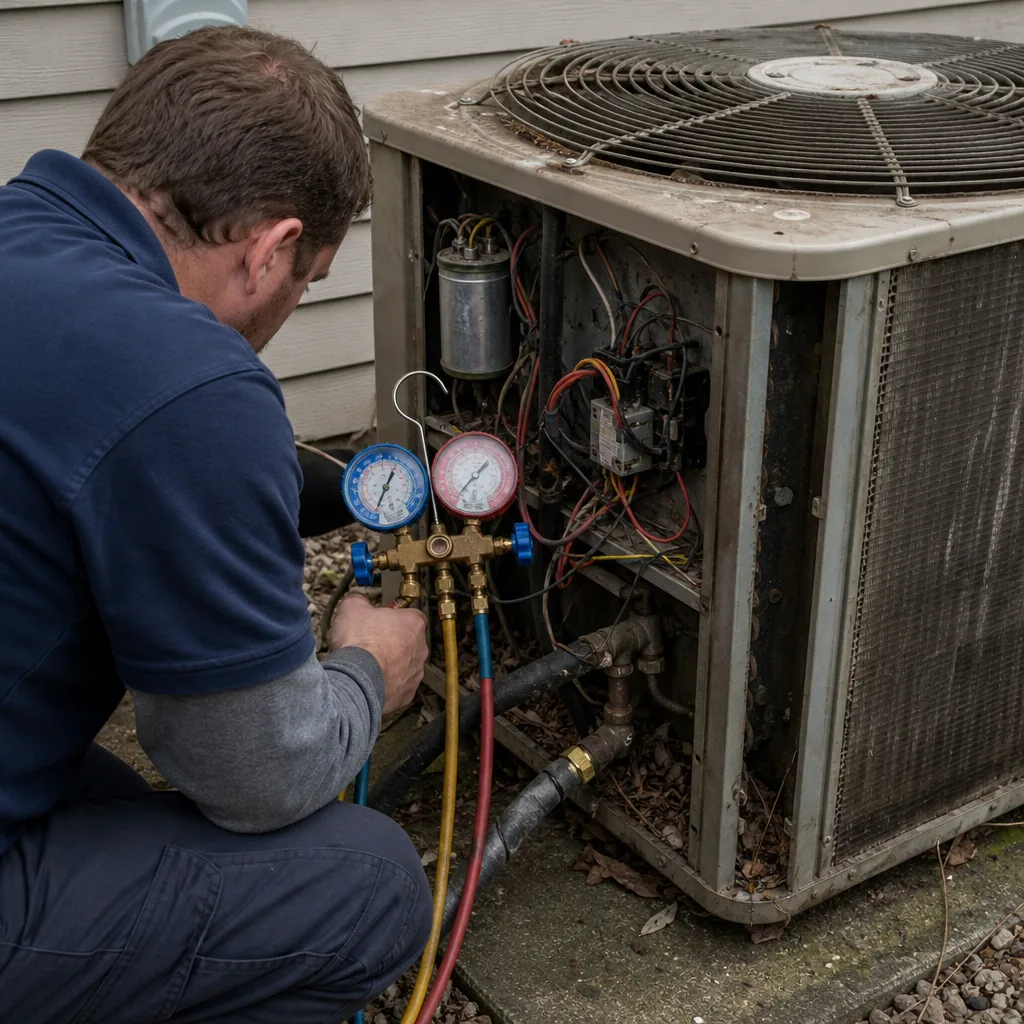 Before
 After
 Before
 After
 Before
 After
The Bottom Line
The right AC maintenance schedule in Whitney looks like this: a spring startup tune-up in April, a mid-summer coil and airflow check in July, a fall heating tune-up in October, and filters every 30 to 60 days in between. Do the five homeowner tasks yourself, leave the four licensed tasks to a professional, keep a simple performance log, and skip the generic national calendar. The $150-a-year tune-up is the cheapest thing you’ll ever spend on the system – it’s the compressor, the blower motor, and the 12- to 15-year lifespan you’re really protecting. If you want a company that answers the phone at 2 a.m., shows you the checklist, and stands behind the work in writing, that’s who we are.
Contact Fireside Heating & Air Co. Whitney
Ready to get on a Whitney-appropriate maintenance schedule – or worried about something your system’s been doing lately? Call (866) 329-8069 for a free estimate. A live person answers every call, 24 hours a day, seven days a week, and our technicians have up to 8 years of experience on nine major brands including Lennox, Goodman, Rheem, and York. Every job is backed by the 90-Day Done Right Promise, our $89 Seasonal Tune-Up is standing year-round, and our senior and veteran discount applies on every job. Done right – or we make it right.
Written by the team at Fireside Heating & Air Co. Whitney.