
Last updated November 18, 2026
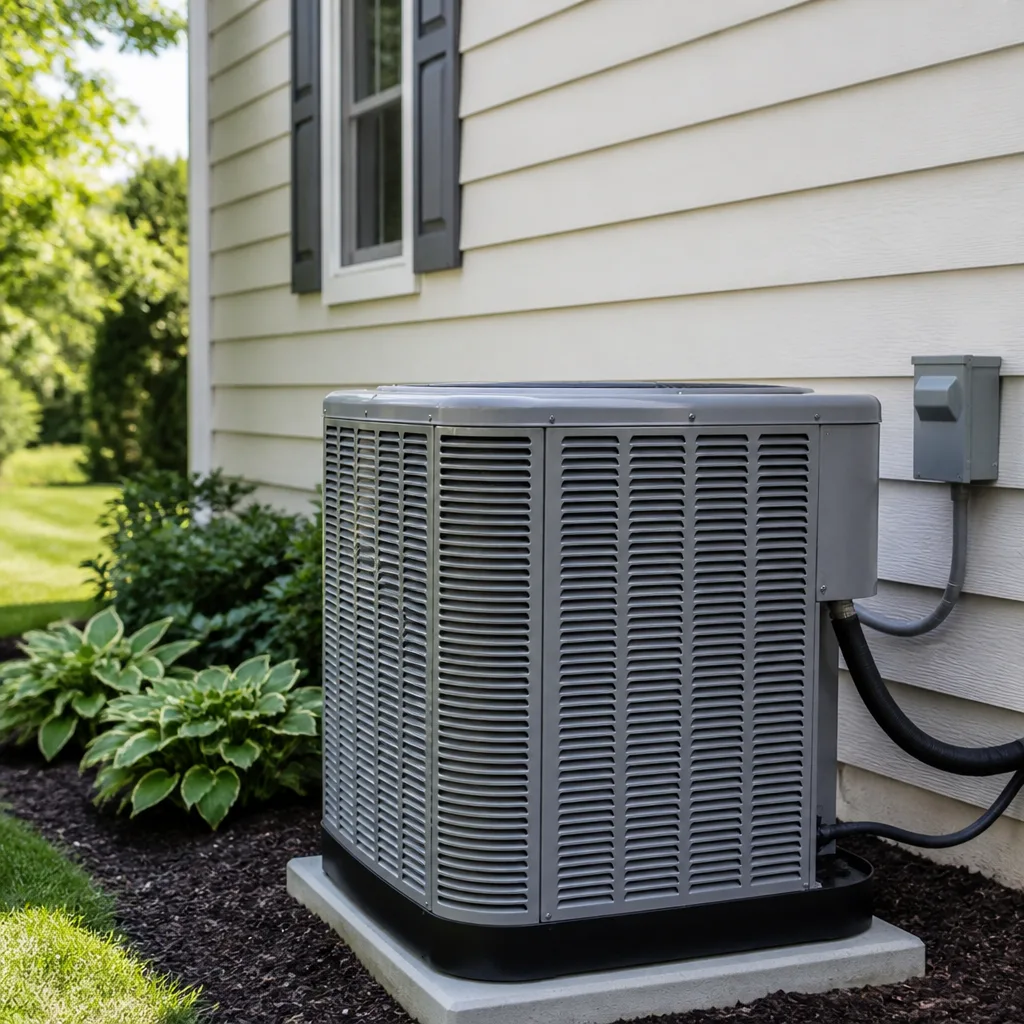 AC repair
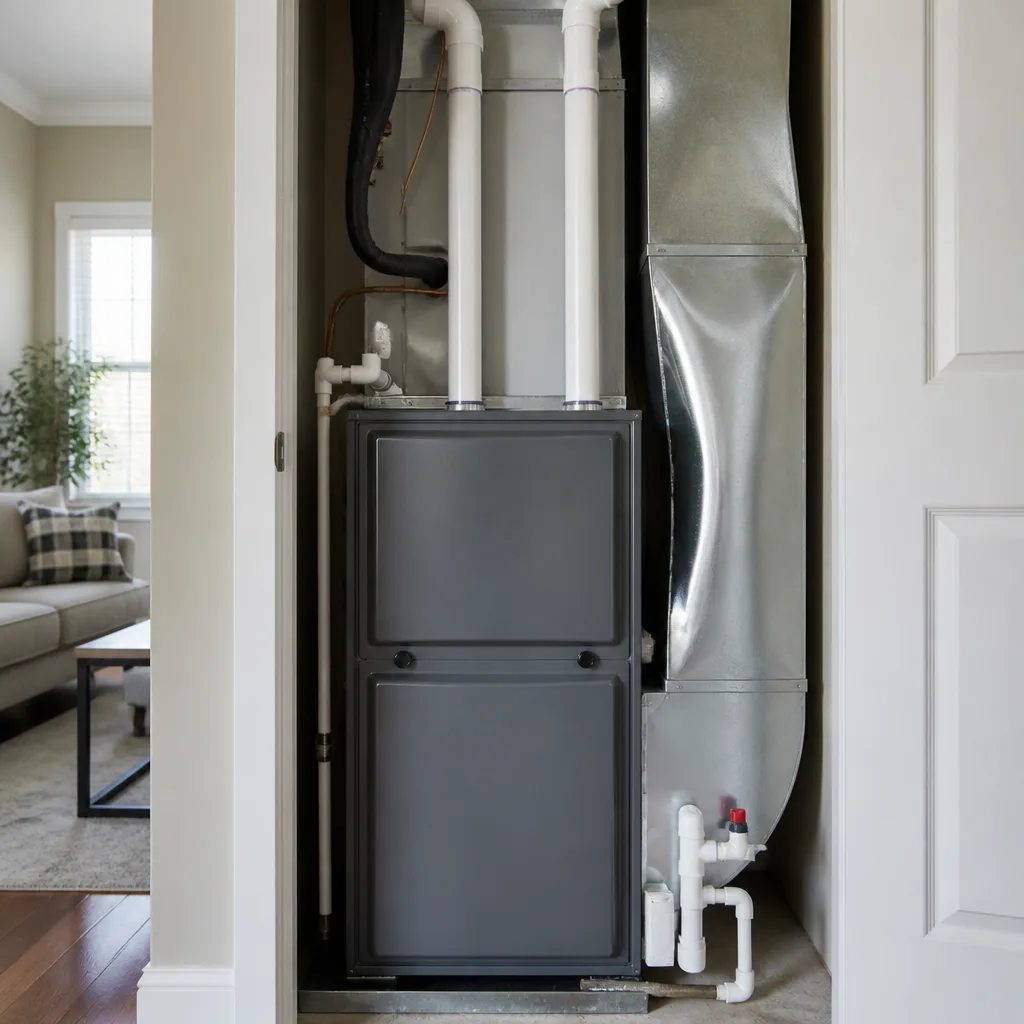 Furnace & heating
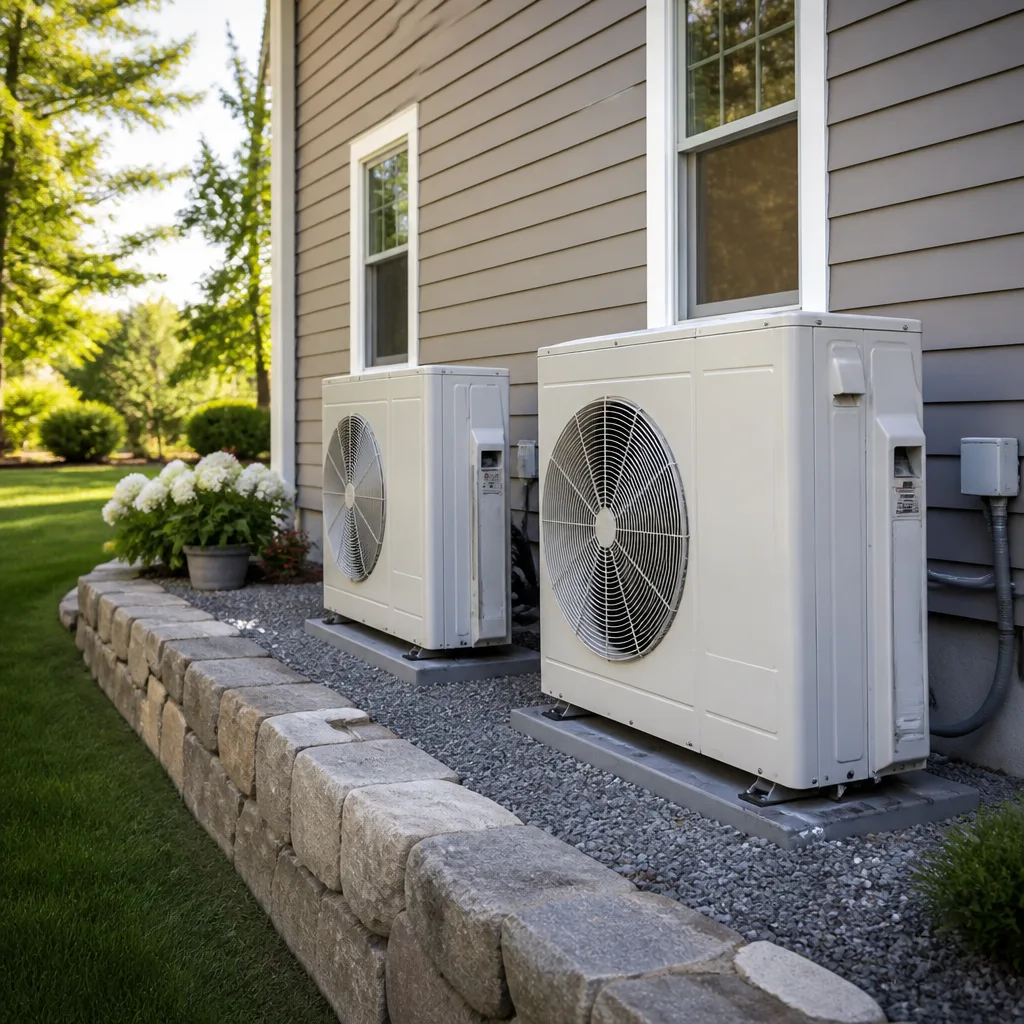 Heat pumps
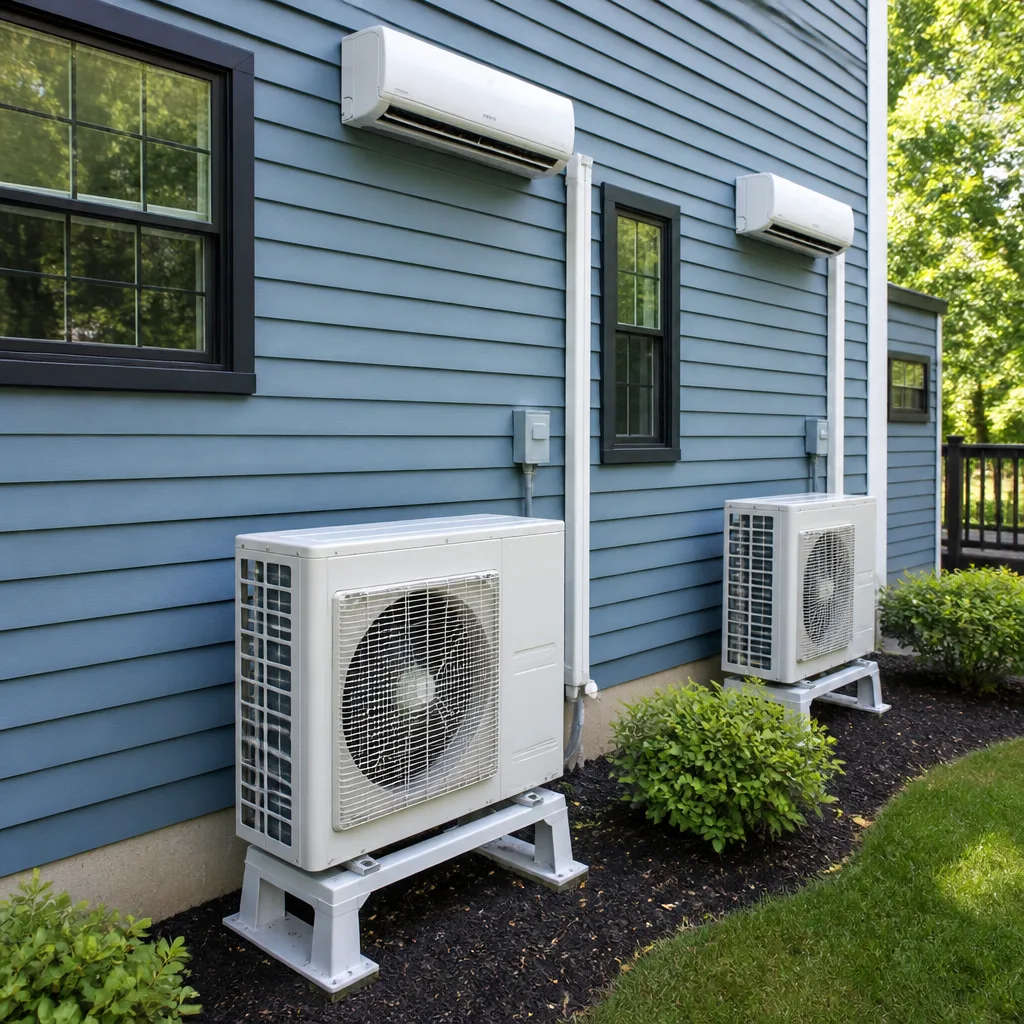 Ductless mini splits
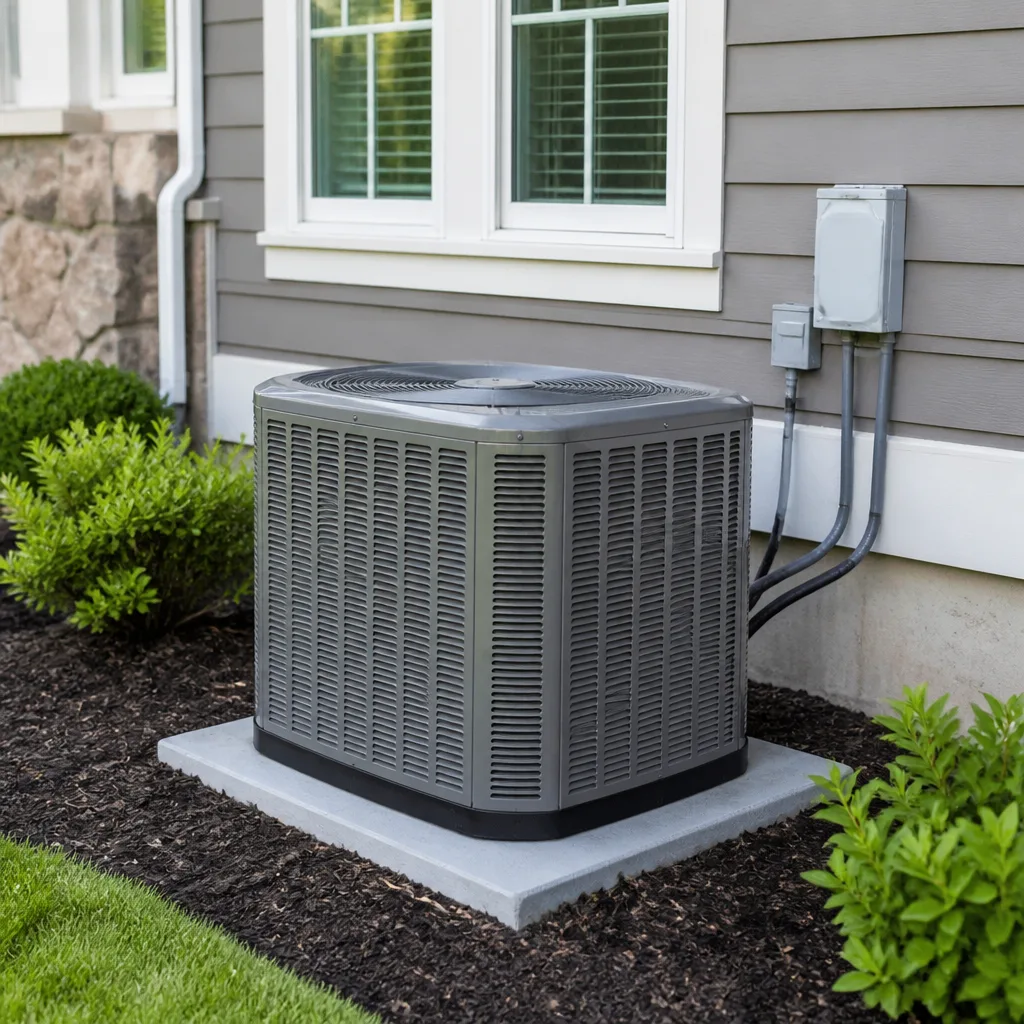 Carrier
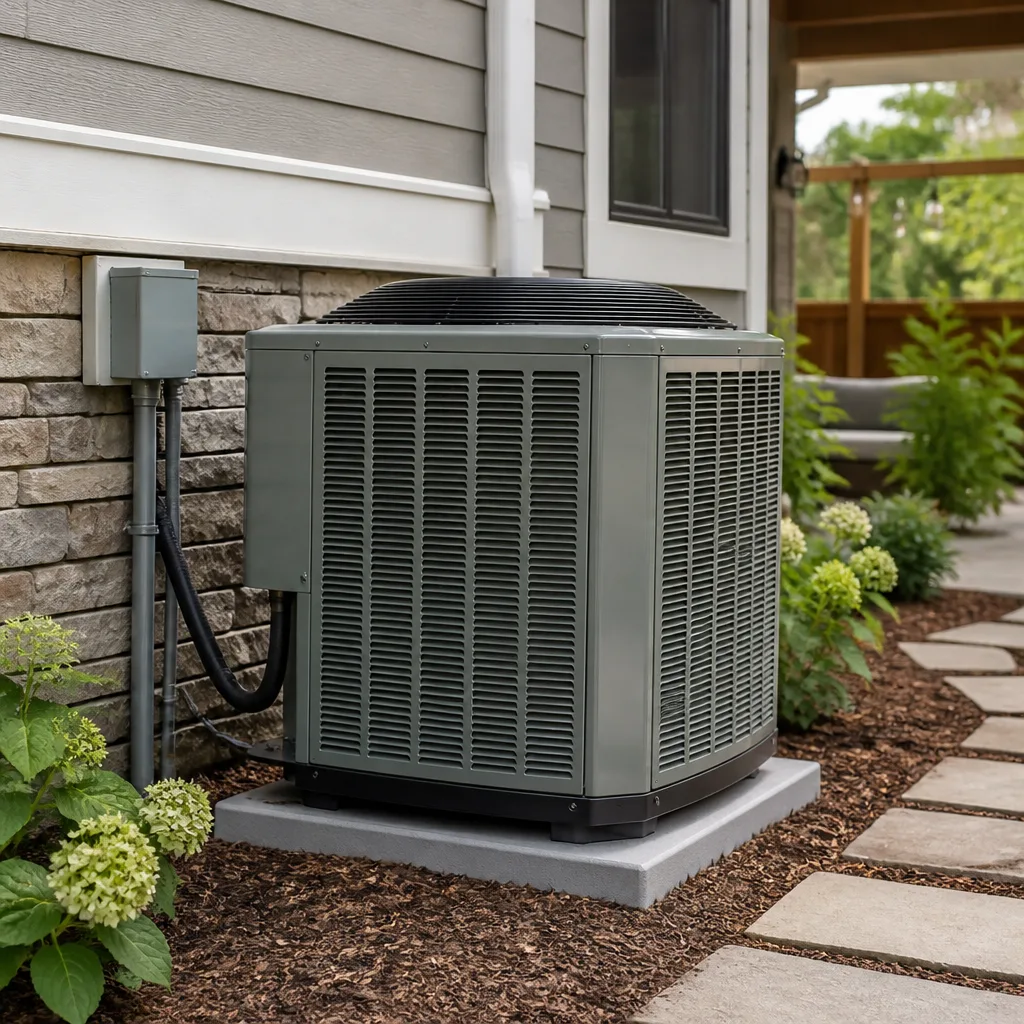 Trane
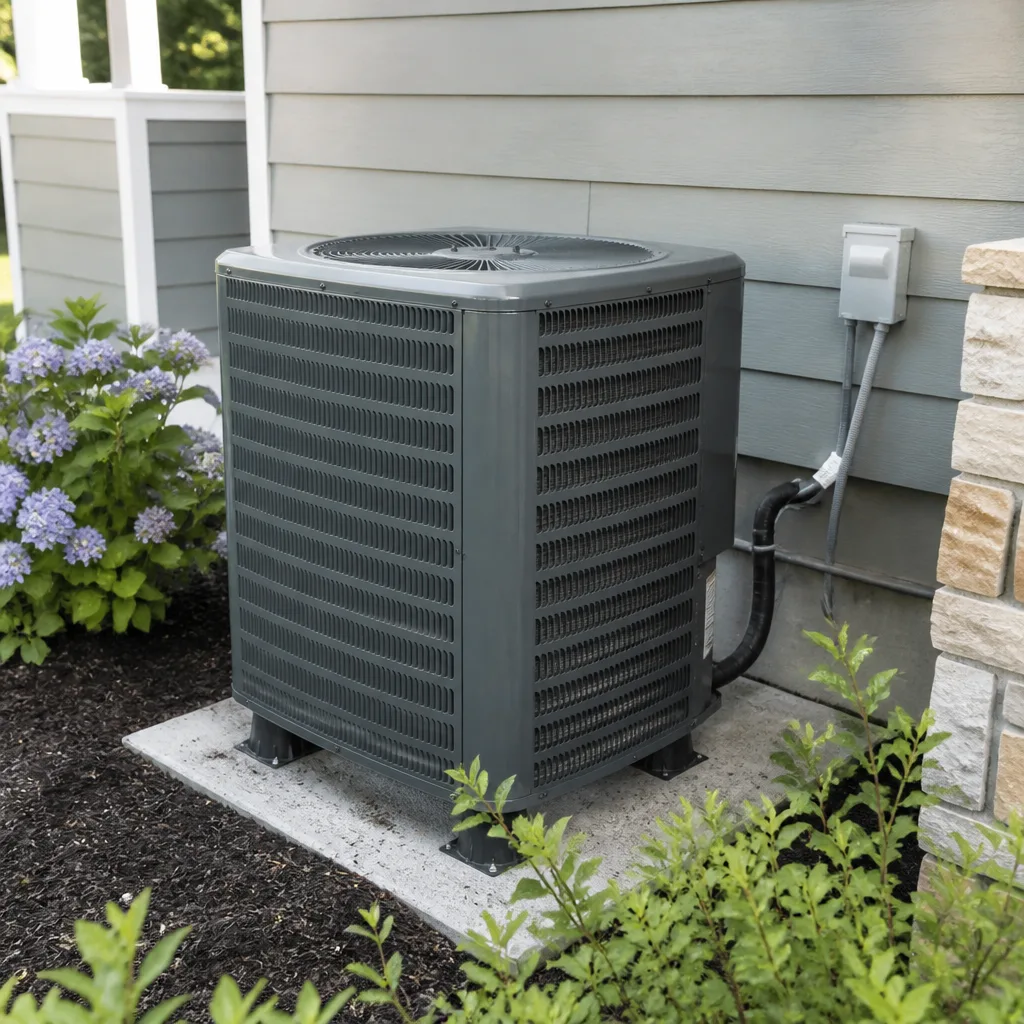 Goodman
Seasonal tune-up and full diagnostic on your Carrier, Trane, or Goodman system - readings shown to you before any repair is proposed
Diagnosis first, numbers second - you approve the repair price before a single part goes in.
Get your free estimateAC Repair & Installation Maintenance Checklist for Whitney Homeowners
Here’s a number that changes how you should think about your air conditioner: a cooling system in Whitney runs about 2,400 hours a year. In a northern climate, the same equipment logs closer to 800. That means the “annual tune-up” advice you read in national home magazines is built for a homeowner running their unit a third as hard as you do. By the time a Whitney system is five years old, it has already worked the equivalent of fifteen years in Ohio. This guide lays out a runtime-based maintenance schedule for the desert, the five components that fail first under sustained 110°F heat, and how to check a new installation at the 30-day mark while the details still matter.
Quick Answer
A Whitney AC needs service every 1,200 to 1,500 runtime hours, which works out to a real tune-up twice a year – once in early spring before cooling season and once in mid-summer when the unit has been stressed for two months. Generic annual maintenance is not enough here. The parts that fail first in Whitney are the capacitor, the contactor, the condenser fan motor, the refrigerant line insulation, and the drain line, not the filter everyone talks about.
Styles & brands we work with
- AC repair
- Furnace & heating
- Heat pumps
- Ductless mini splits
- Carrier
- Trane
- Goodman
Table of Contents
- Why Runtime Hours Beat the Calendar in Whitney
- The Five Components That Fail First in Desert Heat
- Inspecting Refrigerant Line Insulation for UV Damage
- The Spring and Fall Checklists
- What to Check at 30 Days After a New Installation
- Warranty Clock vs. Equipment Life: The Real Difference
- Common Mistakes to Avoid
- When to Call a Professional
Why Runtime Hours Beat the Calendar in Whitney
Most maintenance schedules are written in months. “Service in spring.” “Check in fall.” That works when the machine rests for eight months out of the year. It does not work in Whitney, where a well-sized system may run from April through October and often kicks on in March and November too. The calendar says twelve months have passed. The compressor has already run the equivalent of three years.
Runtime hours are the honest measure. Every AC unit has a compressor with a design life expressed in operating hours, not years – typically somewhere between 12,000 and 15,000 hours for residential equipment. At 2,400 hours a year in Whitney, that life spans five to six cooling seasons. Stretch a unit past its engineered hours with poor service and it will fail at four. Keep up with runtime-based maintenance and you might see seven.
How do you know your runtime hours? Your thermostat or a smart thermostat with runtime logging will tell you. If you do not have that, use a rough rule of thumb: for every day the high temperature exceeds 95°F, assume eight to ten hours of operation. In Whitney, that is most of the summer.
Here is the schedule we recommend to Whitney homeowners, based on runtime:
- Every 1,200 to 1,500 hours: Full service visit – coil cleaning, capacitor and contactor test, refrigerant pressure check, drain flush.
- Every 400 to 500 hours: Filter change or cleaning. In a dusty Whitney summer, this can mean every 30 to 45 days.
- Every 3,000 hours: Condenser coil deep clean, blower wheel inspection, ductwork static pressure check.
- Every 5,000 hours: Full system evaluation with a compressor amp draw test and an honest repair-versus-replace conversation.
Notice that the intervals are tied to a machine that is working, not to a month on a wall calendar. That distinction matters most in a place like Whitney, where the cooling load is heavy and relentless. For a deeper look at how we approach tune-ups and service in this city, see our AC repair and installation in Whitney page.
The Five Components That Fail First in Desert Heat
National maintenance checklists always start with the air filter, and that is fine – but it is not where most Whitney breakdowns begin. In our experience running service calls across the Las Vegas valley, these five parts fail first when a unit is pushed hard for months on end.
- Run capacitor. The capacitor gives the compressor and fan motor their starting jolt. Heat is its enemy. At 110°F ambient, capacitors swell and lose capacitance. A weak capacitor makes the compressor work harder, draw more amps, and eventually trip the breaker. A $30 part left alone can take a $2,000 compressor with it.
- Contactor. The contactor is the switch that sends power to the compressor. Under heavy cycling, the contact points pit and burn. When they stick closed, the unit keeps running past the thermostat setpoint. When they open poorly, the compressor chatters. Neither is good.
- Condenser fan motor. The outdoor fan moves heat off the coil. In Whitney, that fan runs nearly nonstop through summer, and the bearings dry out faster than in cooler climates. A slowing fan means a hotter coil, higher head pressure, and a compressor under strain.
- Refrigerant line insulation. Covered under its own heading below, but it belongs on the list. Sun bakes the insulation on the lineset running along an exterior wall. Cracked insulation means heat gain, lost efficiency, and a system working harder than it should.
- Condensate drain line. Cooling produces water, and in a dry Whitney summer that water plus dust creates a sludge that clogs the drain. A clogged drain trips the float switch and shuts the system down – often in the middle of the hottest week of the year.
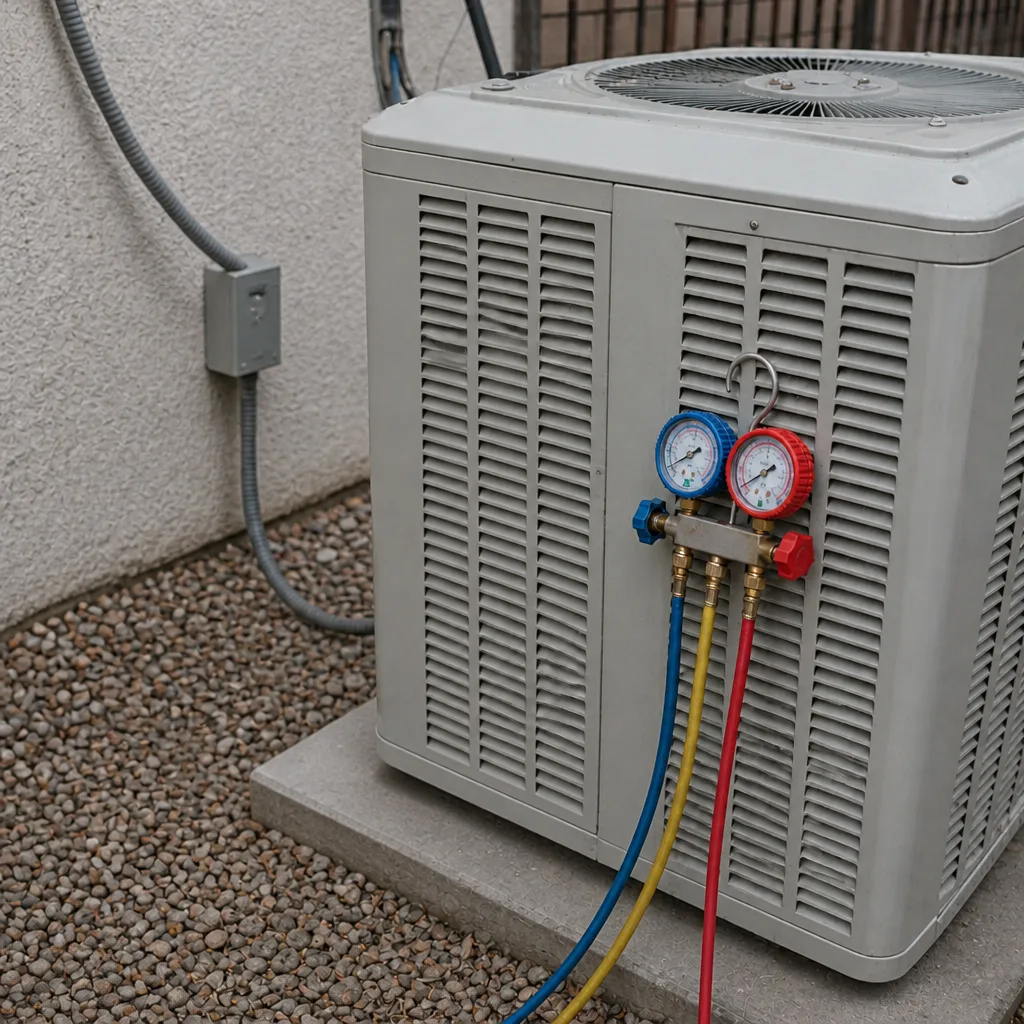
A tune-up that only swaps a filter and sprays the coil misses all five. The right service visit tests each of these with a meter in hand. That is the difference between a visit that resets a checklist and one that genuinely protects your equipment.
Inspecting Refrigerant Line Insulation for UV Damage
This is the check almost no national maintenance article mentions, and it may be the most Whitney-specific failure mode on your whole system. The refrigerant lines that carry cold gas between the outdoor condenser and the indoor coil are wrapped in foam insulation. On a northern install, those lines run through a basement ceiling and never see daylight. In Whitney, they often run along an exterior stucco wall in full afternoon sun.
Nevada’s sun is unforgiving. The UV exposure breaks down the outer skin of that insulation, and once it cracks, the sun hits the foam directly. The foam turns brittle, chalks, and falls away in strips. What’s left is bare copper carrying 40°F refrigerant through 110°F air. That is a heat exchange you do not want – the system loses capacity before the refrigerant even reaches your attic.
How to check yours without climbing anything dangerous:
- Look at the lineset where it runs along any sun-facing wall. You’re looking for cracked, chalky, or missing foam.
- Run your hand along the covered line on a hot afternoon. If it feels warm to the touch, the insulation has failed.
- Check for sun-bleached zip ties and any section of copper showing through.
The fix is inexpensive – new UV-rated insulation and a sun-resistant wrap. Leaving it alone for years adds up to a compressor working harder than it was designed to. This is one of the reasons we ask Whitney homeowners to walk the outside unit with us during a service call. A technician who knows the local sun pattern will point out the problem on the first visit.
The Spring and Fall Checklists
In Whitney, spring and fall are the two windows when the system is either ramping up or winding down. They are also the best times to get ahead of the harsh months. Here are the two lists we walk homeowners through.
Early Spring (before the first 100°F day)
- Replace or clean the air filter – and note the date so you know when the next one is due.
- Clear the condenser of debris – cottonwood fluff, dust, leaves, and yard clippings all collect around the outdoor unit.
- Check the lineset insulation on all sun-facing runs for cracking (see above).
- Test the capacitor and contactor with a meter – this is a technician job, and it is worth the visit.
- Flush the condensate drain and confirm the float switch works.
- Check refrigerant pressures against the manufacturer’s spec.
- Trim any vegetation within two feet of the condenser.
Mid-Fall (after cooling season winds down)
- Deep clean the condenser coil – the summer has loaded it with dust.
- Inspect the blower wheel and indoor coil for dust buildup.
- Check the heat pump or furnace side if you run a dual system – Whitney winters get cold enough to need it.
- Test the thermostat’s cooling and heating changeover.
- Do a runtime-hours review and plan next year’s service intervals.
The fall visit is where a lot of Whitney homeowners miss out, because the system is not “needed” until the following spring. But a unit that sat all winter with a dirty coil and cracked insulation is entering the next cooling season in worse shape than it left the last one. The work you do in October saves the work you would pay for in July.
What to Check at 30 Days After a New Installation
A new AC installation in Whitney is a significant investment, and the first 30 days are when small issues surface. If the installing contractor’s truck is still in your neighborhood at that point, catching problems early is easy. If the truck has moved on and you’re dealing with a warranty claim, it’s harder.
Here is the 30-day walkthrough we recommend for any new system, regardless of brand – whether it is a Carrier, a Daikin, or a Bryant:
- Check the condensate path. Confirm the drain is flowing properly and no water is pooling around the indoor unit or in the drain pan.
- Measure the supply-air temperature at a few registers. The difference between return and supply should be in the range the installer documented – usually 15 to 22 degrees.
- Listen for the outdoor fan and compressor. Any new rattle, squeal, or clicking is worth a phone call.
- Look at the lineset insulation again. Even new insulation can crack in the first month if it was not UV-rated for Las Vegas valley sun.
- Test the thermostat through a full cycle. Run cooling, switch to fan-only, then to heating if you have it. Confirm every mode works.
- Review the paperwork. Confirm your warranty registration was filed with the manufacturer, that you have the model and serial numbers, and that the installation documentation matches what was quoted.
The 30-day visit is also when we suggest homeowners verify the load calculation – the Manual J report – was done. A system that was oversized for your Whitney home will short-cycle and struggle to remove humidity. A system that was undersized will run constantly and never quite catch up in July. Both are avoidable if you confirm the paperwork in the first month.
Warranty Clock vs. Equipment Life: The Real Difference
Most homeowners think of maintenance as one thing. It is really two. One kind of visit keeps your manufacturer warranty intact. The other extends the life of the equipment. They overlap, but they are not the same, and in Whitney the distinction is worth understanding.
Keeping the warranty intact means doing what the manufacturer requires – usually an annual professional inspection with documented filter changes, a checked refrigerant charge, and a clean coil. Miss a year, and a manufacturer can deny a compressor claim. Many Whitney systems carry ten-year parts warranties on the compressor, which is a meaningful piece of money. The paperwork matters.
Extending equipment life means addressing the parts on the “five components” list above before they fail, checking the UV-rated insulation, and keeping the condenser coil genuinely clean, not rinsed. A warranty-reset visit that only covers what the manufacturer requires may still leave a brittle capacitor in place, or a drain line one summer away from a clog.
The visit we recommend to Whitney homeowners does both – the manufacturer-required documentation for warranty, plus the parts and wear items that actually drive equipment life. It is the same trip. You should not have to pay twice. If a company quotes you a “warranty inspection” and a separate “full tune-up,” ask which parts each covers. The answer tells you whether the visit is doing anything for the machine.
This is where brand training matters too. A technician trained on nine major brands – Carrier, Trane, Lennox, Goodman, Rheem, York, Daikin, Bryant, and American Standard – can look up the manufacturer’s specific maintenance requirements, torque specs, and part numbers on your unit. A technician who only works on one brand will be guessing on yours. Our team is trained across all nine, and that training means fewer callbacks and less time chasing the wrong diagnosis.
Common Mistakes to Avoid
- Treating the annual tune-up as all you need. In Whitney, a single annual visit misses an entire half-year of runtime. Two visits a year is closer to the real need.
- Skipping the condenser coil clean. A rinse is not a clean. Dust in the Las Vegas valley binds to the fins and needs a proper coil cleaner, not a garden hose.
- Ignoring the lineset insulation. It’s cosmetic-looking damage that is actually a heat gain problem, and it’s an easy fix if you catch it.
- Waiting for a breakdown in July. The busiest two weeks of any HVAC company in Whitney are the two weeks after the first 110°F stretch. Book service in spring, not during a heat wave.
- Letting a “warranty-only” tune-up pass for real maintenance. Ask what parts the visit actually tests (capacitor, contactor, fan motor, drain, insulation). The answer separates a real service call from a signature on a form.
- Skipping the 30-day new install check. Small installation issues become warranty arguments once the truck leaves. Catch them early.
- Changing the filter only when you remember. In Whitney, filters load up with dust faster than the label suggests. Note the date on the filter next to the thermostat.
When to Call a Professional
Some maintenance is worth doing yourself: filter changes, clearing debris from around the condenser, and checking the lineset insulation by eye. But the moment a job moves to electricity, refrigerant, or a compressor under load, it belongs to a trained technician. Capacitors hold a dangerous charge even after power is cut. Refrigerant handling requires licensing and equipment, and a bad repair there can void your warranty and cost more than the original tune-up.
Call us when the system trips a breaker, when the outdoor fan stops spinning, when the indoor unit ices over, when you hear a rattle or clicking you cannot place, or when the unit runs but never reaches the thermostat setpoint. In Whitney, the combination of an aging system and a hard summer makes these problems more common than the national average. Fireside Heating & Air Co. Whitney offers free estimates in Whitney – call (866) 329-8069. A live person answers every call, day or night. Most repairs are handled in a single visit, and if we finish and something is not right, our 90-Day Done Right Promise means we come back and make it right. For heat pump and mini-split systems that need the same care, our heat pump and mini split service in Whitney covers the specific maintenance those systems require.
See the difference
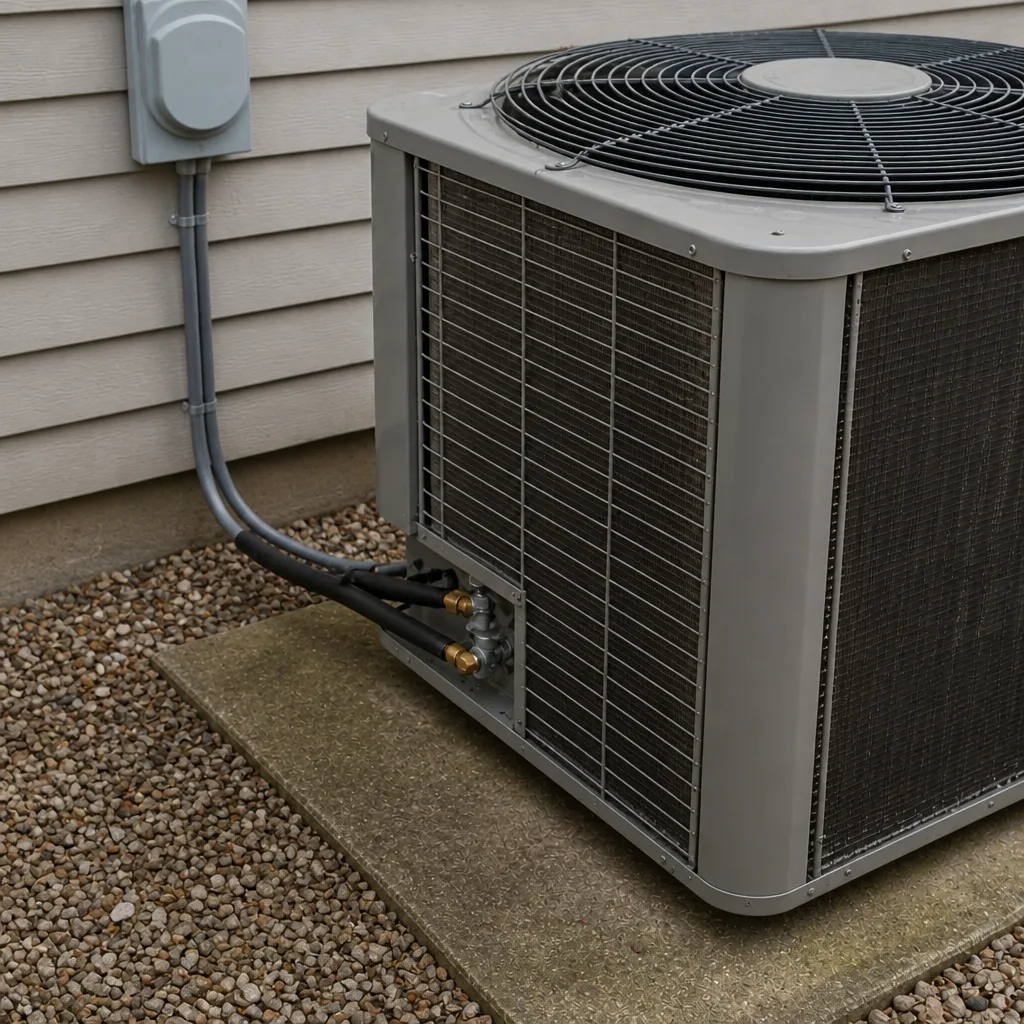
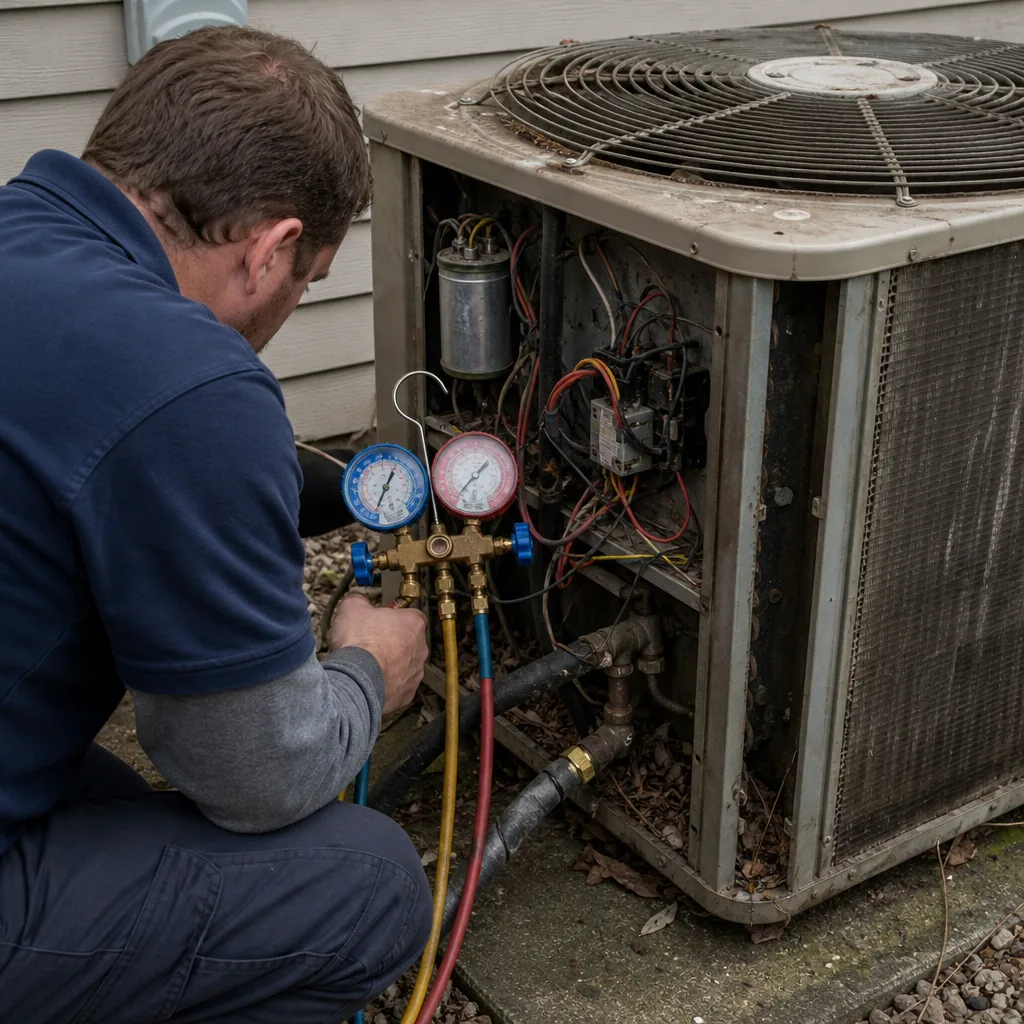 Before
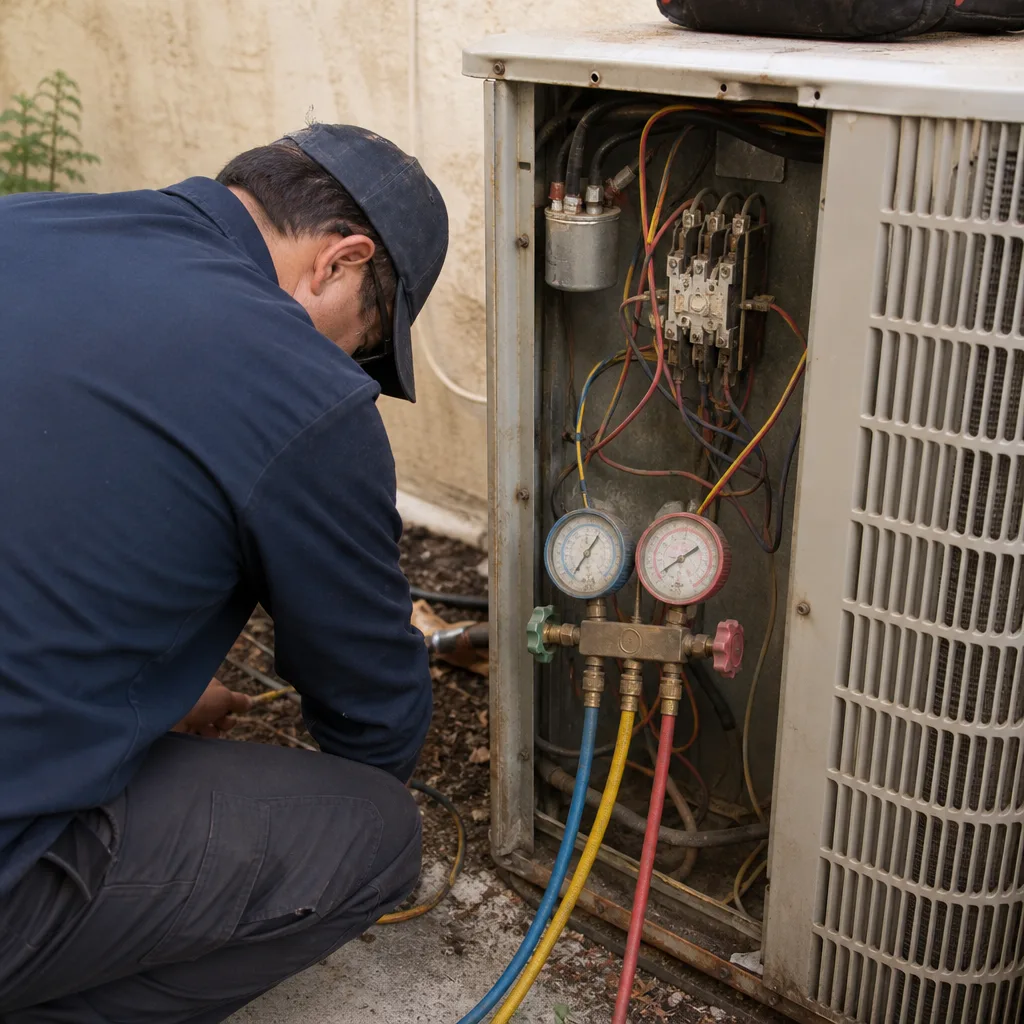
 After
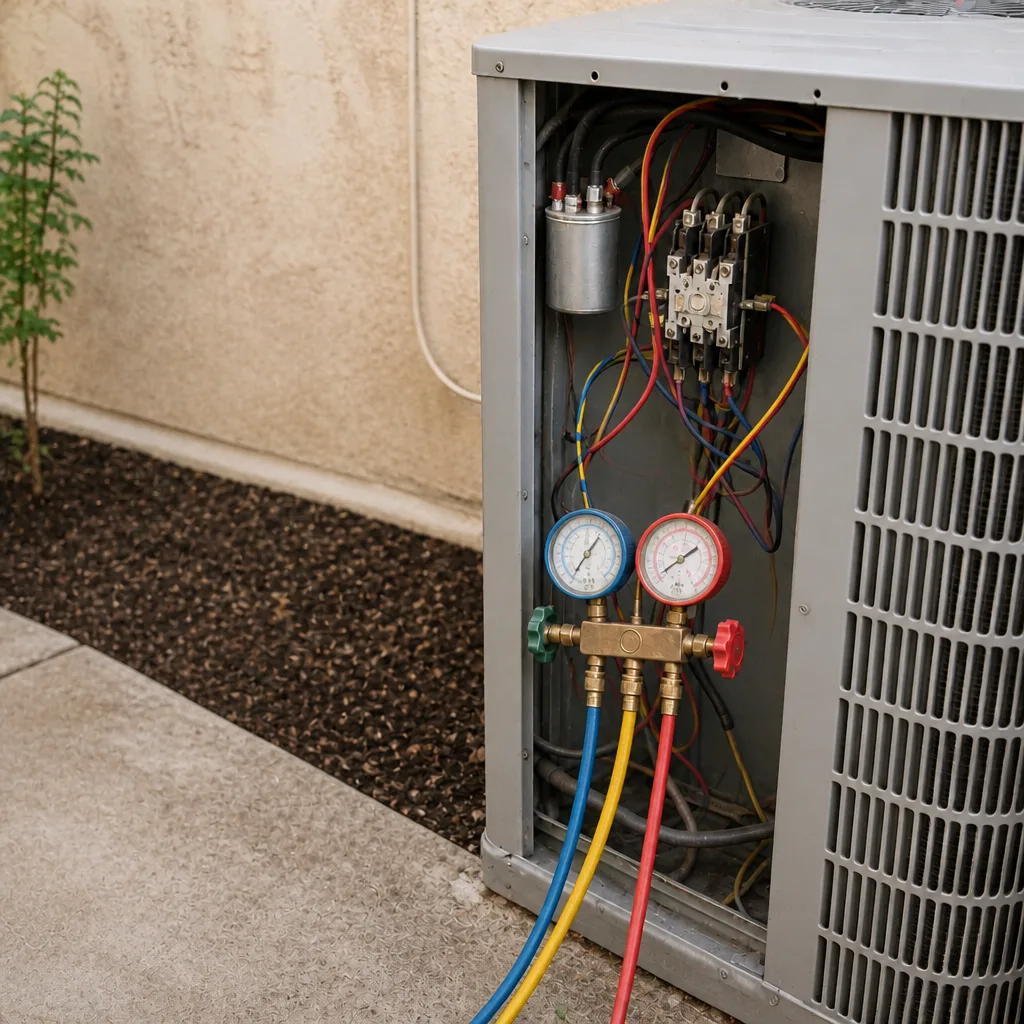
 Before
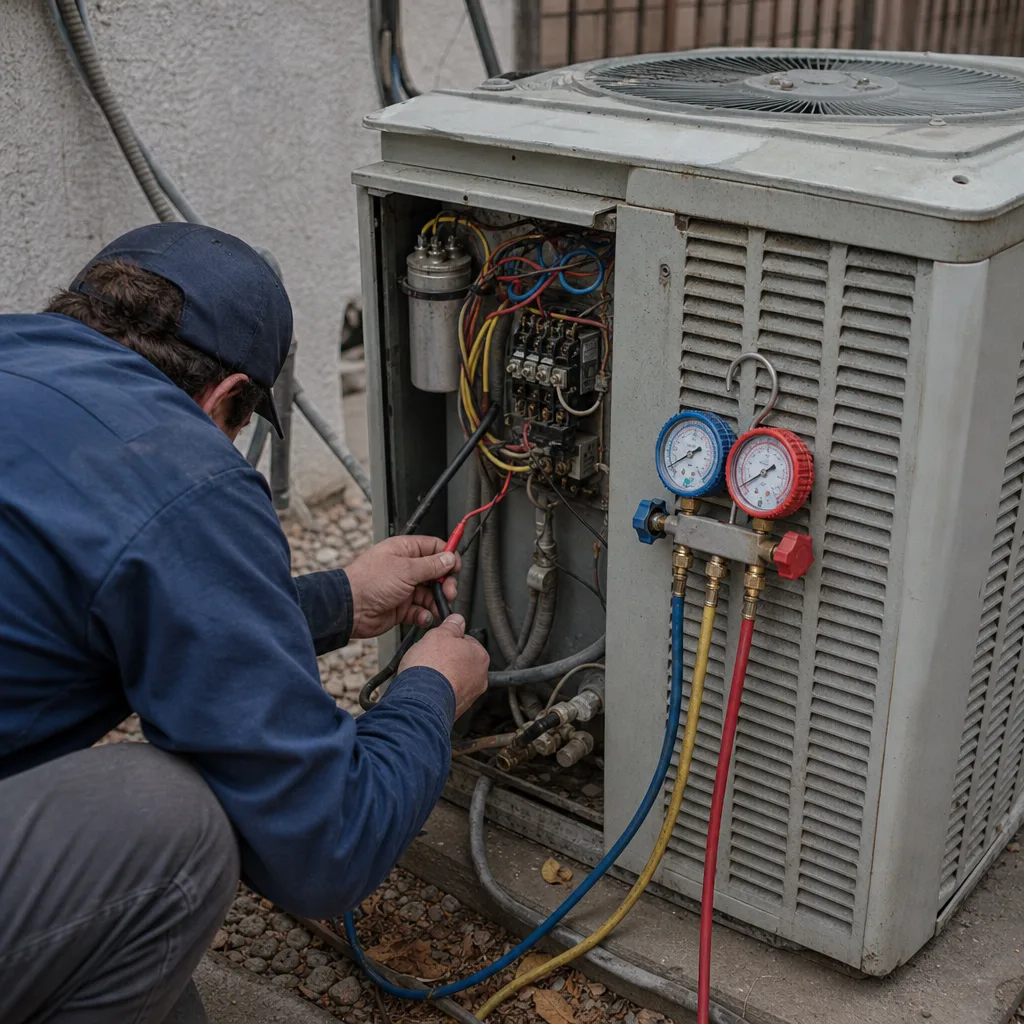
 After
 Before
 After
Frequently Asked Questions
Twice a year, once in early spring before cooling season and once in mid-fall after it ends. A single annual visit assumes a cooler climate and a shorter cooling season. Whitney systems run about 2,400 hours a year, so the machine needs twice the attention of a national-average unit. Call (866) 329-8069 to schedule a tune-up before the first heat wave.
A failed run capacitor is the most common single component failure we see in Whitney. The capacitors swell and lose capacitance under sustained 110°F heat, and when they fail, the compressor draws too many amps and the unit shuts down. The second most common is a clogged condensate drain line. Both are inexpensive to prevent with a proper visit.
Yes, if the visit covers the right parts. A visit that only changes the filter and resets a warranty clock does not extend equipment life. A visit that tests the capacitor, contactor, and fan motor, cleans the coil properly, and inspects the lineset insulation does. The five components we listed above are the ones that drive real equipment lifespan in Whitney.
Our seasonal tune-up is $89 flat. A full evaluation with coil cleaning and parts testing runs higher, and we quote the price upfront before any work starts. Right now, Fireside is also offering $50 off any repair over $250, a free second opinion on any written estimate, and a permanent 5% discount for seniors and veterans. Call (866) 329-8069 for an exact quote.
We can, and we will give you a straight answer. As a general rule of thumb, if the system is past about 12 years old, has had two or more major repairs in the last three years, or is facing a repair that costs more than half the price of a new system, replacement is usually the better economics. But those are guidelines, not rules – the right answer depends on your specific unit, its runtime hours, and your plans for the home. For a fuller discussion, see our Whitney AC repair and installation page.
Yes. Our technicians are trained on nine major brands: Carrier, Trane, Lennox, Goodman, Rheem, York, Daikin, Bryant, and American Standard. If you have a Daikin ductless system or a Bryant split system, we can handle the maintenance. Our technicians have up to 8 years of experience, and every job is backed by our written 90-Day Done Right Promise.
The Bottom Line
Whitney’s cooling load is roughly three times the national average, so the standard “annual tune-up” advice undersells what your system actually needs. Service it every 1,200 to 1,500 runtime hours – meaning twice a year in this climate. Focus on the five components that fail first under desert heat: capacitor, contactor, condenser fan motor, refrigerant line insulation, and drain line. Do the 30-day walkthrough after any new installation. And understand the difference between a visit that resets a warranty and a visit that extends equipment life. Your system will last longer, cool better, and break down less often. That’s the whole point.
When you’re ready to schedule, call Fireside Heating & Air Co. Whitney at (866) 329-8069 for a free estimate. A live person answers, every hour of every day. We’ve been doing this work for over 42 years, and we stand behind it – in writing, for 90 days, no arguing. If you’re also thinking about your heating side before winter, our heating and furnace service in Whitney covers the same care for the colder months. Start with the Fireside Heating & Air Co. Whitney home page if you’d like to see everything we handle.
Written by the team at Fireside Heating & Air Co. Whitney.