
Last updated November 18, 2026
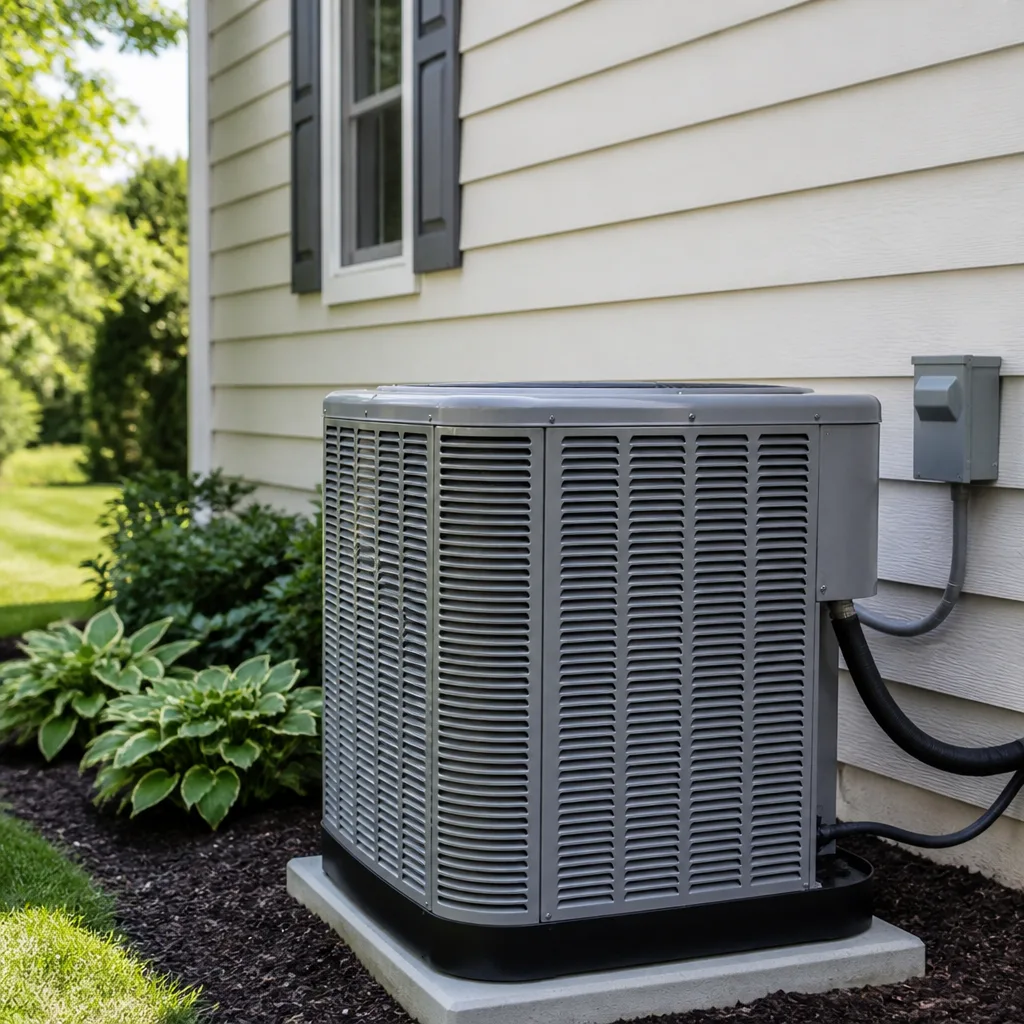 AC repair
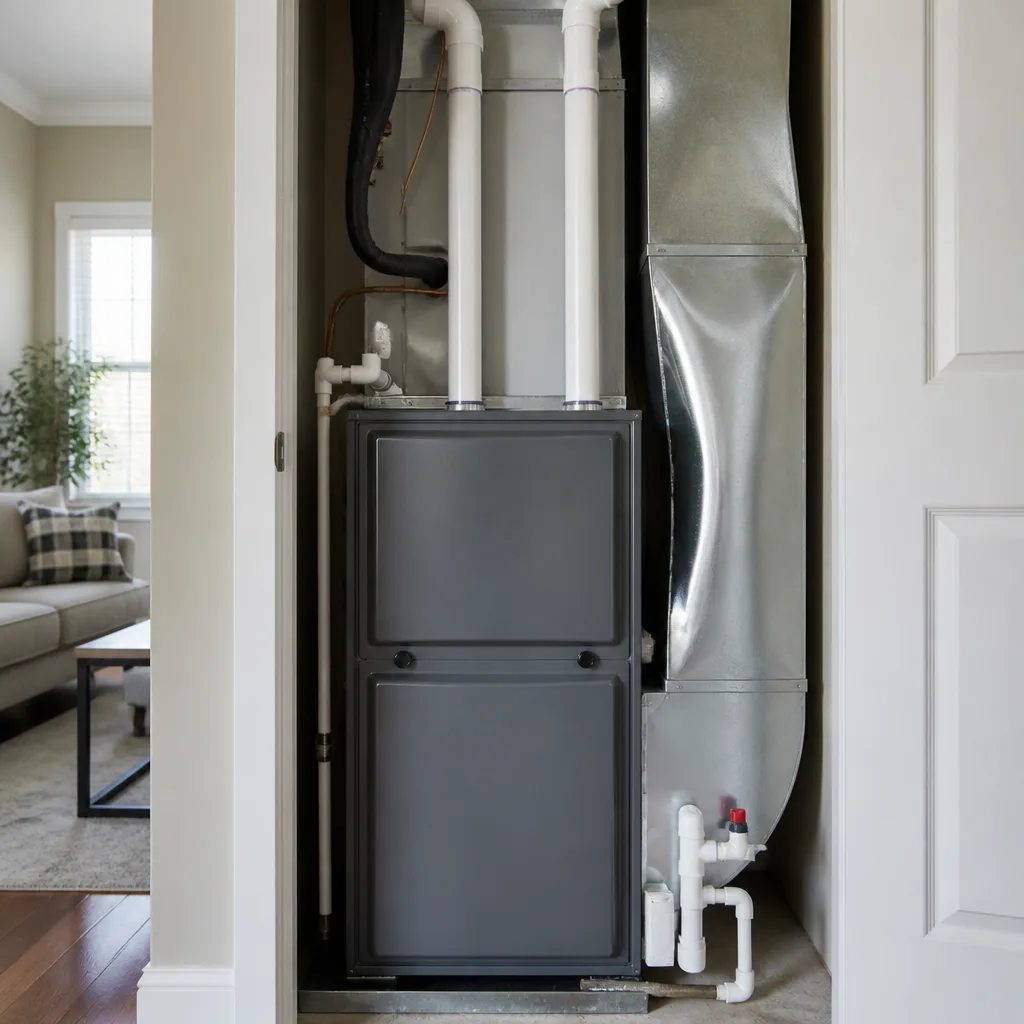 Furnace & heating
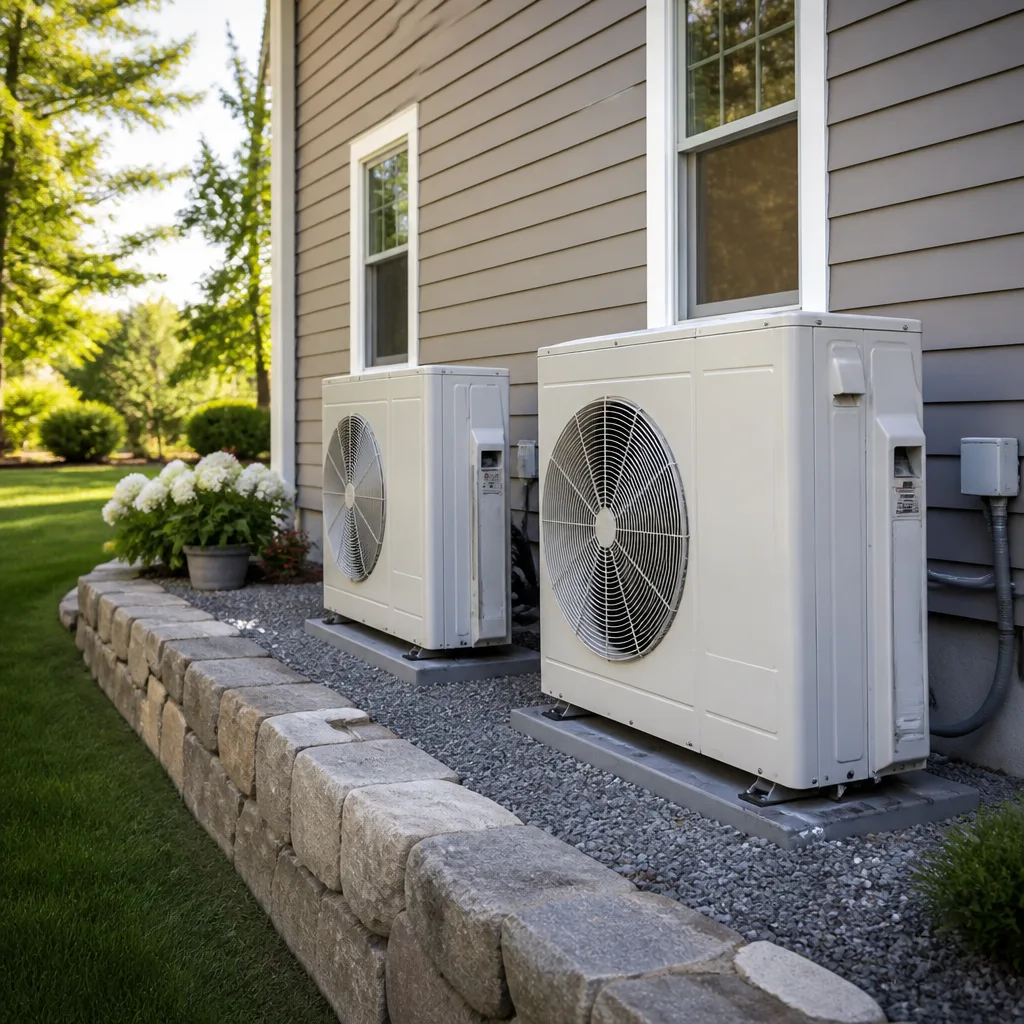 Heat pumps
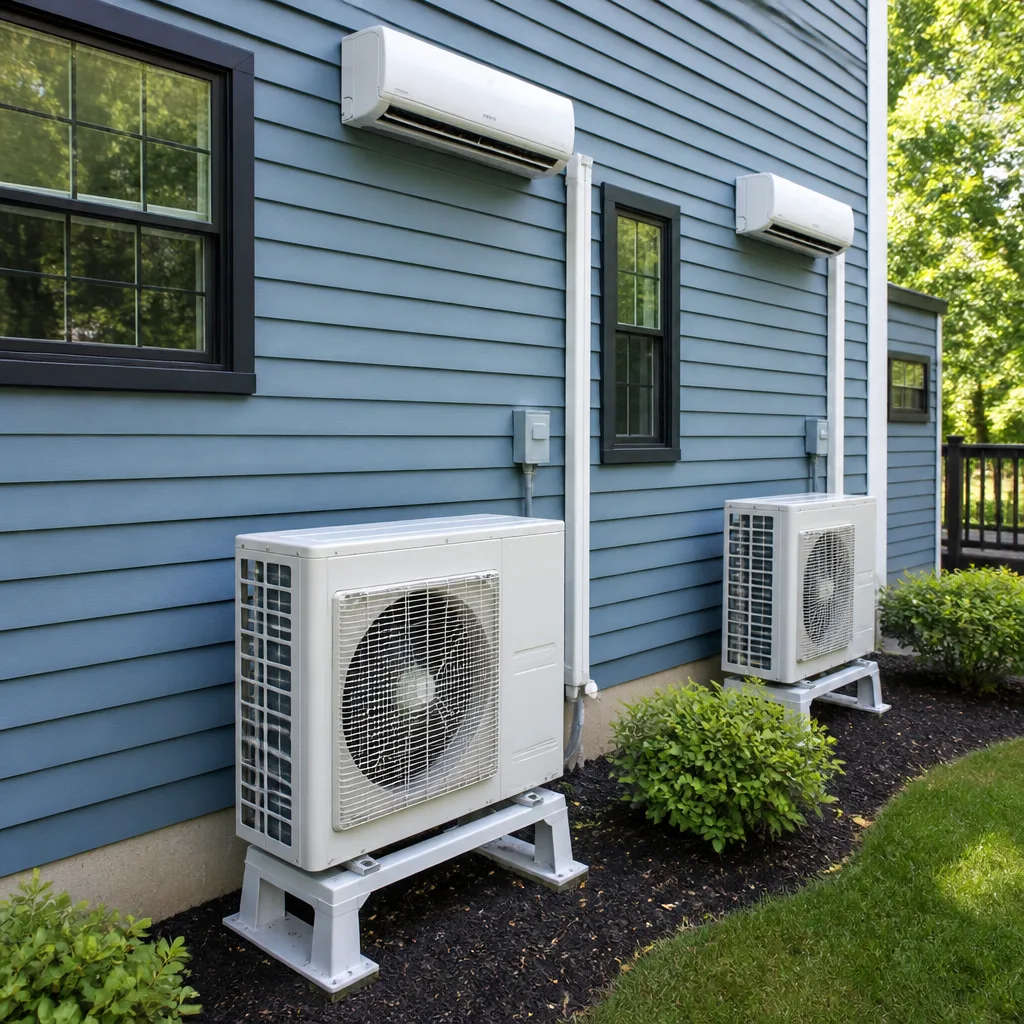 Ductless mini splits
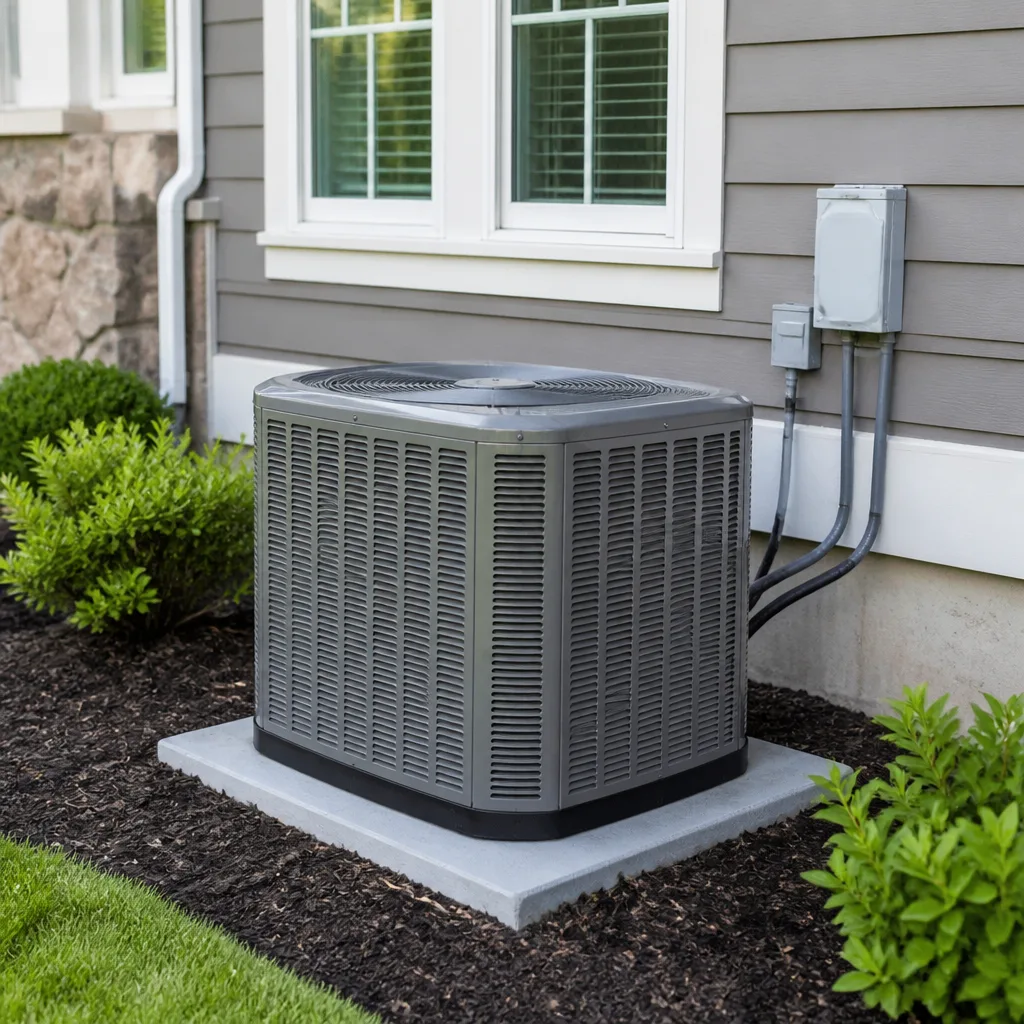 Carrier
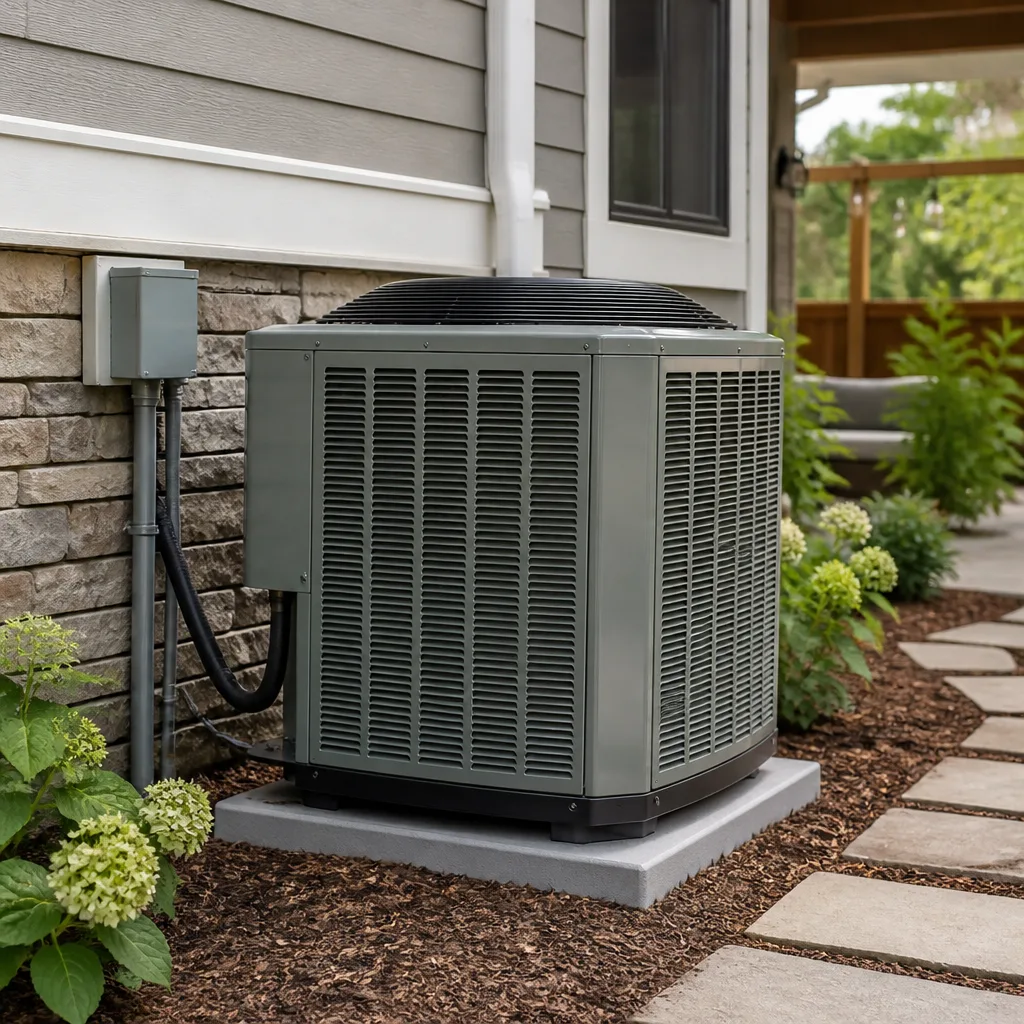 Trane
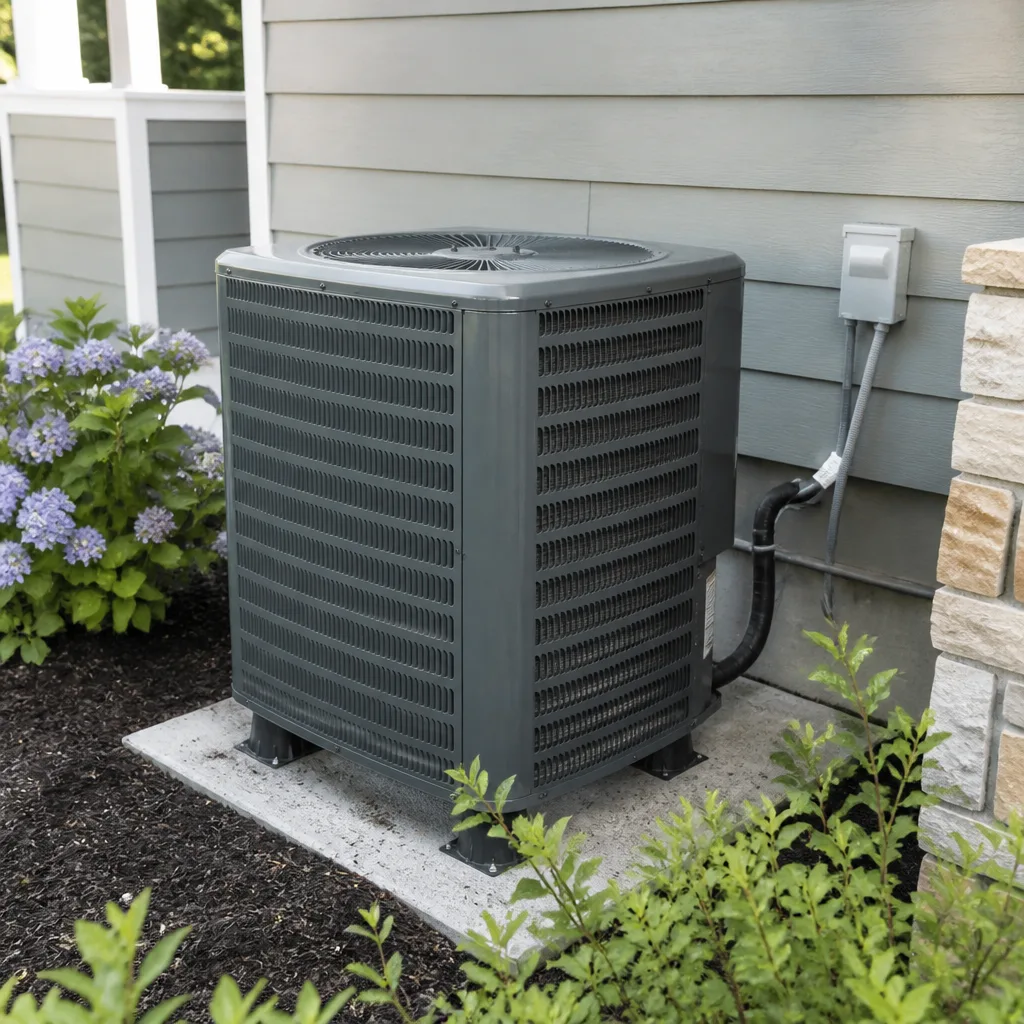 Goodman
Seasonal tune-up and full diagnostic on your Carrier, Trane, or Goodman system - readings shown to you before any repair is proposed
Diagnosis first, numbers second - you approve the repair price before a single part goes in.
Get your free estimateEmergency & Commercial HVAC Troubleshooting: Common Problems and How to Fix Them
Resetting a tripped disconnect on a commercial rooftop unit without checking why it tripped is one of the most expensive free moves a facilities manager can make. We’ve watched a $40 service call become a $4,200 compressor replacement because someone flipped a breaker back on and walked away. Commercial equipment doesn’t fail the way a home furnace does. It fails in sequences, and the first failure is rarely the one that shut the system down. This guide walks through the five failures we see most often in Whitney commercial buildings, the first safe diagnostic step for each, what to document before a technician arrives, and which problems should never be touched without a license. You’ll learn how to troubleshoot without creating liability.
Styles & brands we work with
- AC repair
- Furnace & heating
- Heat pumps
- Ductless mini splits
- Carrier
- Trane
- Goodman
Quick Answer
Most commercial HVAC emergencies trace back to one of five causes: a clogged condensate drain tripping a float switch, a dirty filter or coil driving a high-pressure lockout, a failed capacitor or contactor, a control or thermostat fault, or a refrigerant or gas-side problem. The first three you can safely check and document; the last two require a licensed technician, by law and by common sense. The goal of troubleshooting is not to fix the system yourself. It’s to gather the right information and know which call to make.
Table of Contents
- Why Commercial Troubleshooting Isn’t Scaled-Up Residential Work
- The Five Most Common Commercial HVAC Failures
- How Commercial Systems Fail in Sequences
- Controls and Thermostats: Checks Before You Call
- What to Document Before the Technician Arrives
- Failures That Always Require a Licensed Technician
- What’s Different About Commercial HVAC in Whitney
- Common Mistakes to Avoid
- When to Call a Professional
- Frequently Asked Questions
Why Commercial Troubleshooting Isn’t Scaled-Up Residential Work
A residential split system has one thermostat, one air handler, and one condensing unit. A small commercial package unit might control three zones, share a common condenser loop with four others, and hand off to a building automation system that logs every fault. When something goes wrong, the fault you see on the thermostat is often two steps removed from the fault that caused it.
Commercial equipment also carries stakes a house doesn’t. A failed walk-in cooler at a restaurant means spoiled inventory by morning. A rooftop unit down in a medical office in July means rescheduling patients. And the service contract itself matters. Many commercial agreements require the customer to notify the contractor before attempting repairs. Reset a lockout out of order, and you may have technically voided a coverage clause that would have paid for the repair.
We’ve spent years working commercial calls across Whitney, and the pattern is consistent: buildings that get regular professional maintenance have fewer emergencies, and when they do have one, the technician arrives with a paper trail that halves the diagnostic time. That paper trail starts with the person who noticed the problem. If you’re the one standing in front of the unit, you’re the first link in the chain. Here’s how to be a good one. For the residential side of the same work, our AC repair and installation in Whitney page covers what homeowners can expect.
The Five Most Common Commercial HVAC Failures
These are the calls that fill our schedule, in rough order of frequency. For each, we’ve listed the first step you can safely take and the point where you should stop and call.
1. Clogged condensate drain and float switch lockout
First safe step: Check the drain pan for standing water and look at the float switch. If water is present, the float has likely tripped the safety circuit and shut the unit down on purpose. That’s the system working correctly. Do not bypass the float switch to get cooling back. Clear the visible drain line if you can reach it safely, then call for service.
2. Dirty filter or fouled condenser coil causing high-pressure lockout
First safe step: Pull the filter and hold it to a light. If you can’t see through it, that’s your answer. Replace it, then check whether the condenser coil is matted with dust, lint, or cottonwood. A dirty coil raises head pressure until the unit locks out on a high-pressure switch. Clean what you can reach with a garden hose; leave coil cleaning chemical work to a technician.
3. Failed run capacitor or pitted contactor
First safe step: With power off at the disconnect and verified off, look at the contactor points for obvious pitting or burning. A bulging capacitor top is a visual check only. Do not discharge or test capacitors unless you’re trained. The stored charge can injure you badly. Document what you see and call.
4. Control fault or thermostat communication failure
First safe step: Check the thermostat or building automation screen for an error code, confirm the schedule hasn’t been overridden, and look at whether the system is in occupied or unoccupied mode. Half of the “unit won’t start” calls we take are schedule errors, not equipment failures.
5. Refrigerant or gas-side problem
First safe step: None. Refrigerant handling and gas pressure work are licensed, EPA-regulated, and in the case of gas, genuinely dangerous. Note the symptom, the sounds, and any smell of gas, then call immediately. If you smell gas, evacuate and call your gas utility before calling anyone else.
How Commercial Systems Fail in Sequences
This is the part most troubleshooting guides skip, and it’s the part that costs money. Commercial failures cascade. Here’s the most common chain we see in Whitney buildings.
- Condensate drain clogs with algae, dust, and biological growth over a cooling season.
- Water backs up into the drain pan and lifts the float switch.
- Float switch opens the safety circuit and shuts the unit down on purpose.
- Unit reads as “won’t start” on the thermostat or the building automation screen.
- Someone resets the breaker or jumps the float switch to restore cooling for the afternoon.
- Water overflows the pan, soaks the ceiling tile, and sometimes reaches the control board.
By the time the technician arrives, you don’t have a clogged drain. You have a clogged drain, a water-damaged control board, and a ceiling repair job. The original fix was a drain clearing and a pan treatment. The final bill is many times that.
The same cascade happens with filters. A dirty filter starves airflow, which ices the evaporator coil, which sends liquid refrigerant back to the compressor, which shortens compressor life. Nobody calls for a dirty filter. They call for a unit that isn’t cooling. When you document the whole sequence rather than just the symptom, you help the technician see the whole chain. That’s the difference between a spot repair and a repair that lasts.
Controls and Thermostats: Checks Before You Call
Commercial control systems are where a lot of “emergencies” turn out to be settings. Run through these checks in order before you pick up the phone.
- Occupied vs. unoccupied mode. Confirm the schedule matches actual building hours. A holiday schedule left active on a Tuesday is a common culprit.
- Setpoint. Confirm the cooling or heating setpoint is where you expect it. A mis-setpoint in a building automation system applies to every zone it controls.
- Override status. Check whether someone has applied a temporary override that’s about to expire. Overrides can make a system look broken when it’s just about to revert to schedule.
- Error codes. Write down every code you see on the thermostat, BAS screen, or unit board. Don’t clear codes until you’ve recorded them. Cleared codes are lost diagnostic information.
- Communication status. On a networked system, a single failed communication board can take multiple units offline. Note which units are reporting and which aren’t.
- Power to the controls. A blown control-circuit fuse is cheap and common. It’s also a symptom. Find out what blew it before replacing it.
If you’ve run these checks and the system still won’t run, call with your notes in hand. On a Bryant, Daikin, or Rheem commercial control panel, those codes point a technician directly at the fault. Without them, the technician starts from scratch. For a closer look at the brands we work on, see our heating and furnace in Whitney page.
What to Document Before the Technician Arrives
The best thing you can do for your own bottom line is gather the right information before the technician rolls up. Here’s the list we ask every commercial customer for, and it makes a real difference in how fast the job gets done.
- The exact error codes. Photograph the screen, don’t paraphrase it.
- The sequence of events. When did you first notice the problem? Did it fail on startup, mid-cycle, or after a utility outage? Was there a storm, a power bump, or a scheduled maintenance visit close to when the problem started?
- Recent work done. Any filter changes, belt replacements, thermostat swaps, or new equipment in the last 90 days. Even the small stuff matters.
- Recent weather. A Whitney monsoon week followed by a rooftop unit failure has a rhythm to it. So does the first sustained heat of late spring.
- Equipment nameplate details. Photograph the model and serial number plate on the outdoor unit and the air handler. This gets the right parts on the truck before the technician leaves.
- What’s on the circuit. Is the failed unit on its own breaker, or shared with something else that’s also out?
- The thermostat’s current reading. Setpoint, actual temperature, and mode.
Photograph what you can. A cellphone picture of a nameplate and a control board saves a return trip on its own. And when you call us at Fireside Heating & Air Co., the person who answers the phone is a live human being, 24 hours a day, 7 days a week, including the 2 a.m. no-cooling emergency. They’ll walk you through the documentation list in real time if you need it.
Failures That Always Require a Licensed Technician
This section exists for one reason: there are HVAC jobs that will hurt you, wreck the equipment, or create liability for the building owner if touched by anyone who isn’t licensed and trained. We say this plainly because we’ve seen what happens when shortcuts are taken.
Refrigerant work
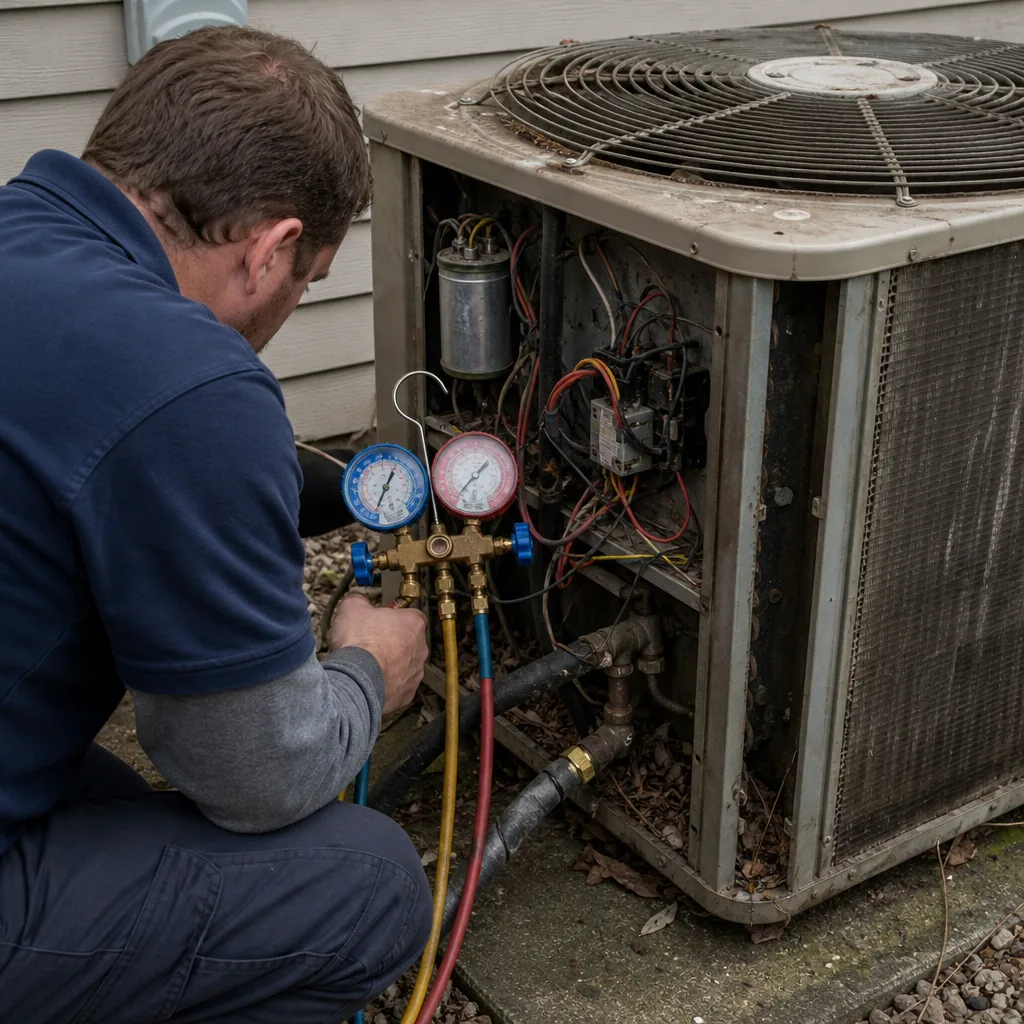
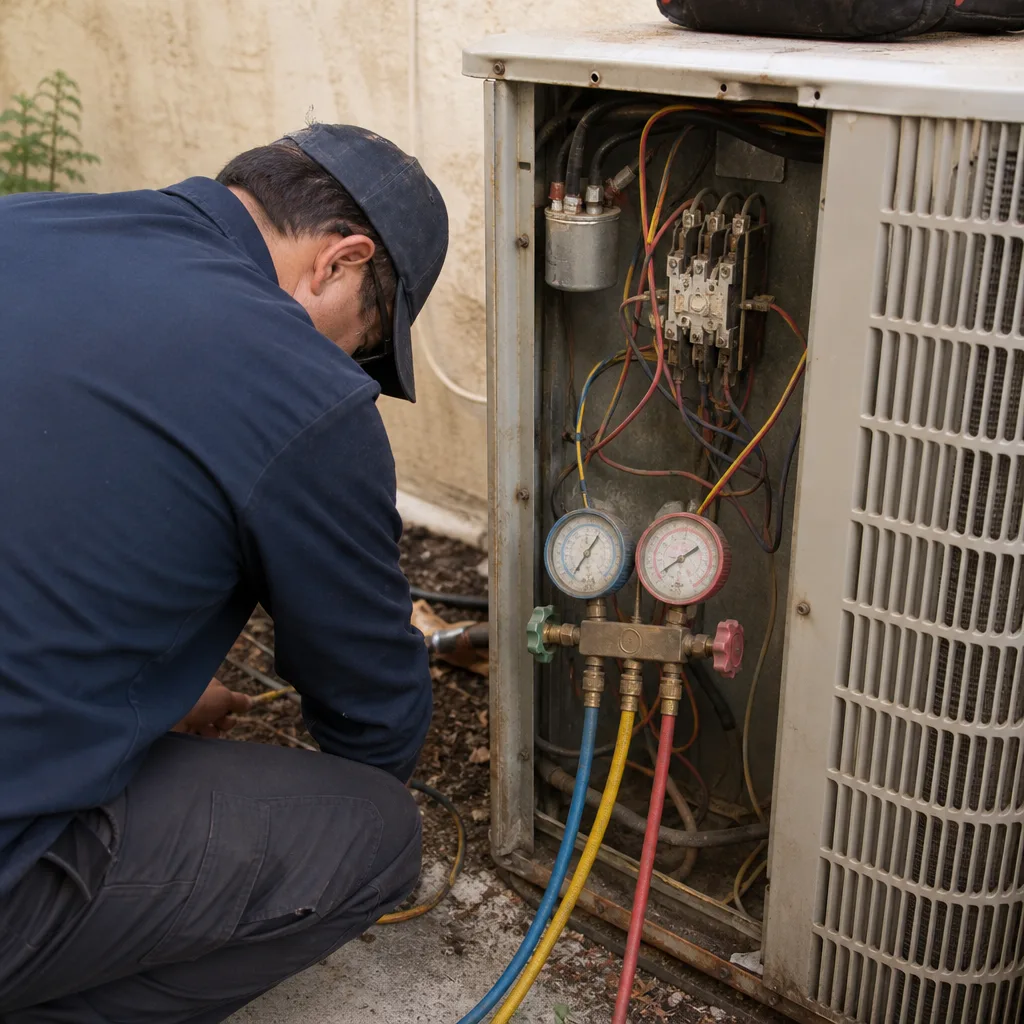
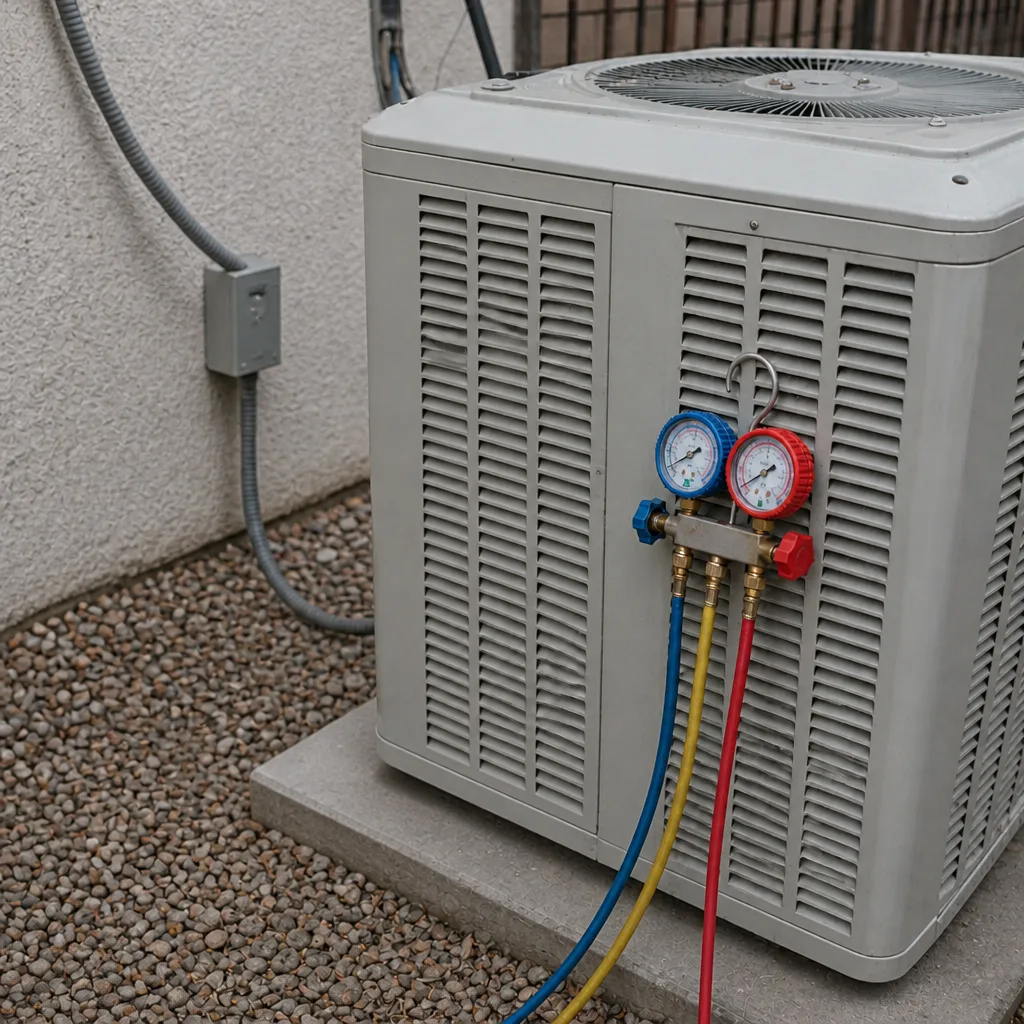
Handling refrigerant requires EPA certification under Section 608 of the Clean Air Act. Venting refrigerant to the atmosphere is illegal. Recovering, evacuating, and recharging a system requires gauges, a recovery machine, a scale, and knowledge of the specific refrigerant. “Topping off” a system without finding the leak is a waste of money and, on some refrigerants, actively harmful to the equipment. If you suspect a refrigerant leak, call a technician.
Gas pressure and heat exchanger integrity
Gas-fired equipment involves fire, carbon monoxide, and pressure settings that must be verified with a manometer. An improperly set gas pressure can produce carbon monoxide, soot, or a flame that rolls out of the combustion chamber. Cracks in a heat exchanger can leak combustion gases into the supply air. Both are life-safety issues. Do not attempt to inspect, test, or adjust either one yourself. A cracked heat exchanger discovered by a trained technician is a routine replacement. The same crack discovered after a carbon monoxide incident is a tragedy and a lawsuit.
Electrical work inside the unit
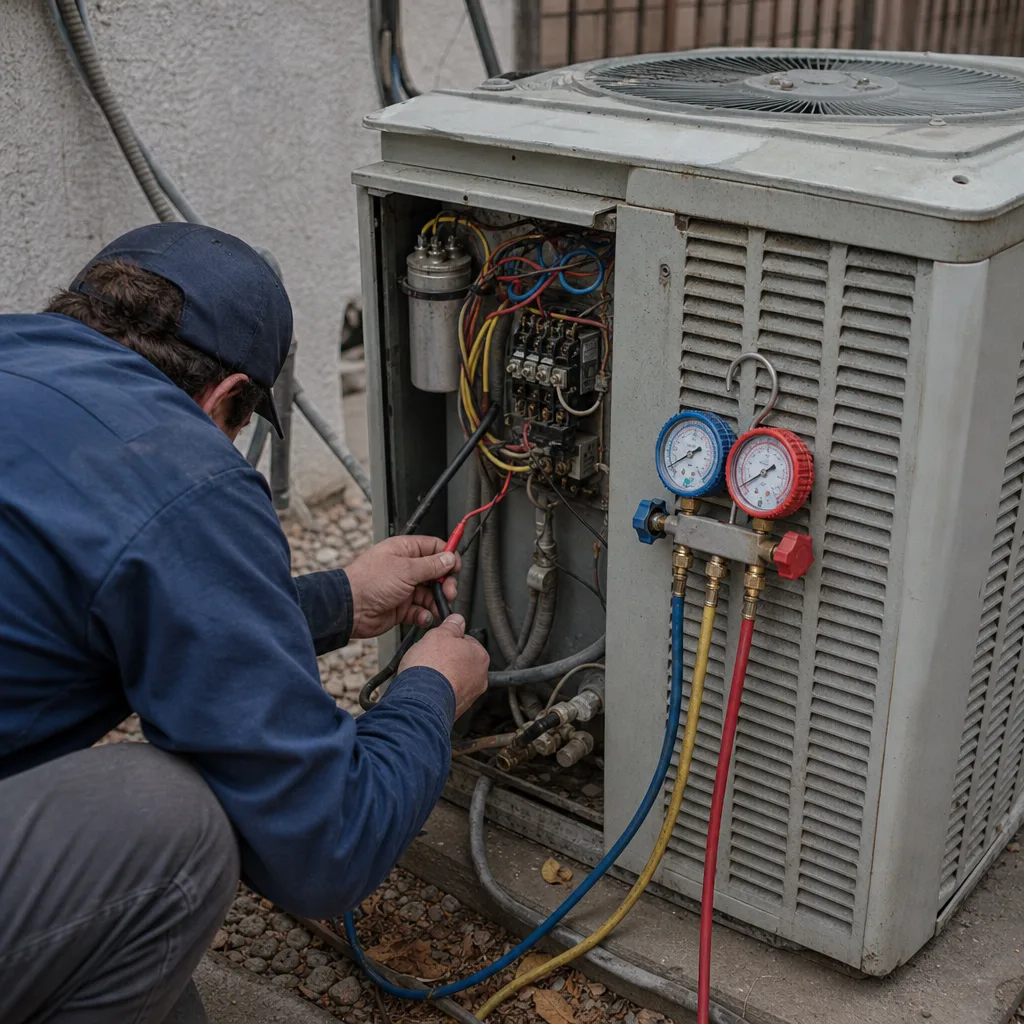
Capacitors, contactors, control boards, and the disconnect are all hazardous. Stored energy in a capacitor can deliver a serious shock even with the power off. If you’re not trained to verify a circuit is dead and safely discharge what’s stored, stay out of the panel.
In our experience, the divide is fairly simple: filters, drains, and visible documentation are safe for building staff. Everything involving refrigerant, gas, high voltage, or the combustion side belongs to a licensed technician. Our heat pump and mini split in Whitney page covers the equipment side of that rule for commercial and larger residential systems.
What’s Different About Commercial HVAC in Whitney
Whitney’s climate puts commercial equipment through a specific kind of wear. Summer temperatures routinely hit triple digits, which means rooftop package units in Whitney run near their design limits for weeks at a time. That’s when capacitors fail, contactors pit, and refrigerant pressures push toward lockout. The first heat wave of the season is always the busiest week of the year for emergency calls, and the failures that show up are almost always the ones that were seeded during the cooler months.
The dust is the other factor. Whitney sits at the edge of open desert, and spring winds carry fine particulate that clogs condenser coils faster than in greener climates. A commercial unit that gets its coils cleaned twice a year in other markets may need it three times in Whitney. We’ve seen rooftop units in the older commercial strips that lost 20 to 30 percent of their capacity to nothing but coil fouling. No part failing, just dirt.
Monsoon season brings its own pattern. A clogged condensate drain that barely dripped in June becomes an overflow in August when the outdoor humidity spikes. That’s the season float switches earn their keep and the reason we check drains on every commercial visit regardless of the service call. For commercial buildings in Whitney, seasonal maintenance isn’t a nice-to-have. It’s the difference between a unit that limps to replacement and one that runs another five years. Our Fireside Heating & Air Co. Whitney home page has more on how we work with building owners here.
Common Mistakes to Avoid
- Resetting a lockout without finding the cause. A lockout is a symptom. Clear the symptom without fixing the cause, and you’ll be back at the same reset within a week, usually with more damage. We’ve seen the same rooftop unit reset four times in a month before someone finally checked the charge.
- Bypassing a float switch or other safety device. Safety switches exist because the failure they prevent costs more than the call. Jumper a float switch to keep cooling on in a Whitney August, and you’re likely to trade a $200 drain clearing for a water-damaged board and ceiling tiles.
- Changing the thermostat without documenting the old one. On commercial jobs, the thermostat often carries custom schedules, setpoints, and network addresses. Pull it out without a photo and its settings, and the technician is rebuilding a control scheme from scratch.
- Clearing error codes to “see if the problem comes back.” The codes are the diagnostic history. Write them down first. Every time.
- Skipping the maintenance contract to save a few dollars. The buildings that call us for real emergencies are almost always the ones that don’t have a maintenance plan. The unit that gets spring and fall service rarely calls us at 2 a.m.
- Assuming one failed unit means one failed part. In commercial systems, the part that failed is often downhill from the part that caused the failure. Document the sequence, not just the symptom.
- Letting an unlicensed person “top off” the refrigerant. Beyond the legal exposure, improper recharging can damage the compressor and void equipment warranties. This isn’t a job for a general handyman.
When to Call a Professional
Call a licensed technician when you smell gas, see water actively overflowing a drain pan, hear a compressor that’s louder than normal, notice ice forming anywhere on the refrigerant lines, see evidence of scorching on electrical components, or find yourself resetting the same breaker a second time. Call if any unit has been down more than a day and the building is occupied. Call if your documentation points to a sequence rather than a single symptom. And call before you reset a lockout you haven’t diagnosed. Fireside Heating & Air Co. Whitney offers free estimates in Whitney – call (866) 329-8069. Phones are answered by a live person 24 hours a day, and every commercial job is backed by our 90-Day Done Right Promise. The price quoted is the price paid.
Frequently Asked Questions
Check the thermostat and any building automation screen for error codes, note the current mode and setpoint, and photograph what you see before touching anything. That single step gives a technician the diagnostic information that would otherwise take thirty minutes to reconstruct, and it tells you which of the five common failures you’re probably dealing with. If the panel or screen shows a safety lockout, don’t reset it until you’ve recorded the code.
Only once, and only after you’ve documented why it tripped. A breaker tripping a second time means something downstream is still wrong, and resetting it again can do real damage to the compressor or control board. If the same breaker trips more than once, leave it off and call. It’s a $40 diagnostic that prevents a $4,000 repair.
That depends on the failure and how well-documented the problem is when you call. A tripped float switch with a clear drain line can be cleared in a short visit. A refrigerant leak, failed compressor, or control board replacement will take longer and may involve a return trip for parts. What we can promise: when you call, a live person answers and gives you a straight answer about the timing.
As a rule of thumb, if the repair cost is more than half the replacement cost and the unit is more than 10 – 12 years old, replacement usually wins out. In Whitney’s heat, units past that age tend to fail in clusters, not one clean failure. We’ll give you a written estimate either way, and our Free Second Opinion on Any Written Estimate helps you check another quote before you commit. Call (866) 329-8069 for a straight talk comparison.
Write down every error code, the sequence of events leading up to the failure, any recent work done on the system, and a photo of the equipment nameplate on both the outdoor unit and the indoor air handler. If the system failed after a power event, a storm, or the first heat wave of the season, note that too. That information shortens the diagnostic and gets the right parts on the right truck.
No, and the difference matters for troubleshooting. Commercial heat pumps, VRF systems, and multi-zone equipment have more control boards, more sensors, and more potential points of communication failure than a standard package unit. Diagnostic checks need to start with the control network, not the compressor. Our technicians work on Daikin, Rheem, and York commercial equipment, among other brands, and we’re trained to service nine major brands across the residential and light commercial side. Call (866) 329-8069 to discuss your system.
The Bottom Line
Commercial HVAC troubleshooting isn’t about becoming your own technician. It’s about knowing which failures you can safely document, which ones you should never touch, and how to hand off the right information when it’s time to call. The five most common failures in Whitney buildings are drain and float switch lockouts, dirty coil and filter issues, failed capacitors and contactors, control and thermostat faults, and refrigerant or gas-side problems. The first three you can check; the last two you must not. Photograph codes, write down the sequence, and don’t reset what you can’t diagnose. Done right, that’s the difference between a service call and a much bigger bill.
Need a hand? Call Fireside Heating & Air Co. Whitney at (866) 329-8069 for a free estimate. We answer the phone with a live person, 24 hours a day, and every job is backed by our written 90-Day Done Right Promise. We’ll be there when we say, quote a price you can stand behind, and leave your building better than we found it.
Written by the team at Fireside Heating & Air Co. Whitney.
See the difference
 Before
 After
 Before
 After
 Before
 After