
Last updated November 18, 2026
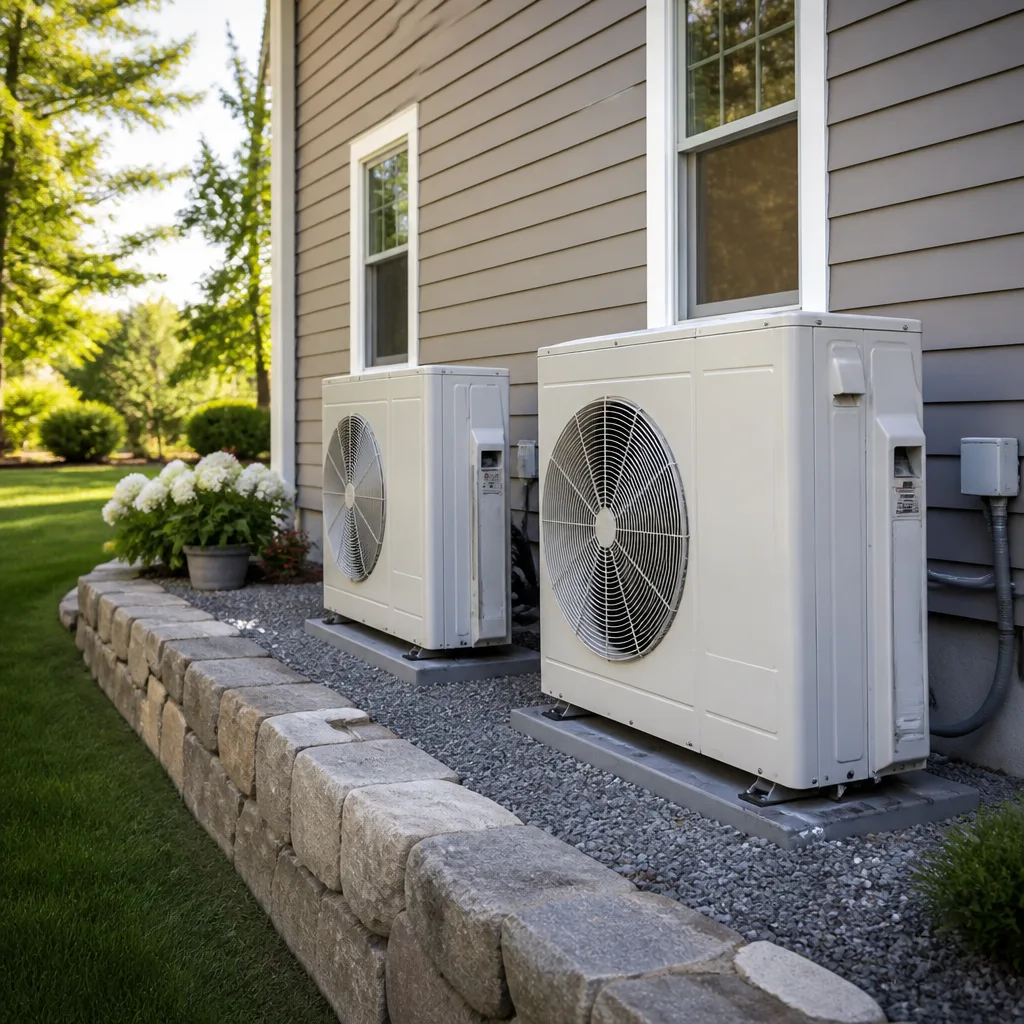 Heat pumps
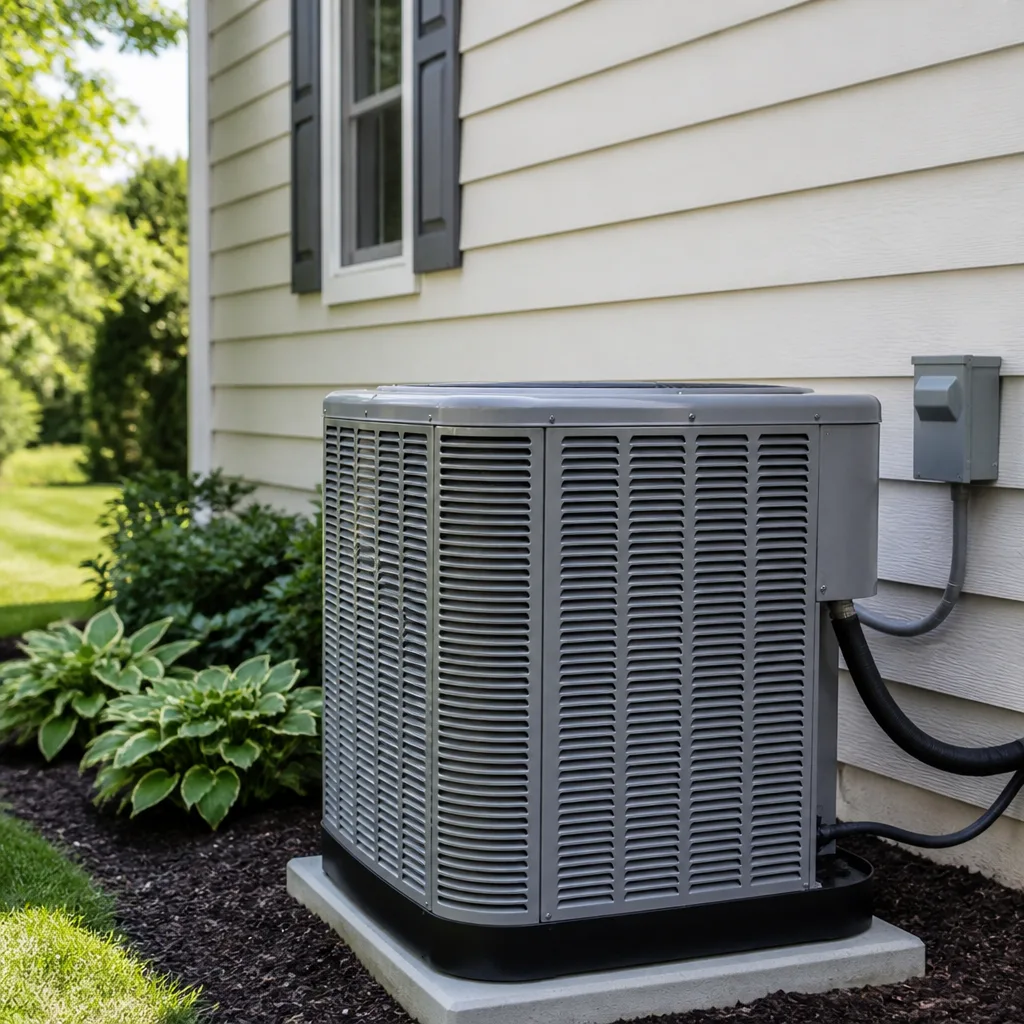 AC repair
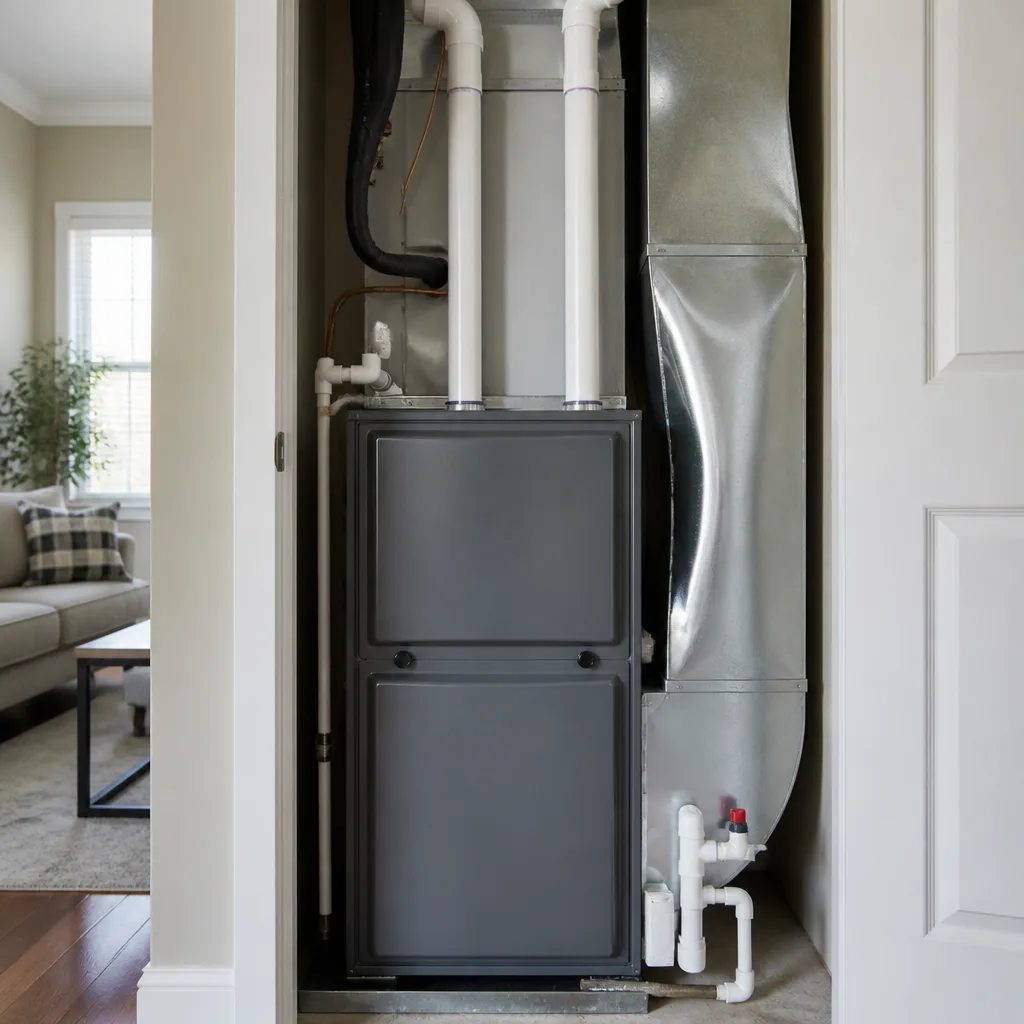 Furnace & heating
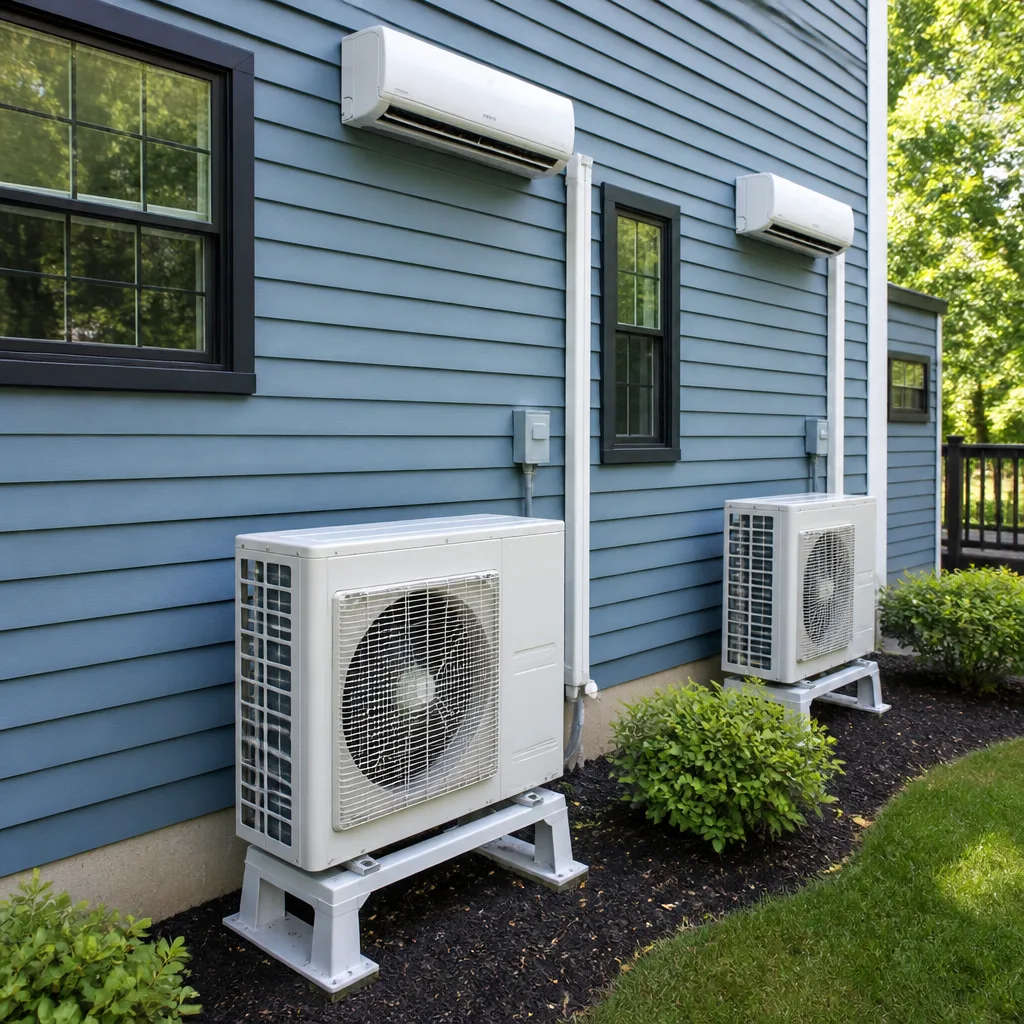 Ductless mini splits
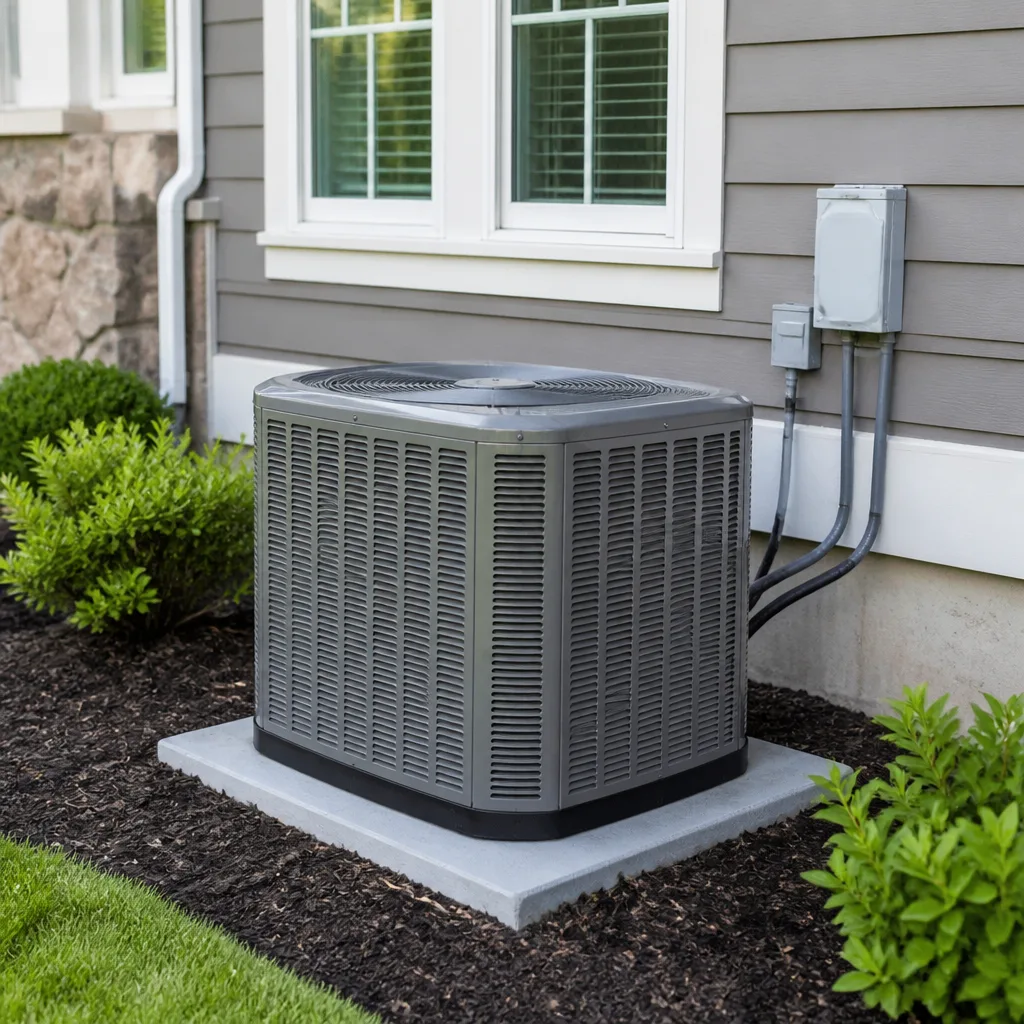 Carrier
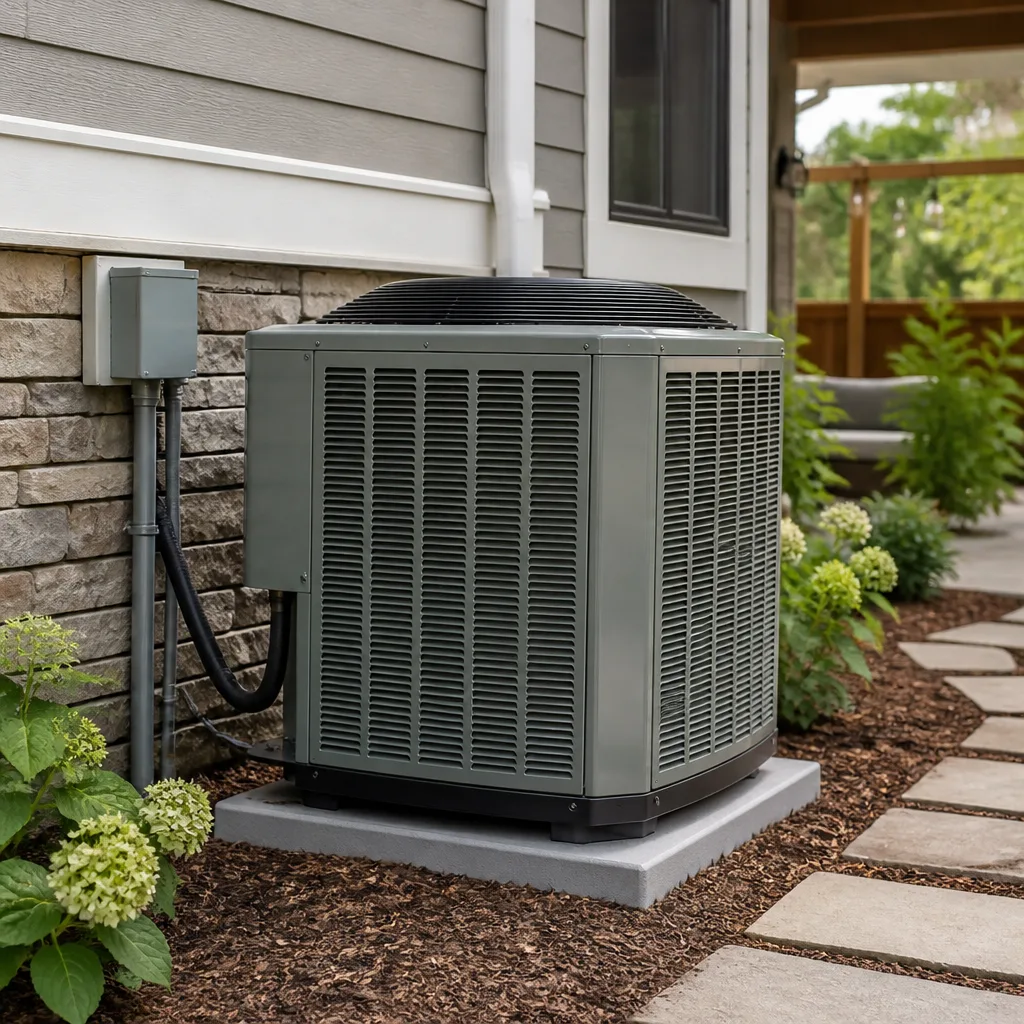 Trane
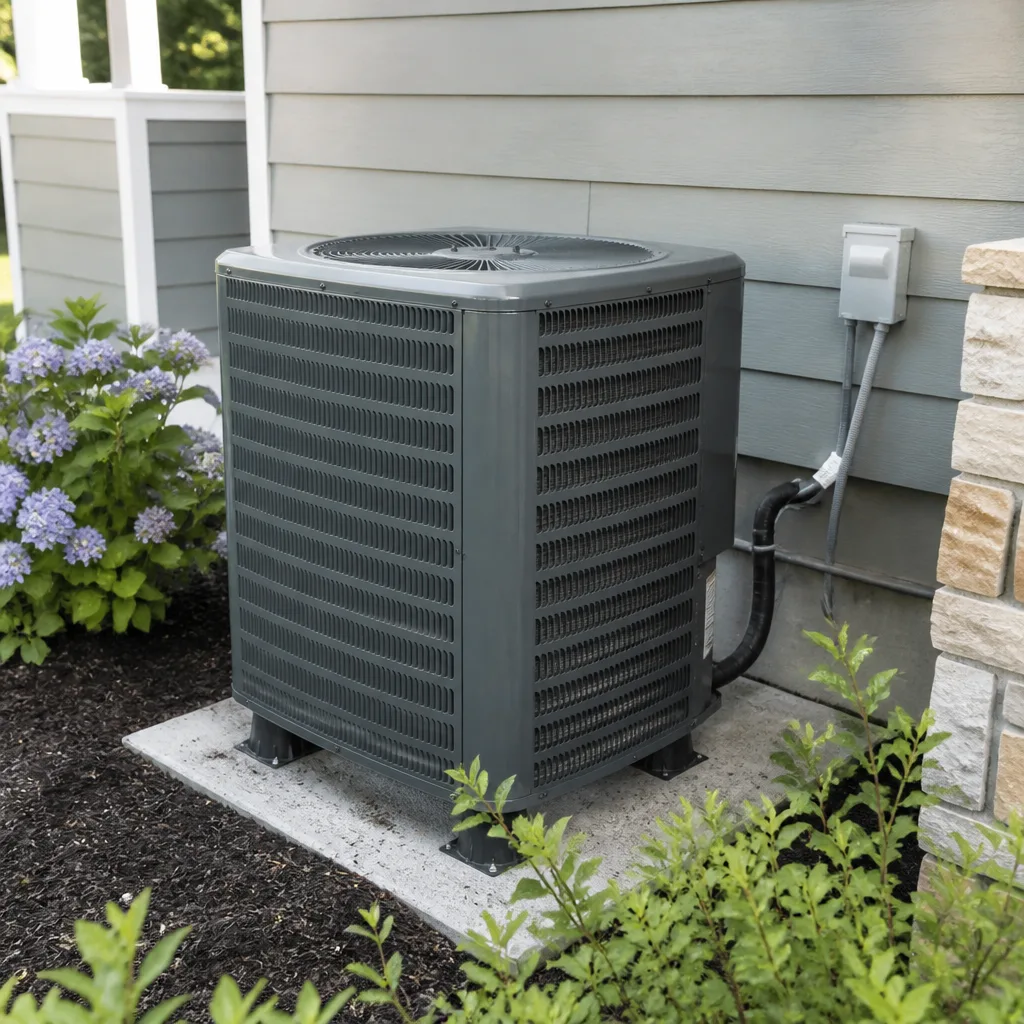 Goodman
Seasonal tune-up and full diagnostic on your Carrier, Trane, or Goodman system - readings shown to you before any repair is proposed
Diagnosis first, numbers second - you approve the repair price before a single part goes in.
Get your free estimateHeat Pump & Mini Split Troubleshooting: Common Problems and How to Fix Them
An E6 or P1 code on your mini split indoor head will send most homeowners straight to Google, where they’ll find ten contradictory forum posts and a parts supplier happy to sell them a control board they probably don’t need. Here’s the part the forums skip: most of those codes trace back to one of five root causes, and three of them have a legitimate homeowner fix you can try before anyone drives out. This guide translates the codes into plain English, walks a symptom-first path so you’re not guessing, and draws a hard line around the work that belongs to a licensed technician. We’ve handled enough calls in Whitney to know which problems are real and which are a unit doing exactly what it was designed to do.
Quick Answer
Most heat pump and mini split problems come down to airflow, a dirty coil or filter, a tripped safety switch, a defrost cycle that looks like a fault but isn’t, or a genuine refrigerant leak. Filter cleaning, outdoor unit clearing, and breaker resets are safe homeowner checks. Refrigerant, wiring, and control boards require a licensed technician. If you see ice that won’t clear, water draining indoors, or a unit blowing cold in heat mode after a reset, call (866) 329-8069.
Styles & brands we work with
- AC repair
- Furnace & heating
- Heat pumps
- Ductless mini splits
- Carrier
- Trane
- Goodman
Table of Contents
- Start With the Symptom, Not the Code
- Blowing Cold Air in Heat Mode
- Not Reaching the Setpoint
- Ice on the Outdoor Unit
- Water Draining Indoors
- The Refrigerant Charge Myth
- Defrost Cycles: Normal Behavior That Looks Like a Fault
- Whitney Dust and Desert Clogging
- Stop-Doing-This: The Lines You Don’t Cross
Start With the Symptom, Not the Code
Error codes are useful, but they’re a symptom report, not a diagnosis. A P1 on a Daikin head and a P1 on a Carrier mini split can sometimes point in different directions depending on the model and the sensor array. What stays consistent is behavior. If you can describe what the unit is doing, a competent technician can reason backward to the cause faster than you can look up a fault table.
Before you touch the remote, run this sequence. It takes five minutes and rules out the majority of call-outs:
- Confirm the mode. A surprising number of “not heating” calls are units stuck in cool or auto. Auto mode on many mini splits defaults to whatever it decides, and in a Whitney winter that can mean a cold house.
- Check the setpoint. If the setpoint is 68 and the room is 68, the unit is doing its job. Raise it four degrees and listen for the compressor to come up.
- Reset the breaker. Flip the outdoor disconnect and the indoor breaker off, wait two minutes, flip back on. This clears transient faults on most modern inverter boards.
- Check the filter. A clogged filter is the single most common cause of reduced performance across every brand we work on, from American Standard to Trane.
- Look at the outdoor unit. Is the fan turning? Is there ice? Is the coil buried in dust? That last one matters more in Whitney than most places, and we’ll get to it.
If the unit comes back to life and holds, you likely had a transient fault or a filter problem. If the fault returns within a day, that’s a real issue. The pattern is the diagnosis.
Blowing Cold Air in Heat Mode
This is the complaint we hear most often in Whitney from October through February, and it has four common causes. Work through them in order.
- Reversing valve stuck. The valve that flips the system between heat and cool can stick, especially after a summer of disuse. A gentle technician tap sometimes frees it, but a stuck valve usually needs replacement. This is not a homeowner fix.
- Outdoor coil frosted over. A heat pump in heating mode pulls heat from outdoor air and the coil gets cold. If the coil ices and the defrost cycle doesn’t clear it, you get cold air inside. See the defrost section below.
- Low refrigerant. A slow leak means the system can’t absorb enough heat from outdoor air to deliver warm air inside. See the refrigerant section. This is not a top-off.
- Defrost cycle in progress. During a defrost, the indoor fan typically stops or blows cool for three to ten minutes. If it warms back up, it isn’t broken.
One detail the forums get wrong: many inverter mini splits intentionally deliver cooler supply air than a gas furnace. A heat pump might push 95 to 110 degrees at the vent versus 120-plus from a furnace. If your hand at the register feels lukewarm but the room is warming, measure the room, not the vent. If the room is not warming after an hour, you have a real problem.
If you’ve reset the breaker, cleaned the filter, and the head is still blowing cold after an hour in heat mode, that’s a technician call. Our Heat Pump & Mini Split in Whitney team handles reversing valves and refrigerant diagnostics routinely.
Not Reaching the Setpoint
A unit that runs and runs but never quite hits the number on the thermostat is a different animal from one that fails outright. This is usually one of four things:
- Airflow restriction. Dirty filter, blocked return, closed registers, or a blower wheel caked with dust. In Whitney, dust loads happen faster than in greener climates, so a filter that would last three months elsewhere can load in six weeks here.
- Undersized or oversized system. A mini split sized for a 300-square-foot room won’t hold a 500-square-foot space no matter how long it runs. This is a design question, not a repair.
- Envelope losses. Old windows, missing attic insulation, doors that leak. We see this a lot in older Whitney homes where the HVAC is fine but the house bleeds heat.
- Sensor drift. The thermistor that reads room temperature can drift over years. If the unit thinks it’s 72 when it’s 66, it will never push harder.
Run a simple test: set the unit ten degrees above the current room temperature and let it run thirty minutes with all filters clean and all interior doors open. If the temperature climbs steadily, the system works and the issue is sizing or envelope. If it climbs two degrees and stalls, you’ve got a mechanical problem worth a technician’s eye.
Ice on the Outdoor Unit
Ice on the outdoor unit means one of two things, and telling them apart matters. A light frost on the coil during cold weather is normal and the defrost cycle clears it. A solid block of ice that persists for hours, or a sheet of ice at the base of the unit, is not normal.
Do this first: switch the system to cool mode for five minutes, or turn it off entirely, and let it thaw. If the ice stays after a thaw cycle in mild weather, or if it returns within hours of running, the problem is real. Three common causes:
- Defrost control fault. The sensor that tells the system when to defrost has failed, so the coil never gets cleared.
- Low refrigerant. A low charge drops coil pressure and temperature, causing ice even in weather where it shouldn’t.
- Restricted airflow. A coil clogged with dust can’t move enough air to shed ice.
Do not chip at the ice with a tool. You’ll bend fins and puncture the coil, and a punctured coil is a refrigerant leak plus a repair bill. Warm water poured carefully at the base is the only thing we’d suggest, and even that is a stopgap.
Water Draining Indoors
Water inside the house from an HVAC unit is almost always a condensate problem, and it’s the one on this list that can cause real property damage while you wait for a technician. When a system runs in cool or dry mode, it pulls moisture out of the air, and that water needs somewhere to go.
Common causes, most to least likely:
- Clogged condensate drain line. Algae, dust, or debris blocks the drain, water backs up, and it finds the easiest path out, which is often your ceiling or wall.
- Clogged drain pan. The pan under the indoor coil fills with debris over time and overflows.
- Frozen coil melting off. A frozen indoor coil melting after the system shuts down can overflow the pan. See the ice section.
- Improper pitch. An installation where the drain line doesn’t slope correctly will pool water and back up.
If you see water, turn the system off at the thermostat and soak up what you can. A wet ceiling in a Whitney summer home can turn into mold in days. Then call us. This is a problem worth handling the same day, and our live phone line means you get a person, not a voicemail tree, no matter when you call.
The Refrigerant Charge Myth
Here’s the myth: refrigerant gets used up like gasoline and needs topping off. It doesn’t. A sealed system holds its charge for its entire life. If your system is low on refrigerant, it has a leak, and adding refrigerant without finding and repairing the leak just means you’ll be filling it again next season.
What a legitimate diagnostic looks like:
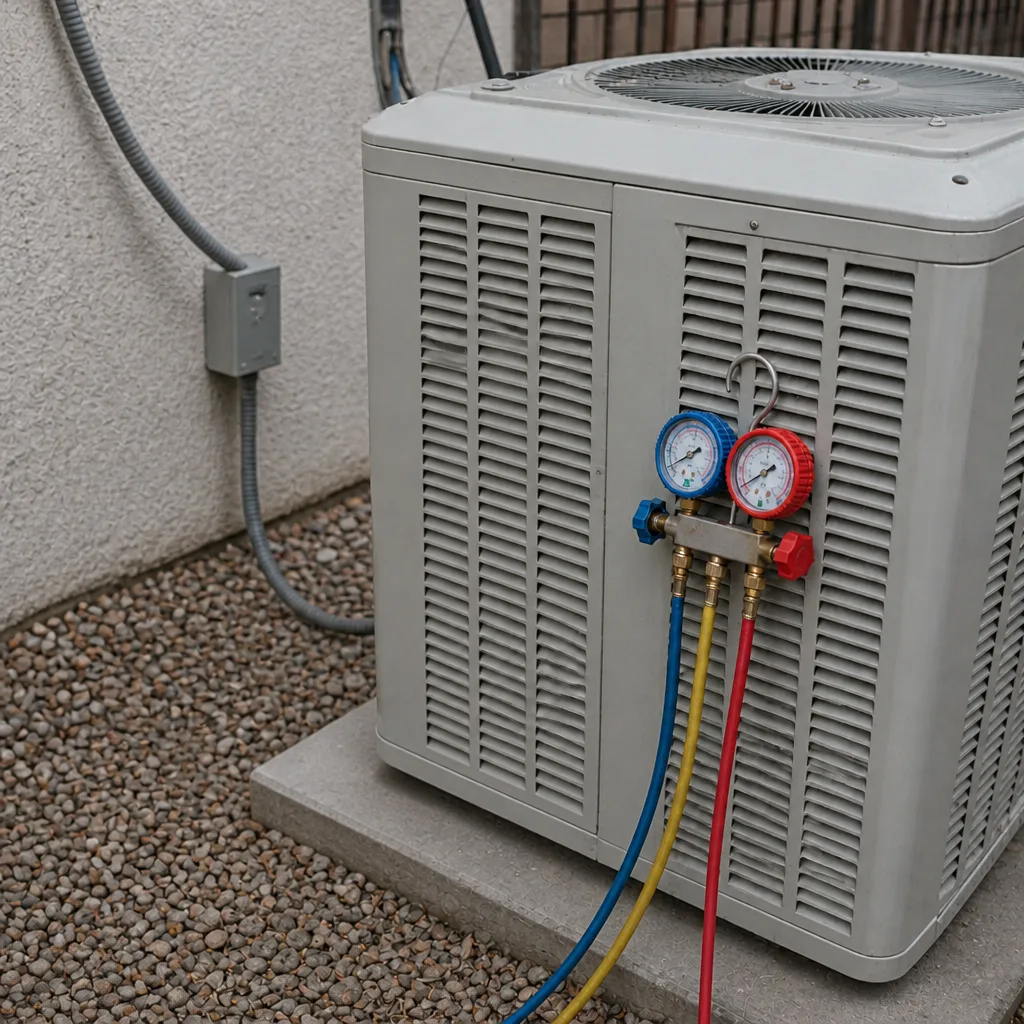
- Technician measures pressures on the service ports and compares to the manufacturer’s target for the outdoor temperature that day.
- Technician measures superheat or subcooling, depending on the metering device, to confirm whether the charge is actually off.
- If the charge is low, technician performs an electronic leak search on the indoor coil, outdoor coil, line set, and all flare fittings.
- Leak is repaired, the system is evacuated to a deep vacuum, held under vacuum to confirm tightness, and then recharged to the exact manufacturer spec by weight.
If a technician offers to top off your system without a leak search, that’s a red flag. If they quote a flat price without measuring temperatures and pressures first, that’s another one. Straight talk about the diagnosis is how you know the recommendation is honest.
Also: refrigerant handling is regulated at the federal level. Venting it is illegal, and working with it requires certification. This is the line you do not cross yourself, no matter what a YouTube video suggests.
Defrost Cycles: Normal Behavior That Looks Like a Fault
A heat pump has to defrost its outdoor coil periodically, and during that defrost, several things happen that look like a breakdown. We get calls every winter from Whitney homeowners convinced their system has failed when it’s running exactly as designed.
What defrost looks and sounds like:
- Indoor fan stops or blows cool air for three to ten minutes. Many systems lock out the indoor blower during defrost so it doesn’t push cold air into the house. Some blow cool air instead. Either is normal.
- Outdoor unit runs in cool mode briefly. That’s how it defrosts the coil. You may see steam or vapor rise from the outdoor unit. This is not smoke.
- A clicking or whooshing sound at the outdoor unit when the reversing valve switches. Normal.
- Auxiliary heat kicking in to cover the defrost gap. In cold snaps, you might see electric strips engage for a couple of minutes.
- Frequency that depends on weather. In humid, near-freezing weather, defrost cycles come more often. In dry Whitney cold, they’re less frequent.
If defrost lasts longer than fifteen minutes, if it never happens when the coil is clearly iced, or if the indoor head goes cold and stays cold, that’s a fault. Otherwise, let the cycle finish before you call anyone.
Whitney Dust and Desert Clogging
This is the local problem that mimics refrigerant failure more convincingly than anything else. In Whitney and the surrounding high-desert neighborhoods, dust accumulates on outdoor coils faster than in most of the country. Wind-blown dust, cottonwood fluff in spring, and fine grit from nearby construction all find their way into the coil fins, and once they’re packed in, the coil can’t reject or absorb heat the way it should.
The symptoms of a dust-clogged coil look exactly like low refrigerant: reduced capacity, higher amp draw, ice forming on the coil, long run times. We’ve seen units diagnosed as “low on charge” by less careful techs when the real issue was a coil that hadn’t been cleaned in three seasons.
Here’s the homeowner check you can do right now:
- Turn the system off at the thermostat and the breaker.
- Look at the outdoor coil fins through the grille. They should be visible and clean, like rows of metallic teeth. If they look like felt, you have a clog.
- Gently rinse with a garden hose, spray aimed straight at the fins, from the inside out. Do not use a pressure washer. Do not bend the fins.
- Clear any leaves, tumbleweeds, or debris from around the base and top of the unit, and keep two feet of clearance on all sides.
If the fins are packed with dust that won’t rinse out, that’s a technician job with a coil cleaner. Our AC Repair & Installation in Whitney team cleans coils as part of seasonal service, and it’s often the difference between a unit that struggles all summer and one that doesn’t.
Stop-Doing-This: The Lines You Don’t Cross
We appreciate a homeowner who wants to understand their system. But there are four things no one should attempt on a heat pump or mini split, and they’re worth stating plainly.
- Do not open refrigerant lines or attempt to add or recover refrigerant. It’s a federal violation without certification, it’s dangerous, and it voids most manufacturer warranties instantly. A system exposed to moisture during a botched repair can be a total loss.
- Do not bypass safety switches or pressure switches. These exist to shut down the compressor before it destroys itself. Bypassing one is how a $400 repair becomes a $3,000 replacement.
- Do not handle electrical components inside the outdoor unit or the indoor board. Capacitors hold a charge after the breaker is off. Inverters carry high DC voltage. This is genuinely hazardous.
- Do not open the indoor coil cabinet or the outdoor compressor compartment. Beyond the danger, you’re on the hook for any damage once you’ve been inside.
The line is simple: anything upstream of the service ports is homeowner territory. Anything involving refrigerant, high voltage, or a sealed component is licensed work. Our technicians are trained on American Standard, Carrier, Trane, and Lennox among the nine major brands we service, and we treat that boundary the way we’d want it treated in our own mother’s home.
Common Mistakes to Avoid
- Cleaning the indoor filter once a year. In Whitney’s dusty climate, monthly is closer to correct during heavy-use seasons. A clogged filter strains the blower and mimics low refrigerant.
- Chip-chip-chipping at ice. Every chip risks a bent fin or a punctured coil. Warm water or a scheduled defrost, never a tool.
- Assuming every cool-air blow during winter is a failure. Defrost cycles and the cooler supply air of a heat pump in shoulder weather are normal. Read the section above before you call.
- Accepting a “top-off” without a leak search. If refrigerant is low, there’s a leak. A top-off without a leak find is money into a hole.
- Running the system with water pooling inside. Turn it off and call. A wet ceiling in Whitney turns into a mold problem faster than most homeowners expect.
- Letting dust pack the outdoor coil for three seasons. Annual cleaning isn’t cosmetic. It’s how the unit maintains capacity in our climate.
- Hiring whoever shows up first without a written estimate. Ask for a written diagnosis, ask what testing was done, and compare. Our free second opinion on any written estimate exists for exactly this reason.
See the difference
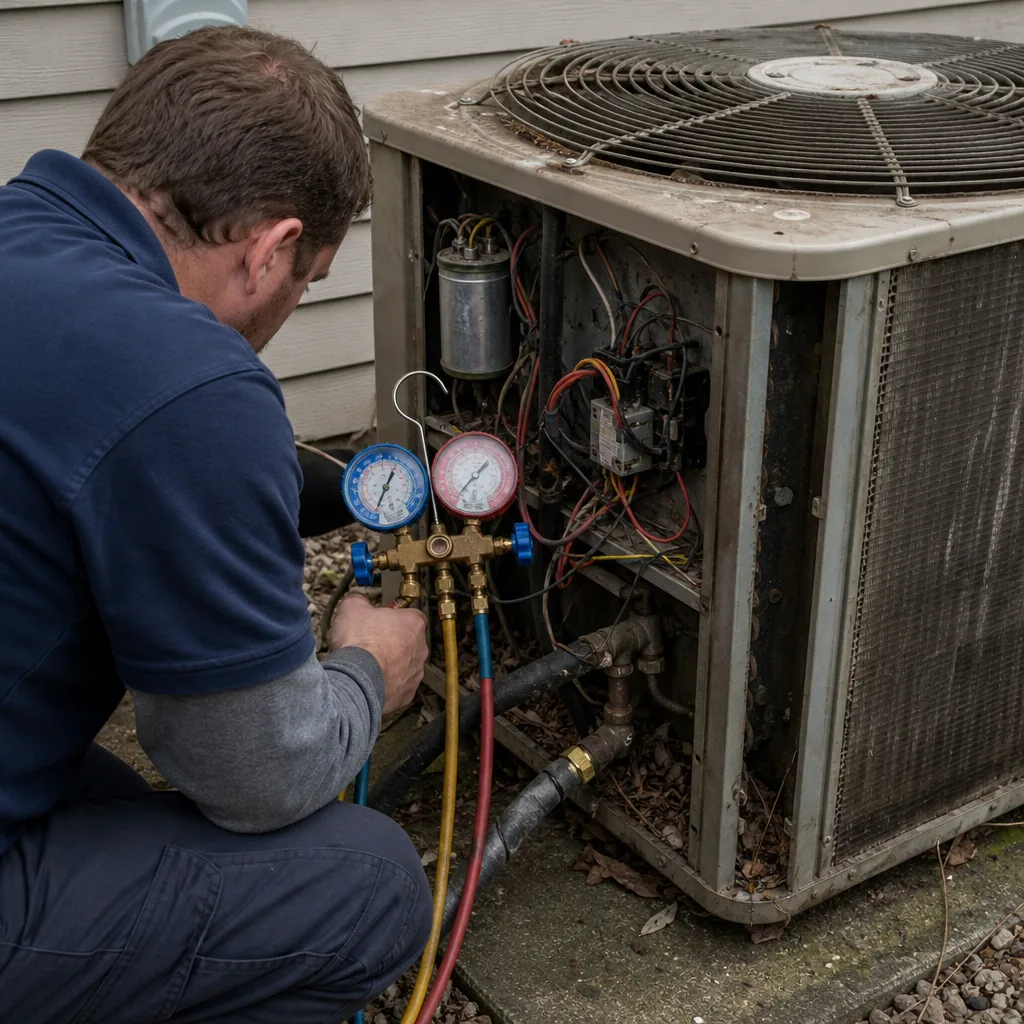 Before
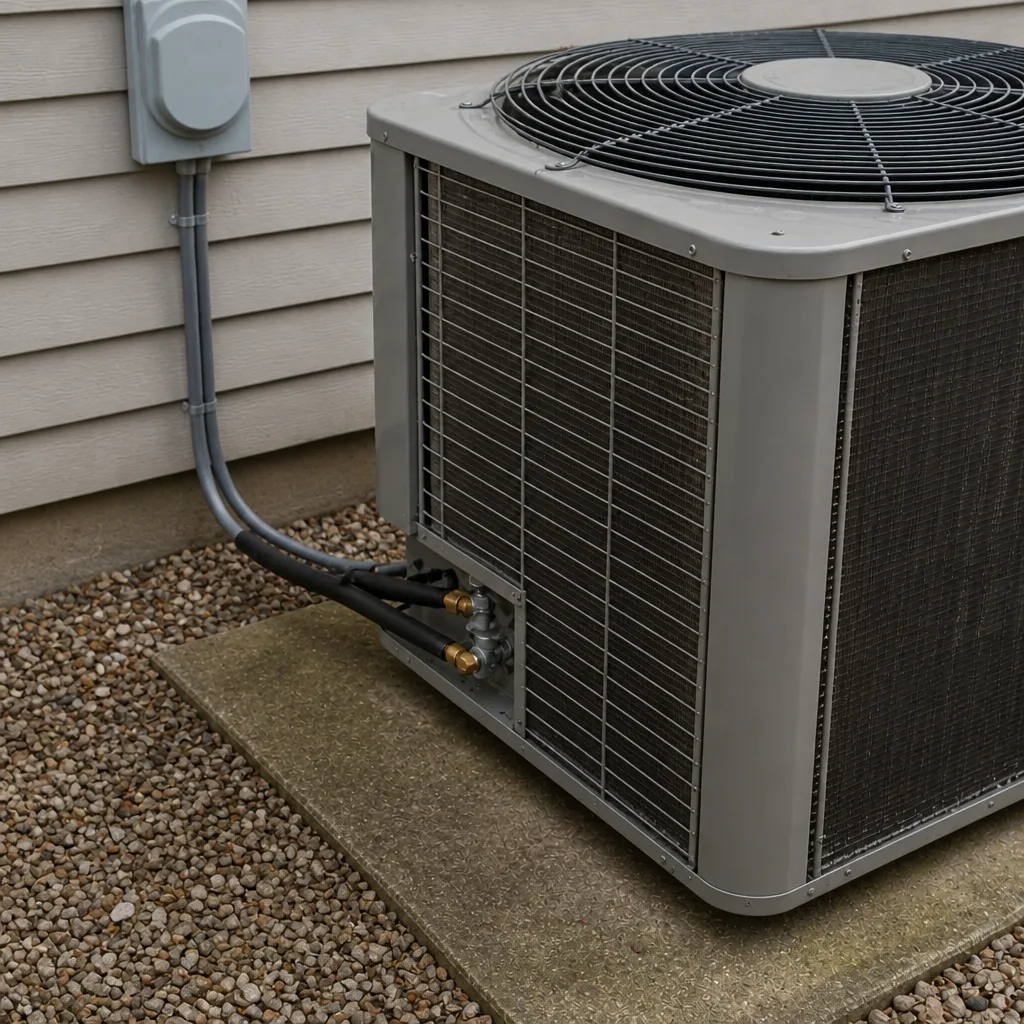 After
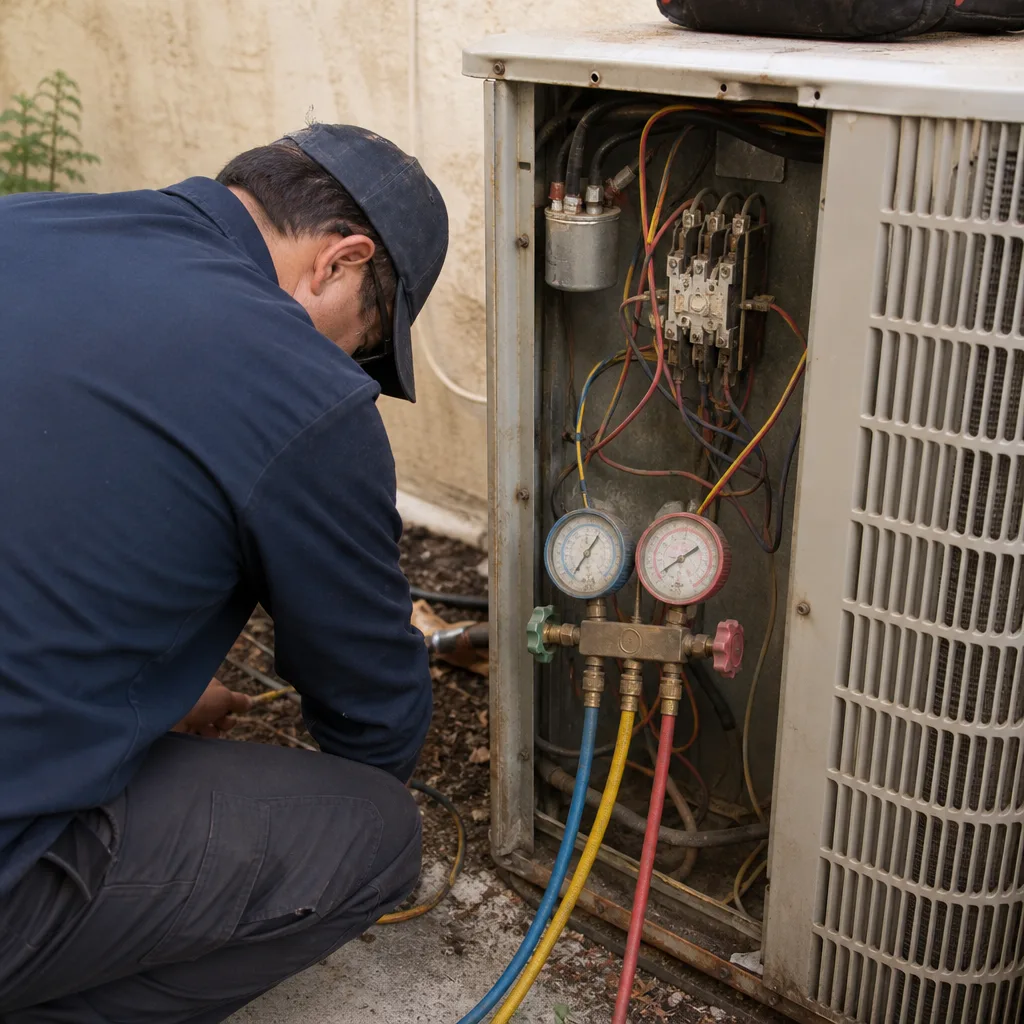 Before
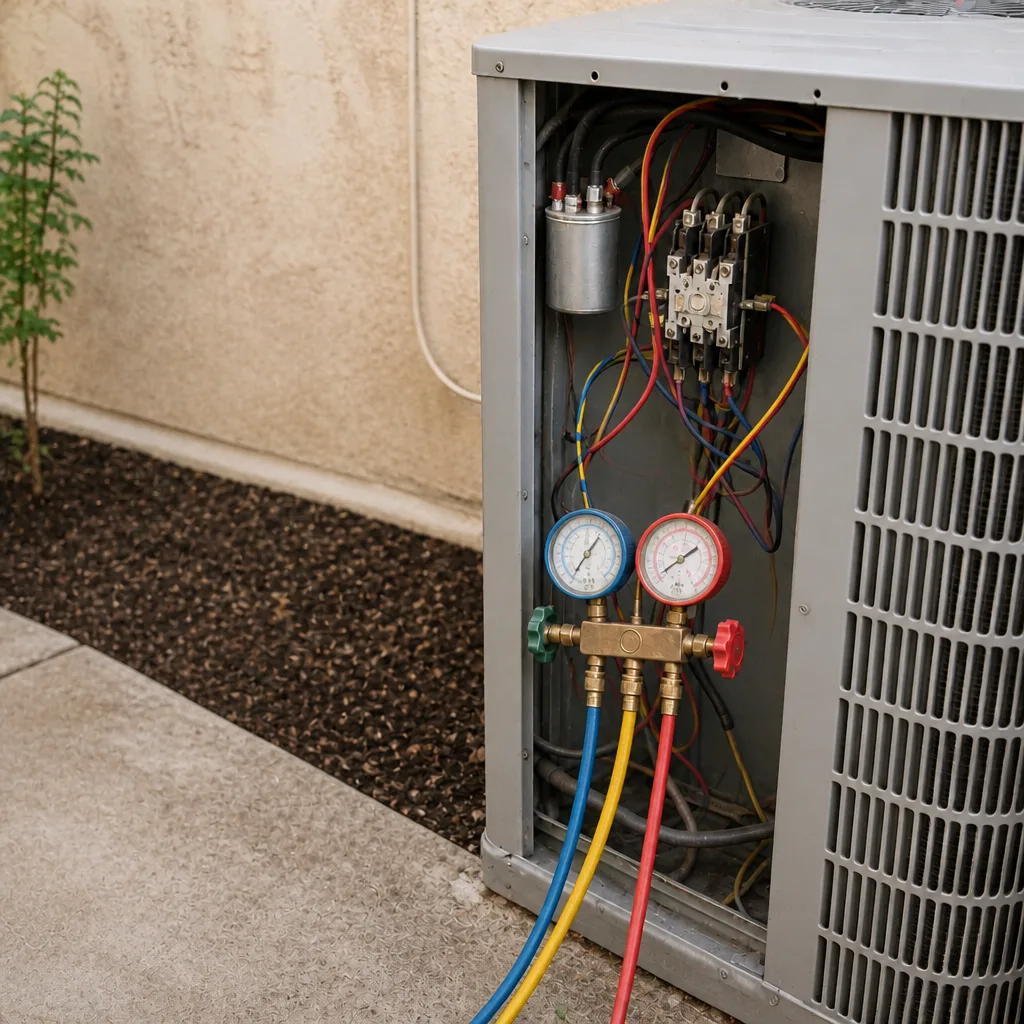 After
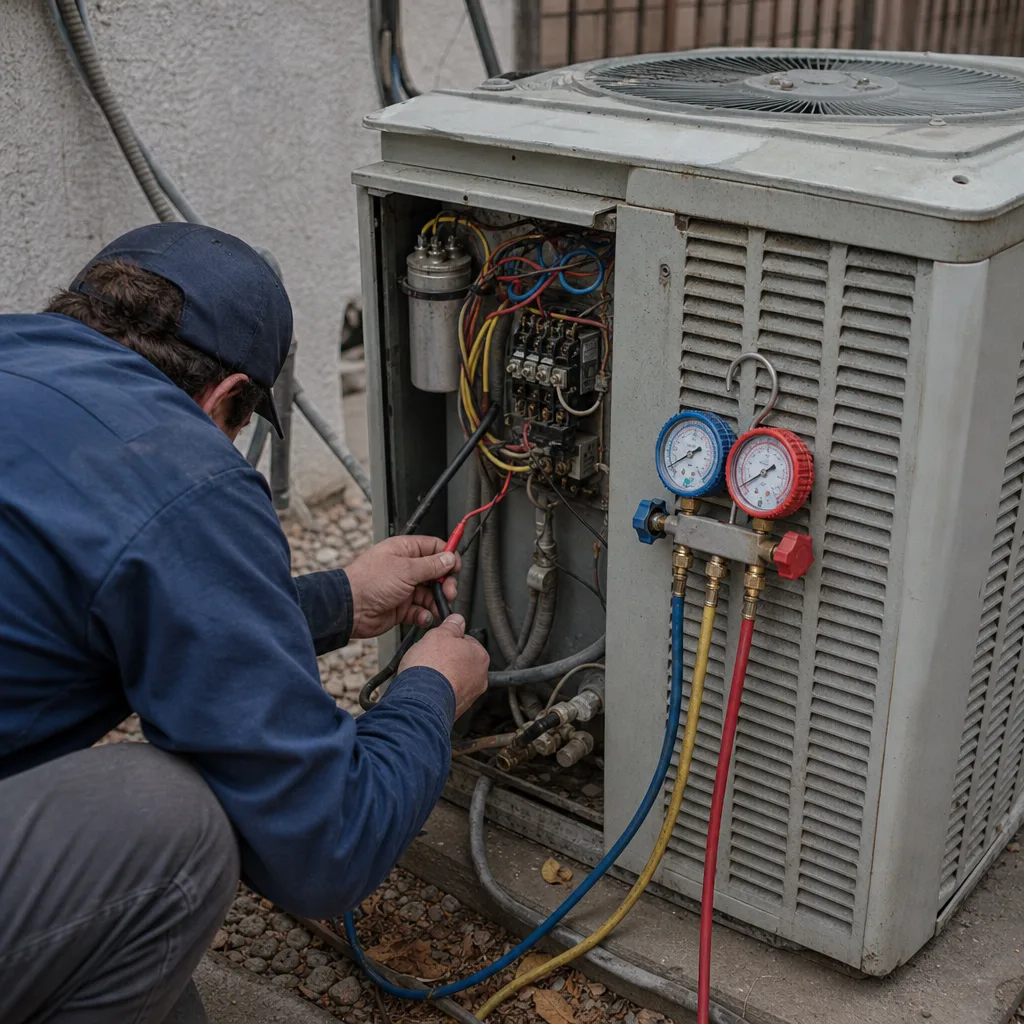 Before
 After
When to Call a Professional
Call a technician when: the unit won’t heat after a breaker reset and a filter change; ice persists on the outdoor coil after a thaw; water is draining indoors; you smell refrigerant; you hear metal-on-metal or grinding from the outdoor unit; the fault code returns within 24 hours of a reset; or the system is over ten years old and running non-stop without reaching setpoint. Those scenarios cross the line between homeowner check and licensed service. Also worth calling for: a system that runs but you’re not sure why. A short diagnostic that finds nothing is cheaper than a summer of struggling equipment. Fireside Heating & Air Co. Whitney offers free estimates in Whitney; call (866) 329-8069 for straight talk about what your system needs, and if a repair is the answer, our 90-Day Done Right Promise backs it in writing.
Frequently Asked Questions
E6 and P1 codes typically indicate a communication or sensor fault between the indoor and outdoor units, though exact meaning varies by brand. The useful move is to reset the breaker and note whether the code returns. If it comes back within a day, it’s a real fault and needs a technician with a brand-specific fault table.
Most often it’s a stuck reversing valve, a frosted outdoor coil not clearing, or low refrigerant from a leak. Check whether the system is mid-defrost first – it may just be running normally. If it’s been cold for over an hour after a reset, call (866) 329-8069 for a diagnosis.
Steam and light frost during defrost are normal, and icing that clears within fifteen minutes is by design. Ice that stays for hours, or a solid block at the base of the unit, is not. Do not chip at it. Turn the system off and let it thaw, then call if it returns.
No. Refrigerant work requires federal certification, and adding charge without finding the leak is a temporary patch on a permanent problem. A legitimate repair always involves a leak search, evacuation, and recharge to manufacturer weight spec. If a technician offers to top it off without a leak search in Whitney, get a second opinion.
In Whitney’s dusty climate, plan on cleaning the outdoor coil at least once a year, and twice during heavy construction activity nearby. Rinse with a garden hose, never a pressure washer. If fins are packed with dust, a technician can clean deeper than a hose will reach.
During a defrost cycle, which happens a few times a day in cold weather, the indoor fan often stops or blows cool for three to ten minutes while the outdoor coil clears. That’s normal behavior. Some inverter mini splits also deliver cooler supply air than a furnace by design – check whether the room is warming, not just the vent temperature.
The Bottom Line
Most heat pump and mini split problems fall into five root causes: airflow, coil dirt, safety switch trips, defrost cycles, and refrigerant leaks. Filter cleaning, outdoor coil rinsing, and breaker resets are safe for homeowners. Refrigerant work, electrical components, and sealed compartments require a licensed technician, and crossing that line risks warranty loss and real damage. In Whitney, dust loads faster than most places, so coil cleaning is a routine necessity, not a luxury. When a problem crosses the line, call a company that answers at 2 a.m. and stands behind the work. If you need help figuring out whether your system is behaving normally or failing, our Fireside Heating & Air Co. Whitney home page has more, or call (866) 329-8069.
Written by the team at Fireside Heating & Air Co. Whitney.