
Last updated November 18, 2026
 Furnace & heating
 AC repair
 Heat pumps
 Ductless mini splits
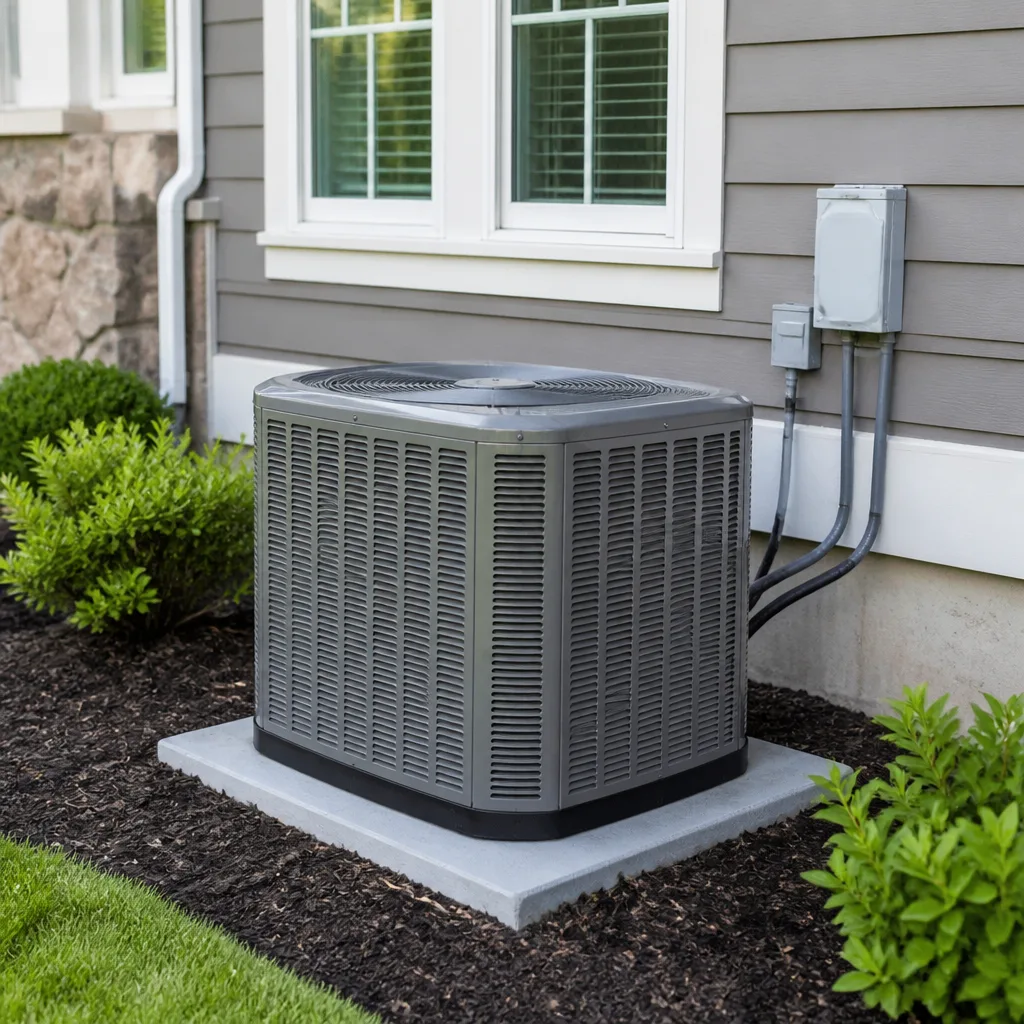 Carrier
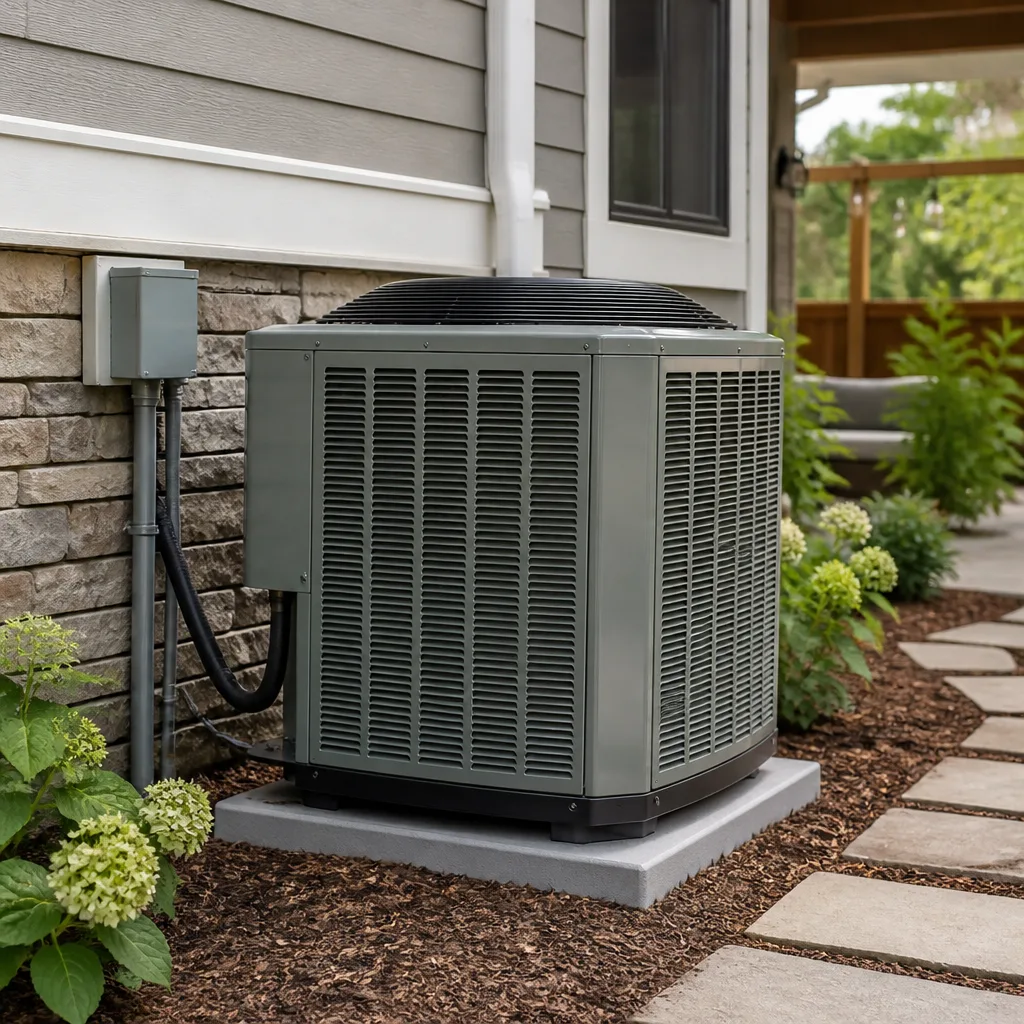 Trane
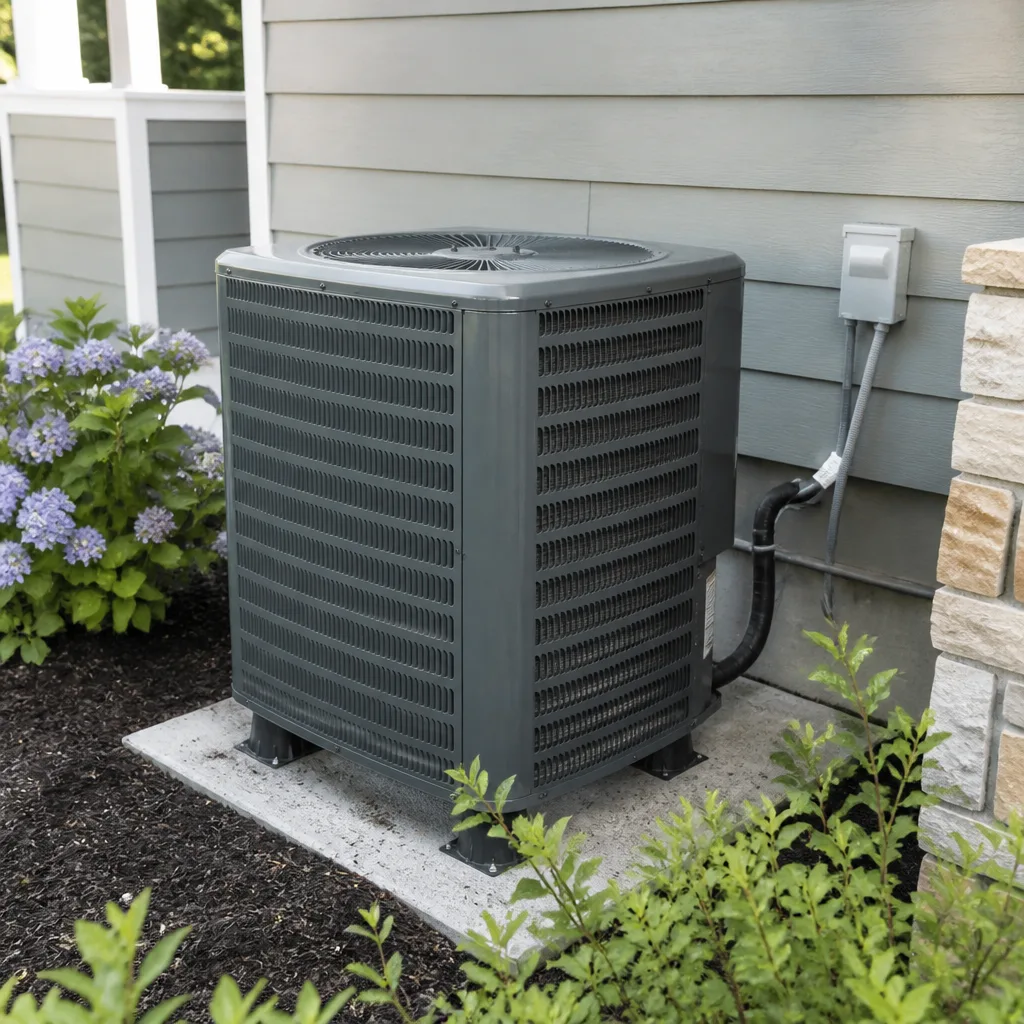 Goodman
Seasonal tune-up and full diagnostic on your Carrier, Trane, or Goodman system - readings shown to you before any repair is proposed
Diagnosis first, numbers second - you approve the repair price before a single part goes in.
Get your free estimateHeating & Furnace Maintenance Schedule: What to Do and When
Furnace failures don’t spread themselves evenly across winter. In our experience, they cluster in the first hard cold snap of the season – usually early November in Whitney – when a system that sat mostly idle through a long desert summer suddenly runs hard for the first time, and the part that was quietly going bad since April finally lets go. That’s the failure point this schedule is built backward from. Get the work done in September and October, and you avoid the 2 a.m. call in November. This guide lays out exactly what to do each month, what a real tune-up includes line by line, why a cracked heat exchanger ends the conversation, and how to keep a service log that pays you back at resale or in a warranty claim.
Quick Answer
Schedule a professional furnace tune-up in September, do a filter check in late August before the first heating cycle, and have the heat exchanger inspected in October before you rely on the system daily. Between November and March, check the filter monthly and watch for odd noises or short cycling. Shut the system down and clean the air handler in April. A furnace serviced on this rhythm runs safer, holds its efficiency, and lives years longer than one run to failure.
Styles & brands we work with
- AC repair
- Furnace & heating
- Heat pumps
- Ductless mini splits
- Carrier
- Trane
- Goodman
Table of Contents
- The Whitney Furnace Calendar: A Month-by-Month Schedule
- What a Furnace Tune-Up Should Include, Line by Line
- The Carbon Monoxide Risk Schedule
- Why a Cracked Heat Exchanger Is a Non-Negotiable Replacement
- Keeping a Service Log That Protects You
- The 20-Year Math: Maintained vs. Neglected
- Common Mistakes to Avoid
- Frequently Asked Questions
The Whitney Furnace Calendar: A Month-by-Month Schedule
Whitney’s climate makes this schedule different from a generic fall reminder. Our summers are long and dry, so a furnace often sits untouched for six or seven months. That long idle stretch is exactly where problems set in – dust loads the filter, a blower belt takes a set, a pilot or igniter sits through months of dry air. Then the first genuinely cold night arrives and everything has to work at once. Here’s how we pace the year for Whitney homeowners.
- Late August – filter inspection. Pull the filter and look at it against a light. After a Whitney summer of dust and pollen, it may already be clogged even though the furnace hasn’t run. A clean filter protects the blower and heat exchanger from day one.
- September – professional tune-up. This is the appointment that matters. Book it before the rush. A thorough tune-up takes time, and September is when technicians aren’t yet buried in no-heat calls.
- October – heat exchanger inspection. Before you lean on the system daily, have the exchanger and flue checked. This is the safety inspection that can’t wait until something smells wrong.
- November through March – monthly filter checks and a listening ear. Change or clean the filter monthly through heating season. Pay attention to new noises: a squeal, a rumble, a clicking that wasn’t there in October.
- Mid-winter – blower belt and motor check. If your furnace has a belt-driven blower, mid-season is when to check belt tension and motor condition. Most modern systems use direct-drive blowers, but older units in Whitney’s established homes often don’t.
- April – shutdown and air handler cleaning. Once heating season ends, have the air handler and blower compartment cleaned so dust doesn’t bake onto components over the summer. This is also when to change the filter one last time before the idle season.
Homeowners with a heat pump get a version of this schedule too, since the same unit heats and cools. If that’s your setup, our Heat Pump & Mini Split in Whitney guide covers the equipment-specific checks.
What a Furnace Tune-Up Should Include, Line by Line
Not every tune-up is the same, and “we tuned it up” tells you nothing. You’re paying for specific tests, so you should be able to verify them on the invoice. Here’s what a proper furnace tune-up includes, and what each item actually does. The flat $89 seasonal tune-up we offer covers these checks, and you get a written report of what was found.
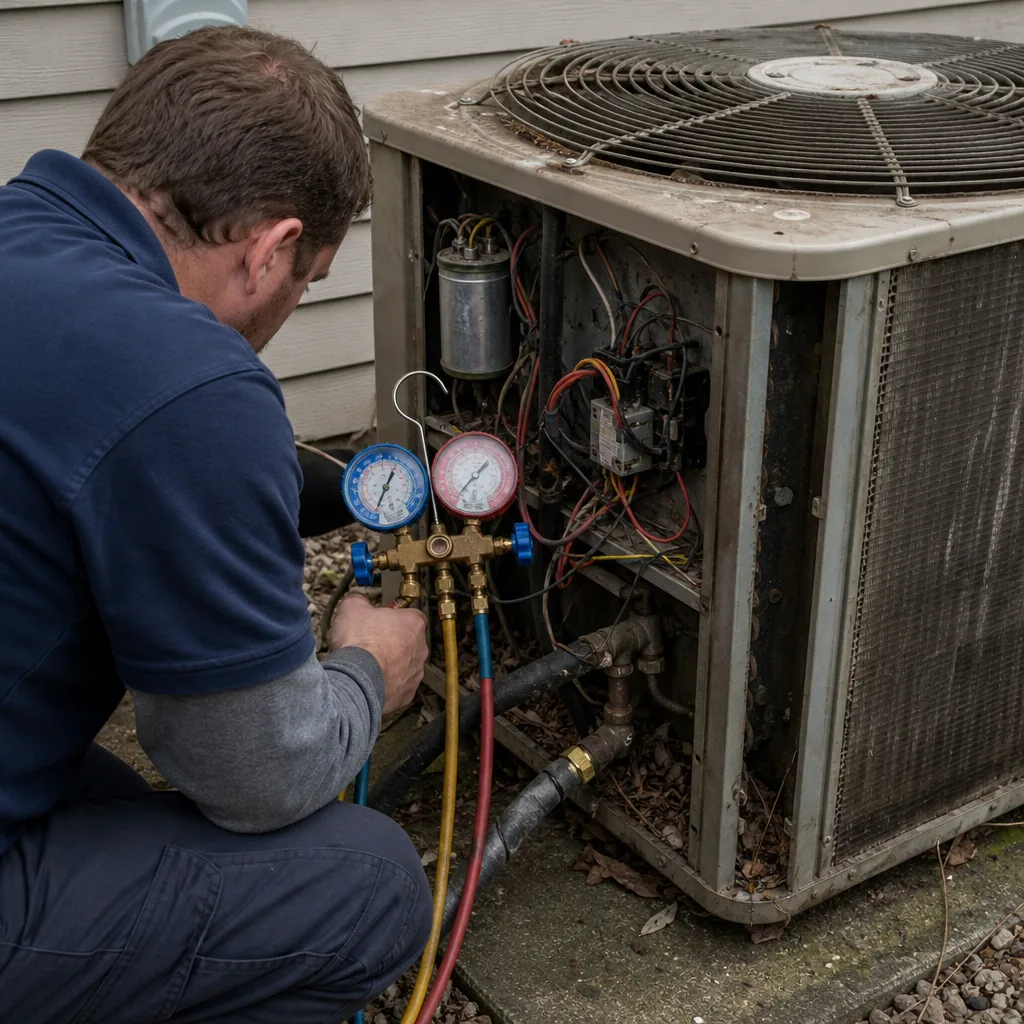
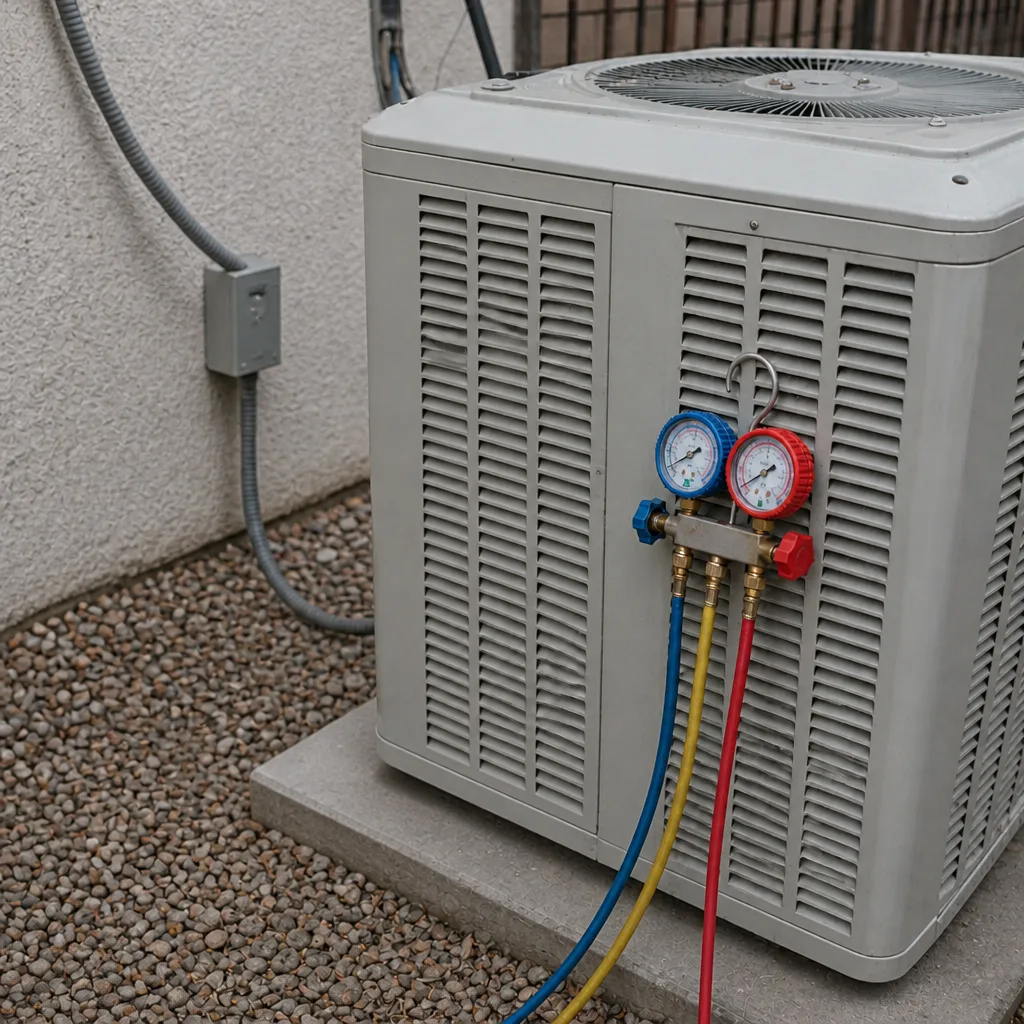
- Combustion analysis. A combustion analyzer reads the flue gases to confirm the furnace is burning fuel cleanly. High carbon monoxide or off-ratio readings point to a problem before it becomes dangerous.
- Heat exchanger visual inspection. A trained eye looks for cracks, warping, and corrosion on the exchanger, using a flashlight and mirror to see the surfaces you can’t reach from the front.
- Flue draft test. This confirms exhaust gases are venting up and out rather than spilling back into the home. A blocked or leaky flue is a serious safety issue.
- Blower amp draw. Measuring how many amps the blower motor pulls tells you if it’s working harder than it should, which signals a failing motor or a restriction.
- Gas pressure check. The manifold gas pressure should match the manufacturer’s spec. Too low and the flame is weak; too high and you’re wasting fuel and stressing components.
- Igniter and flame sensor check. These are the parts that fail most often and cause the “furnace clicks but won’t light” problem.
- Filter, belt, and general condition check. The basics, done properly, plus a look at the venting and drainage.
Ask for the results in writing. At Fireside Heating & Air Co., our technicians aren’t paid on what they sell, so the report you get is the report on what’s actually there. The job should end with a clear picture of your system’s condition, not a sales pitch.
The Carbon Monoxide Risk Schedule
Carbon monoxide is the reason maintenance isn’t optional. A furnace that’s burning dirty or leaking exhaust can put CO into the living space without any obvious sign. Whitney homes tend to be well sealed against the summer heat, which means less natural ventilation to carry a small leak away. Treat CO detection as part of the maintenance schedule, not a separate afterthought.
- Test CO detectors monthly. Press the test button on each detector once a month, and replace the batteries at the same time each year – a good pairing is the September tune-up. Detectors have a service life (check the manufacturer’s date on the unit) and need replacing when they expire.
- Have detectors on every level and near sleeping areas. If you don’t have them, this is the first thing to fix, ahead of any tune-up.
- Confirm combustion analysis at every annual service. This is the test that catches a CO problem early, before a detector ever sounds.
- Treat a detector alarm as an emergency. Get everyone out, call the gas utility and emergency services first, then call us. Don’t run the furnace to “see if it happens again.”
A proper heat exchanger inspection is the other half of CO protection, and it’s the one part of a furnace you should never attempt to inspect or repair yourself. A cracked exchanger is a genuine hazard, and the diagnosis and repair belong to a trained technician. We mean that plainly: this is not a homeowner job.
Why a Cracked Heat Exchanger Is a Non-Negotiable Replacement
When a heat exchanger cracks, it’s a replacement scenario, not a repair. The exchanger is the metal chamber that separates combustion gases from the air blowing through your home. A crack lets those gases mix with the air you breathe. There’s no honest patch for that. Some shops will weld a small crack and send you on your way, but the metal is already fatigued, and a second crack usually follows.
Here’s what the decision looks like in practice:
- Cracked or perforated exchanger: replace the furnace. This is a safety call, full stop.
- Minor surface rust, no crack: often fine, but worth monitoring at every annual service.
- Older unit in Whitney with a failing exchanger: weigh the age and the rest of the system. A 20-year-old furnace is usually at the end of its useful life anyway, so replacement is the sensible path.
If you’re facing that decision, our Heating & Furnace in Whitney page walks through the repair-versus-replace question, and we’ll give you a free second opinion on any written estimate before you commit. Honest talk about repair versus replace has been part of our work here for a long time. A furnace replacement is a load-calculated, scheduled job – we quote it in writing and set an install date, not a same-day swap.
Keeping a Service Log That Protects You
A service log is one of the most useful records a homeowner can keep, and almost nobody does. It’s a simple folder or notebook that holds every invoice, every filter change, and every tune-up report. Three things make it worth the small effort.
- Warranty claims. Many manufacturers require proof of regular professional maintenance to honor a parts warranty. A log with dated invoices is that proof. Without it, a claim can be denied on a technicality.
- Home sale disclosures. When you sell, buyers and their inspectors want to see the furnace has been cared for. A documented maintenance history makes the disclosure cleaner and the sale smoother.
- Consistent service. When you call, we can pull up the history and see what was tested last time and what was flagged for watching. That continuity matters for older systems.
What to keep: the date of each service, the technician’s findings, the tests performed (combustion numbers, amp draw, gas pressure), parts replaced, and the filter size and change dates. Ask for the written report at every visit – a thorough tune-up produces one. Store it where you keep your home records so it’s found when a warranty rep or a buyer asks.
The 20-Year Math: Maintained vs. Neglected
Here’s the part most homeowners never add up. Over 20 years, a well-maintained furnace and a neglected one part ways in three places: parts, efficiency, and how soon you have to replace it.
- Parts. A neglected furnace in Whitney’s dusty environment runs a clogged filter, which starves the blower and overheats the exchanger. That accelerates wear on the blower motor, the igniter, and the limit switch – each a repair over the years. A maintained furnace replaces filters on schedule and those parts last.
- Efficiency loss. A dusty, out-of-adjustment furnace loses a few percentage points of efficiency per year. Spread over two decades, that’s real money in gas bills, and it shows up most in the coldest months when the furnace runs longest.
- Early replacement. The typical furnace is built to last around 15 to 20 years. A neglected one often dies closer to 12 or 13, which forces a replacement years sooner than necessary. The math is simple: a modest annual tune-up buys you years of service and sidesteps an early four-figure replacement.
The contrast is stark. Spend a little on maintenance each year and let the system age out on its own schedule. Skip it and you’re often paying for repairs in a lump and then replacing the whole unit early. If you’d like a straight read on where your furnace stands against that clock, our team can take a look.
Common Mistakes to Avoid
- Waiting for the first cold snap to call. In Whitney, the first serious cold usually lands in early November, and that’s when every furnace with a latent problem fails at once. Book your tune-up in September, before the phones light up.
- Skipping the heat exchanger inspection to save money. A “tune-up” that only changes the filter and calls it done isn’t a tune-up. The exchanger inspection is the safety core of the visit, and it’s not optional.
- Reusing a summer filter into winter. A filter that survived a Whitney dust season is already loaded. Put in a fresh one before the heating season starts, not after.
- Ignoring a new noise until it’s a breakdown. A squeal, a rumble, or a clicking that appears mid-season is the system telling you something. Get it looked at before it strands you on a cold night.
- Letting a shop weld a cracked heat exchanger. It’s a safety hazard and a temporary fix at best. Replacement is the honest answer, and a company that tells you otherwise is doing you no favors.
- Not keeping a service log. Homeowners who skip the log find out at warranty time or resale that the paper trail is what matters. Start it this season.
- Testing CO detectors only when they chirp. A detector can fail silently. Press the test button monthly and respect the expiration date.
See the difference
 Before
 After
 Before
 After
 Before
 After
When to Call a Professional
Some of this schedule is yours to handle – the filter checks, the detector tests, the log. But specific situations need a trained technician, and it’s worth knowing which are which. Call us if you smell gas, if a CO detector ever sounds, if you see a cracked or soot-streaked heat exchanger, if the furnace won’t stay lit, or if you hear a noise you can’t place. Call if the system short-cycles or blows cold air. And if your furnace hasn’t been serviced in more than a year, book a tune-up before the Whitney cold arrives. Fireside Heating & Air Co. Whitney offers free estimates in Whitney – call (866) 329-8069. A live person answers around the clock, including the 2 a.m. no-heat emergency.
Frequently Asked Questions
Once a year, ideally in September before heating season starts. Annual service catches worn parts and safety issues before the first cold snap, when a neglected Whitney furnace is most likely to fail.
A proper tune-up includes combustion analysis, a heat exchanger visual inspection, a flue draft test, a blower amp draw check, a gas pressure check, and a look at the igniter, flame sensor, and filter. Ask for the results in writing so you can confirm the work was done. Call (866) 329-8069 to book one.
The signs include soot streaks on the exchanger, a yellow or wavering flame instead of a steady blue one, and a CO detector that’s been triggered. These aren’t things to self-diagnose or repair – have a trained technician inspect it. A cracked exchanger means replacement, not a patch.
No, and “seems fine” is exactly the trap. A furnace can run for months with a clogged filter, a straining blower, or the beginnings of a heat exchanger problem, and give no obvious sign until the first hard cold in Whitney. The tune-up is how you find out before that happens.
Replace it if the heat exchanger is cracked, or if the unit is aging and facing a costly major repair. A free second opinion on any written estimate takes the guesswork out of that call – estimates are free, so call (866) 329-8069.
Yes. Booking in September, ahead of the November cold snap, gets you in before the schedule fills, when a thorough tune-up has time to be done right. If you’ve already let fall pass, book anyway – late is better than waiting for a failure.
The Bottom Line
A furnace that fails on the coldest night of the year in Whitney almost always had warning signs that were missed, not a problem that appeared from nowhere. Build your year around the schedule: a filter check in late August, a full tune-up in September, a heat exchanger inspection in October, and a clean, quiet shutdown in April. Verify what a real tune-up includes, treat your CO detectors as part of the routine, and keep a written log that protects you at warranty time and resale. For the professional side of that schedule, book a $89 seasonal tune-up, and call (866) 329-8069 for a free estimate. We’ll be there when we say, quote a price we stand behind, and back the work in writing for 90 days – done right, or we make it right.
Written by the team at Fireside Heating & Air Co. Whitney.