
Last updated November 18, 2026
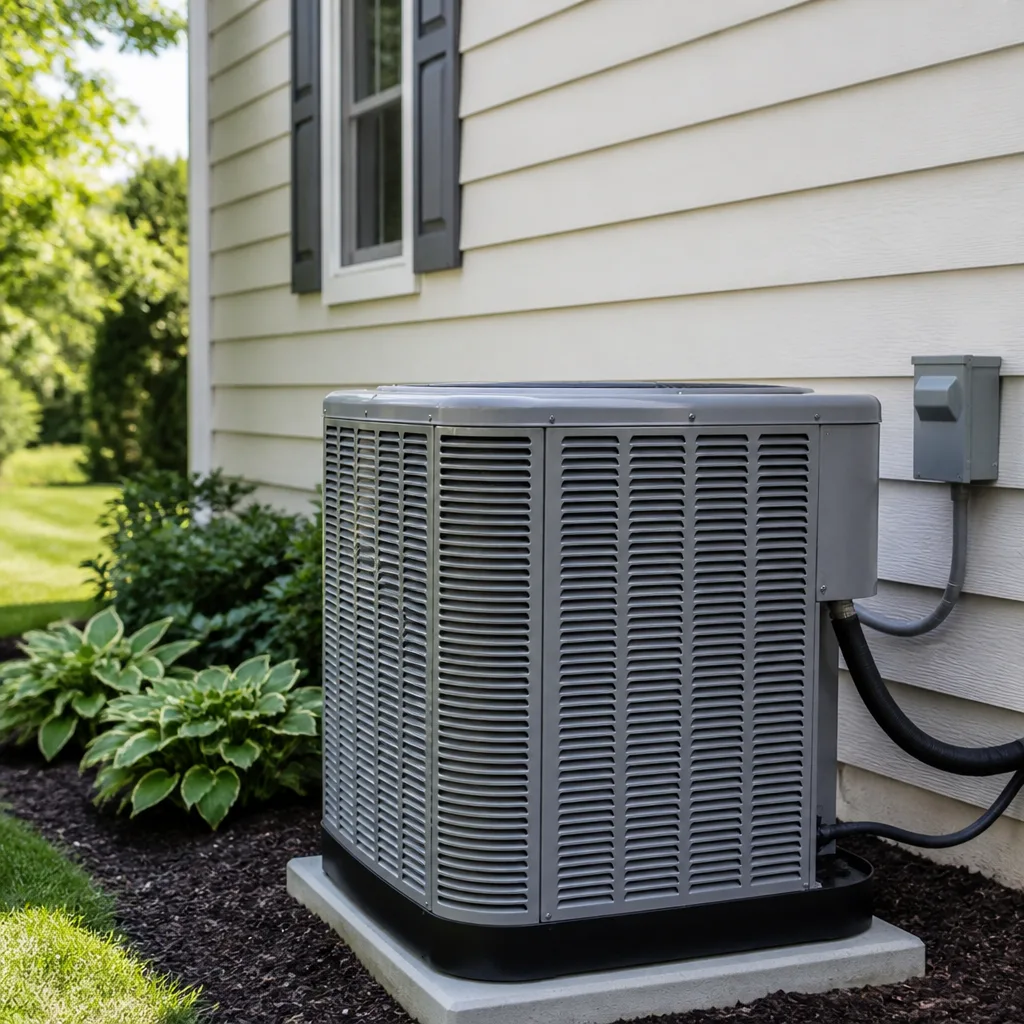 AC repair
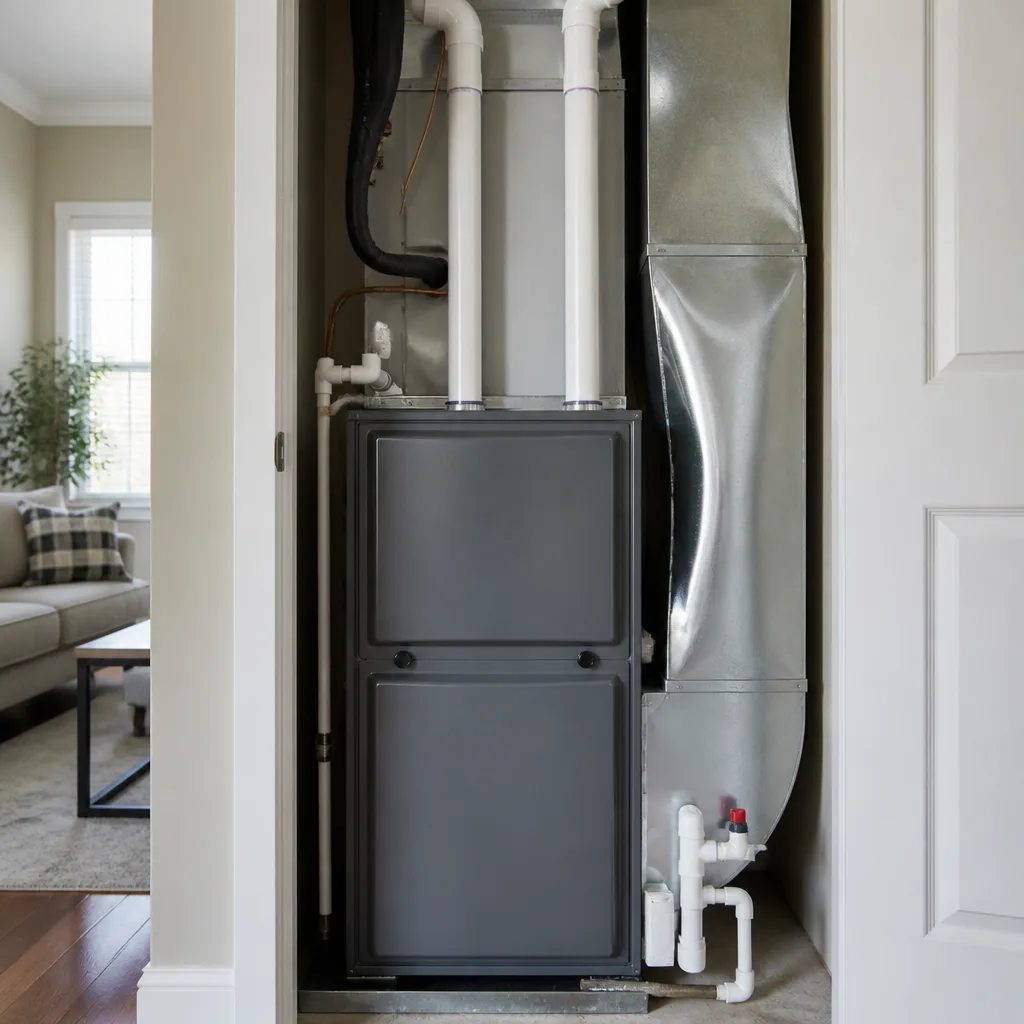 Furnace & heating
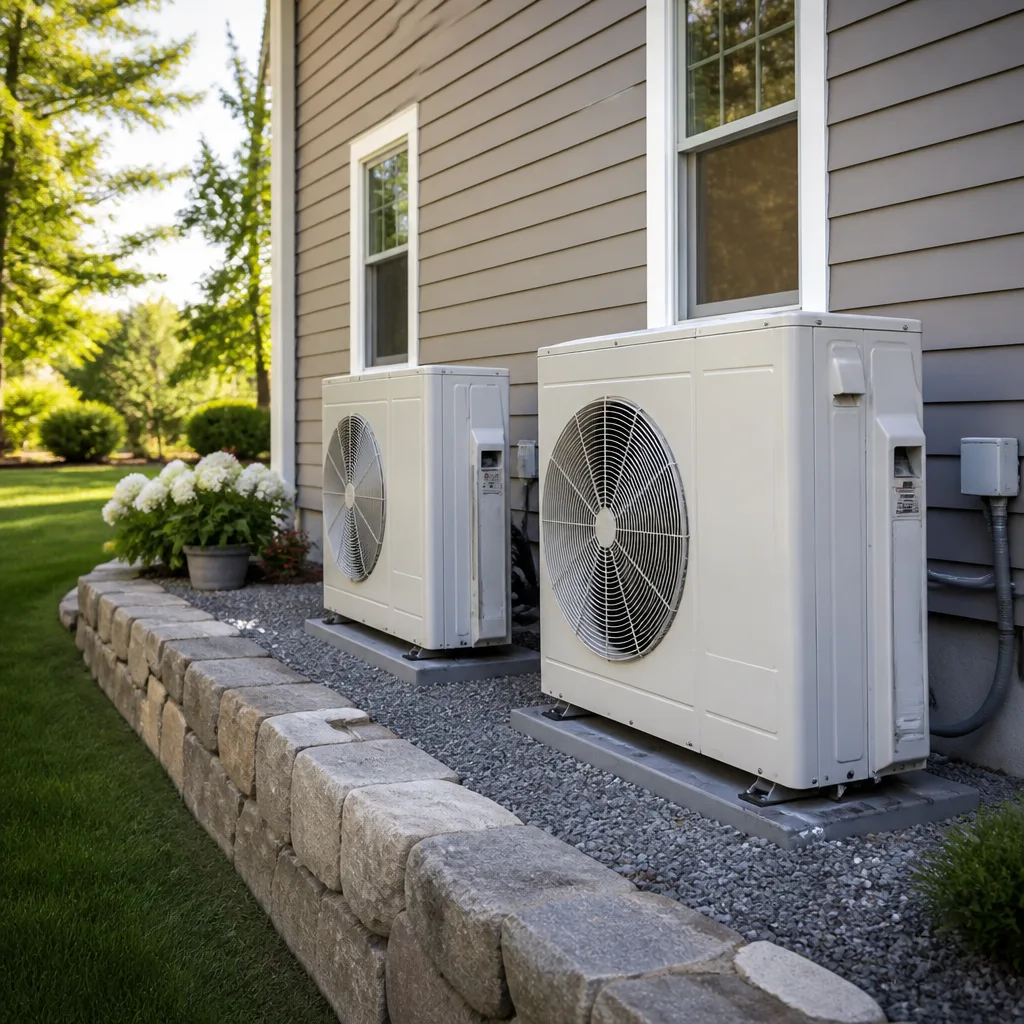 Heat pumps
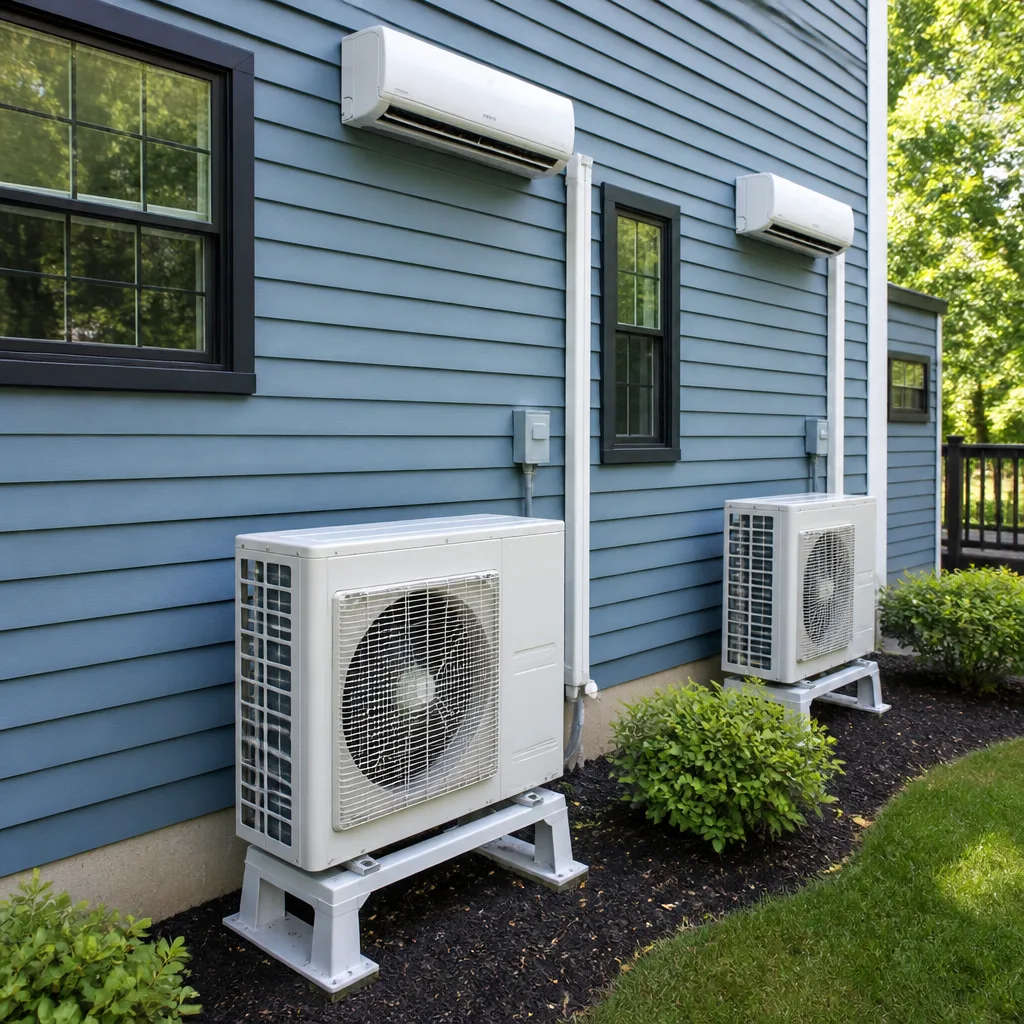 Ductless mini splits
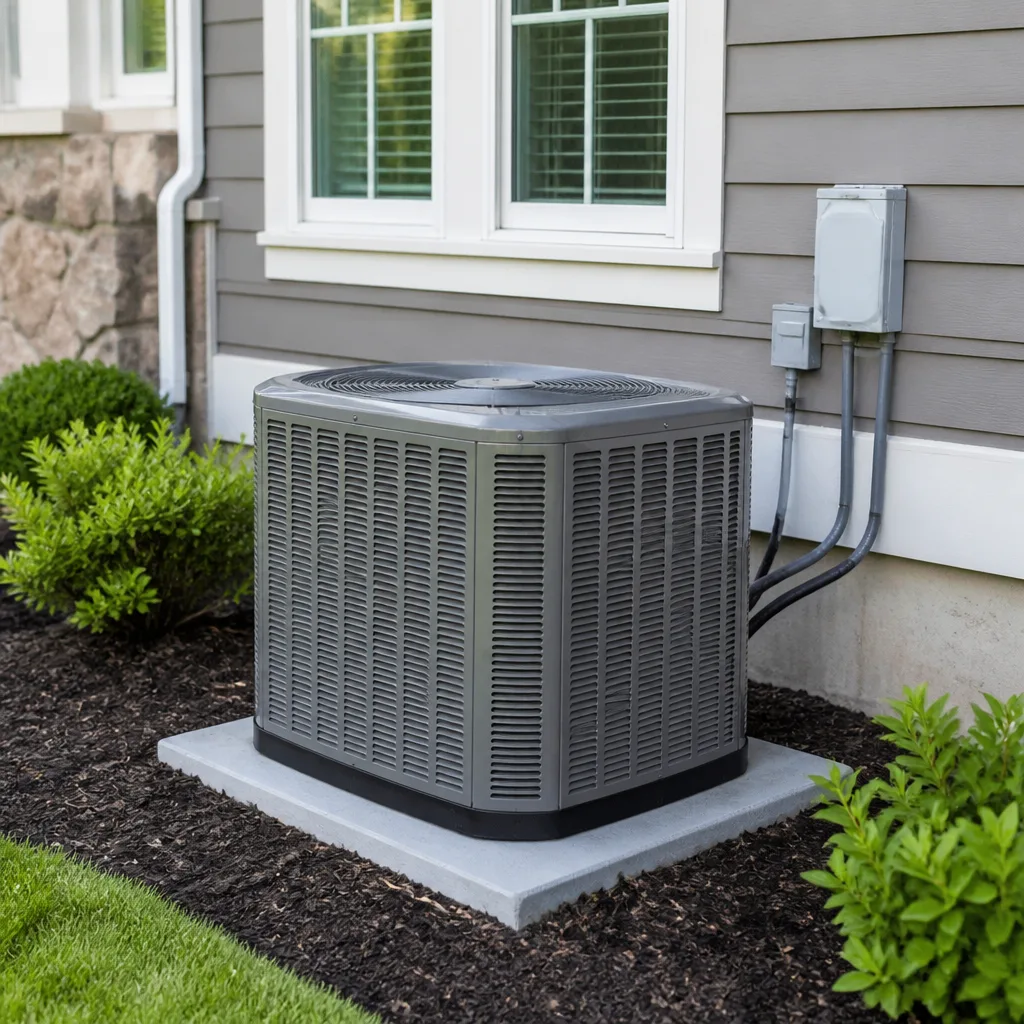 Carrier
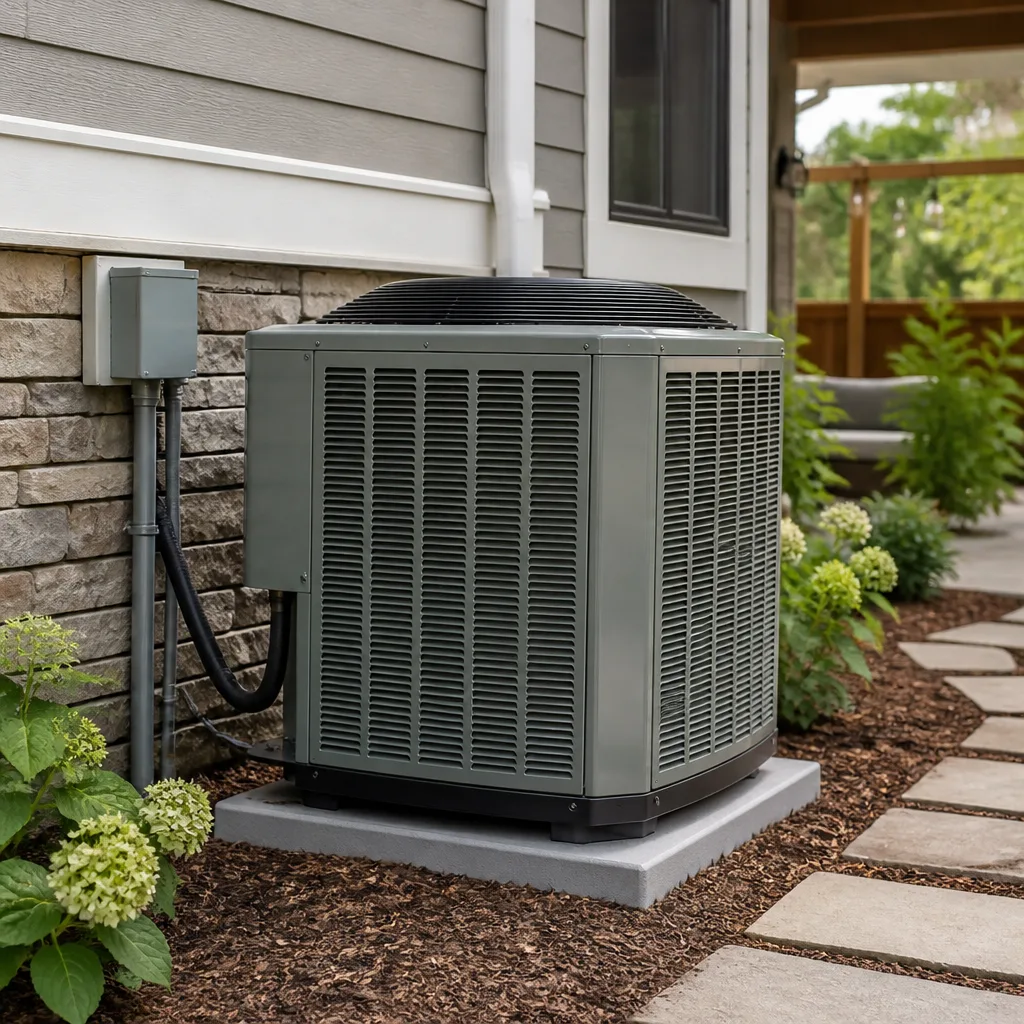 Trane
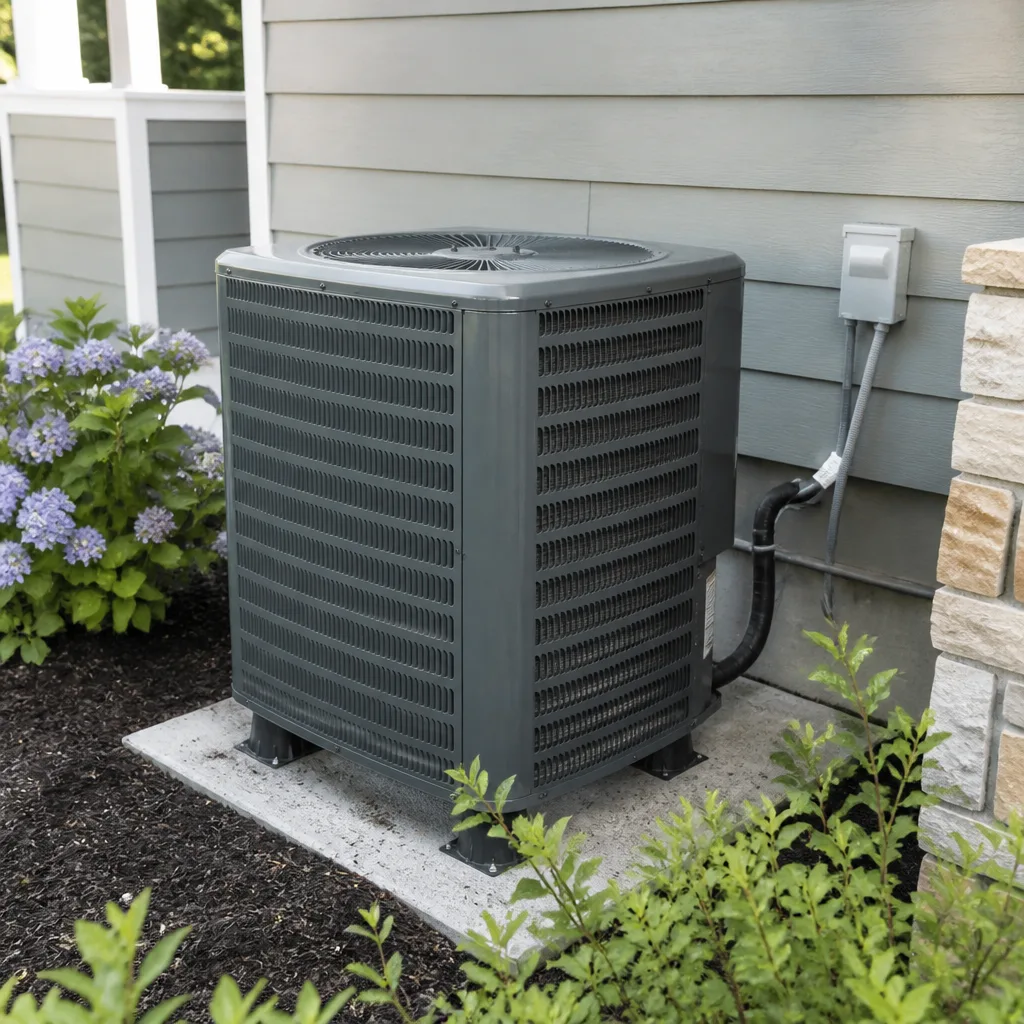 Goodman
Seasonal tune-up and full diagnostic on your Carrier, Trane, or Goodman system - readings shown to you before any repair is proposed
Diagnosis first, numbers second - you approve the repair price before a single part goes in.
Get your free estimateDIY vs Professional HVAC: The Whitney Homeowner’s Decision Guide
Replacing a run capacitor costs about $15 in parts and takes ten minutes with the power off. In a Whitney summer, doing it wrong can take out a compressor three days later – a repair that runs into the thousands. That gap between a cheap fix and a very expensive mistake is the whole story of do-it-yourself HVAC in the desert. It isn’t really about whether you’re handy. It’s about which tasks the law and physics let you touch safely, and which ones carry consequences most homeowners never see coming. This guide lays out exactly where that line sits in Whitney, Nevada.
Quick Answer
Whitney homeowners can legally and safely handle filter changes, condenser coil rinsing, thermostat batteries, and outdoor-unit clearance themselves. Anything involving refrigerant, gas, electrical panel work, or sealed system components requires an EPA 608 certification or a Nevada contractor license – and in sustained desert heat, a small DIY misstep cascades into major repair faster than in any moderate climate. When in doubt, the smart money calls a pro before starting, not after.
Styles & brands we work with
- AC repair
- Furnace & heating
- Heat pumps
- Ductless mini splits
- Carrier
- Trane
- Goodman
Table of Contents
- Where the Legal Line Actually Sits in Nevada
- The DIY Tasks That Are Genuinely Safe in Whitney
- The Failure Cascade: Why Desert Heat Punishes Small Mistakes
- How DIY Work Affects Your Manufacturer Warranty
- The Honest Cost Comparison: Capacitor vs Refrigerant
- The Diagnostic Complexity Penalty
- A Step-by-Step Decision Framework
Where the Legal Line Actually Sits in Nevada
The DIY debate usually turns into an argument about skill. In Whitney, it’s simpler than that: federal and state law draw a hard line, and it isn’t negotiable based on how confident you feel with a screwdriver.
Two credentials matter here. The first is EPA Section 608 certification, a federal requirement for anyone who handles refrigerants – including the small amounts in a residential split system. Buying refrigerant without that card is illegal in every state. Venting it to atmosphere is a federal violation. The second is a Nevada State Contractors Board license, required for any HVAC work above a low dollar threshold or any job that touches gas lines, electrical panels, or the sealed refrigerant circuit.
What this means in practice:
- No certification needed: filters, thermostat settings, coil rinsing from outside, clearing debris, tightening a loose access panel screw.
- EPA 608 required: adding or recovering refrigerant, checking superheat and subcooling, brazing line sets, evacuating a system.
- Nevada contractor license required: gas line connections, electrical work at the panel, compressor replacement, any repair to the sealed system, full system installation.
Homeowners in the Whitney Ranch and Pittman area sometimes tell us they’ve done a refrigerant top-off themselves “just to get through the summer.” That’s a federal violation, and it’s also the beginning of a slow leak nobody is tracking. If you’re unsure whether a task crosses a legal line, it probably does. A quick call settles it in two minutes.
The DIY Tasks That Are Genuinely Safe in Whitney
Not everything needs a technician. Some routine upkeep is worth doing yourself, and doing it consistently saves real money over a Whitney summer. Here’s what’s genuinely within reach for a careful homeowner.
- Change the air filter every 30 to 60 days. Desert dust loads filters faster than most manufacturers anticipate. In Whitney, a “three-month” filter often needs swapping at six weeks during July and August. This is the single highest-value DIY task on the list.
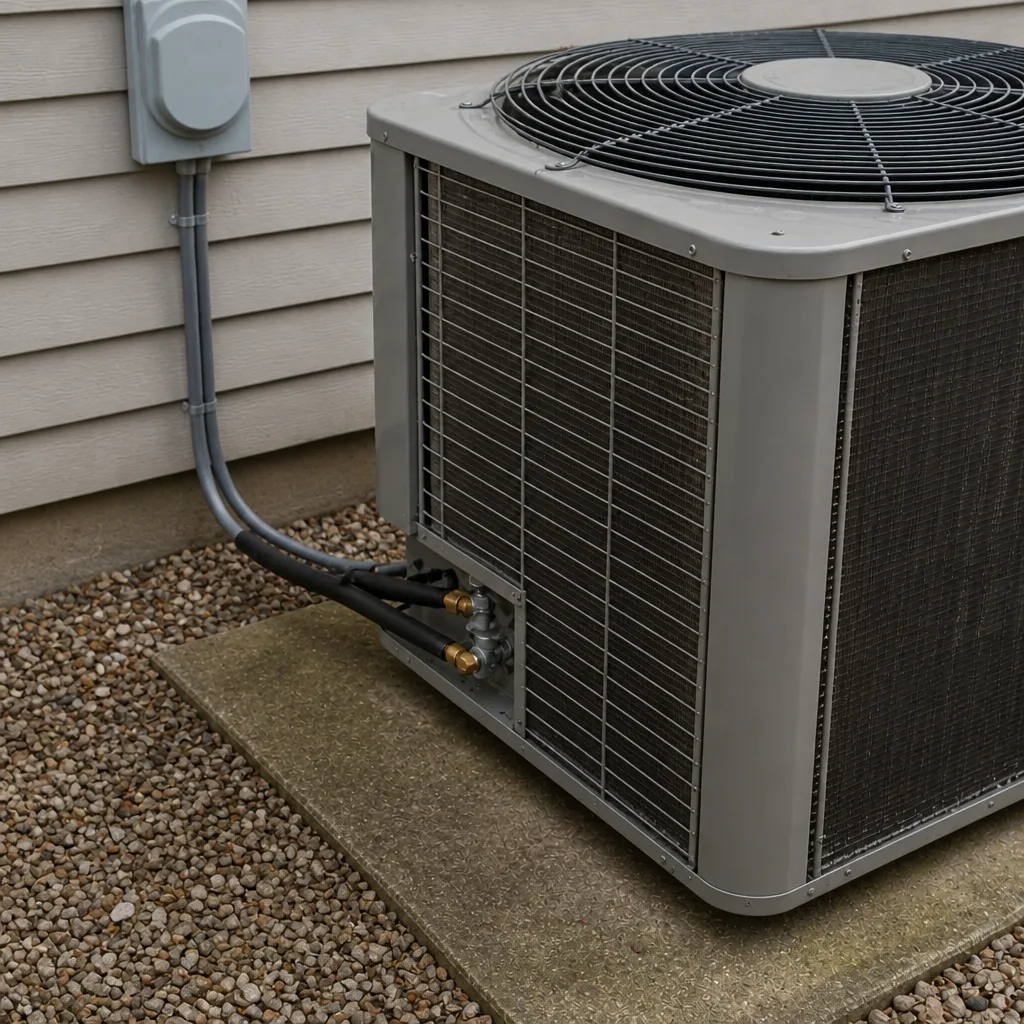
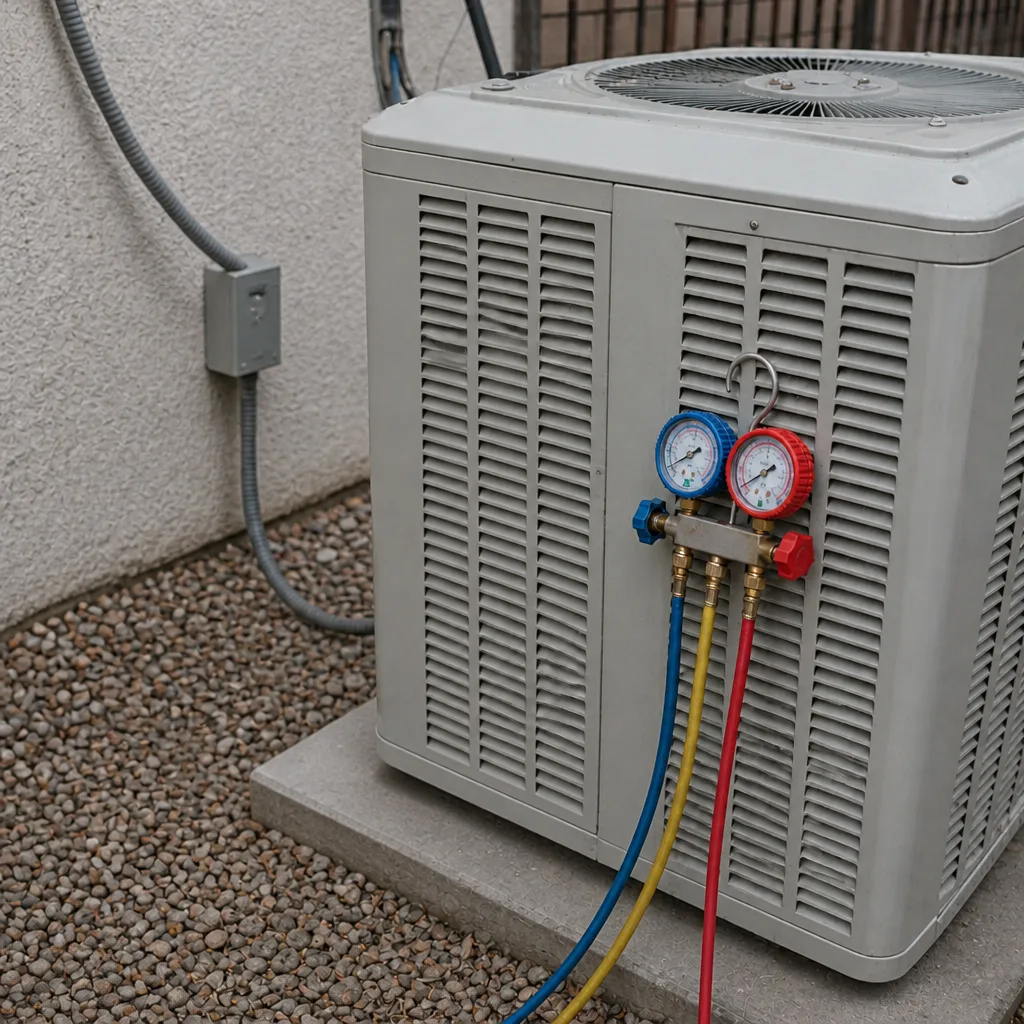
- Rinse the outdoor condenser coil. With the power off at the disconnect, a garden hose rinses off the cottonwood fluff and dust that blanket coils here every spring. Never use a pressure washer – it bends fins and creates a bigger problem.
- Keep two feet of clearance around the outdoor unit. Trim back shrubs on the north and east sides where they tend to creep. Blocked airflow raises head pressure, and high head pressure is the leading cause of compressor failure in desert climates.
- Replace thermostat batteries and check the setpoint schedule. A dead thermostat battery reads like a failed system. Change batteries each spring before the first 100-degree day.
- Clear the condensate drain line. A wet-dry vac on the outdoor drain stub clears the algae that loves Whitney’s hard water. Do this in June, before it backs up into the ceiling.
That’s the whole safe list. Everything else – anything that touches refrigerant, gas, or the electrical panel – belongs to a licensed technician. For the tasks that do need a pro, our AC repair and installation service in Whitney covers the full range, and our heating and furnace service in Whitney handles the winter side of the same system.
The Failure Cascade: Why Desert Heat Punishes Small Mistakes
In a mild climate, a slightly overcharged system or a miswired capacitor might limp along for a year. In Whitney, it fails in days. This is the part of the DIY conversation most guides skip, and it’s the part that matters most here.
Here’s the chain of events. A Whitney summer holds 105 to 110 degrees for weeks at a stretch, and the system runs almost continuously from late May through September. Continuous operation means every component is stressed at its design limit for months, not hours. There’s no cool overnight recovery period to reset the thermal load.
When a homeowner installs a capacitor with the wrong microfarad rating – a common mistake, since the label is easy to misread – the compressor draws starting current it wasn’t designed for. At 108 degrees, with the system running flat out, that stress compounds daily. Three days later, the compressor shorts. The $15 capacitor became a $2,000-plus repair.
The same cascade applies to refrigerant. A system that’s slightly low on charge runs a higher superheat and a hotter compressor. In moderate climates that’s a slow degradation. In Whitney, with the compressor already near its thermal ceiling in July, it’s a fast track to failure. The desert doesn’t offer a margin for error, which is why we treat small mistakes as urgent here – they don’t stay small.
How DIY Work Affects Your Manufacturer Warranty
Here’s a detail most Whitney homeowners never read until it’s too late: nearly every manufacturer warranty – Carrier, Trane, Lennox, Goodman, Rheem, York, Daikin, Bryant, American Standard – has language voiding coverage when the system is “serviced by unqualified personnel” or when required maintenance isn’t documented.
Read that carefully. It usually doesn’t say “any DIY voids the warranty.” It says unqualified personnel, and it requires maintenance records. That cuts two ways:
- Changing your own filter doesn’t void anything – no reasonable manufacturer would claim it does.
- Attempting your own refrigerant recharge absolutely does. Refrigerant work requires EPA certification by law, which makes the homeowner “unqualified” in the warranty language. A failed compressor under those conditions is typically denied.
- Skipping documented maintenance can void a parts warranty on its own. Many manufacturers require annual service records. If you’ve never had the system professionally checked, the fine print can be used against a claim.
The practical takeaway: DIY filter swaps are fine. DIY anything that touches the sealed system or electrics risks the warranty on a system that could otherwise be covered for ten years. For Whitney homeowners who plan to stay in the house, that protection is worth more than the money saved on a repair attempt. Our heat pump and mini split service in Whitney keeps proper maintenance records for exactly this reason.
The Honest Cost Comparison: Capacitor vs Refrigerant
Let’s put real numbers on the two most common DIY temptations. The savings on the first are real. The risk on the second is disproportionate.
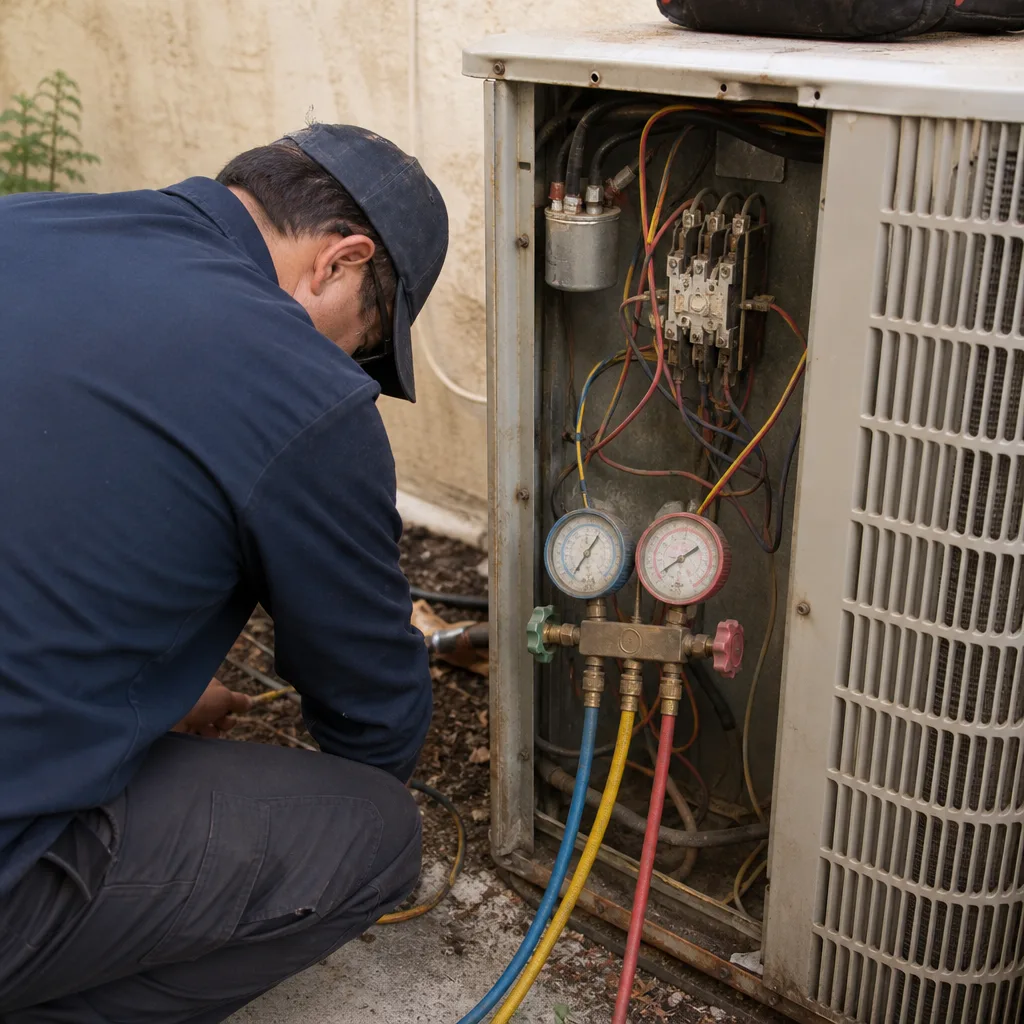
- Capacitor replacement: Part costs $12 to $25. A professional repair runs $150 to $300 in the Whitney market. If you’re confident, the power is off, and you match the microfarad rating exactly, the DIY savings are genuine – maybe $150 – and the task is legal.
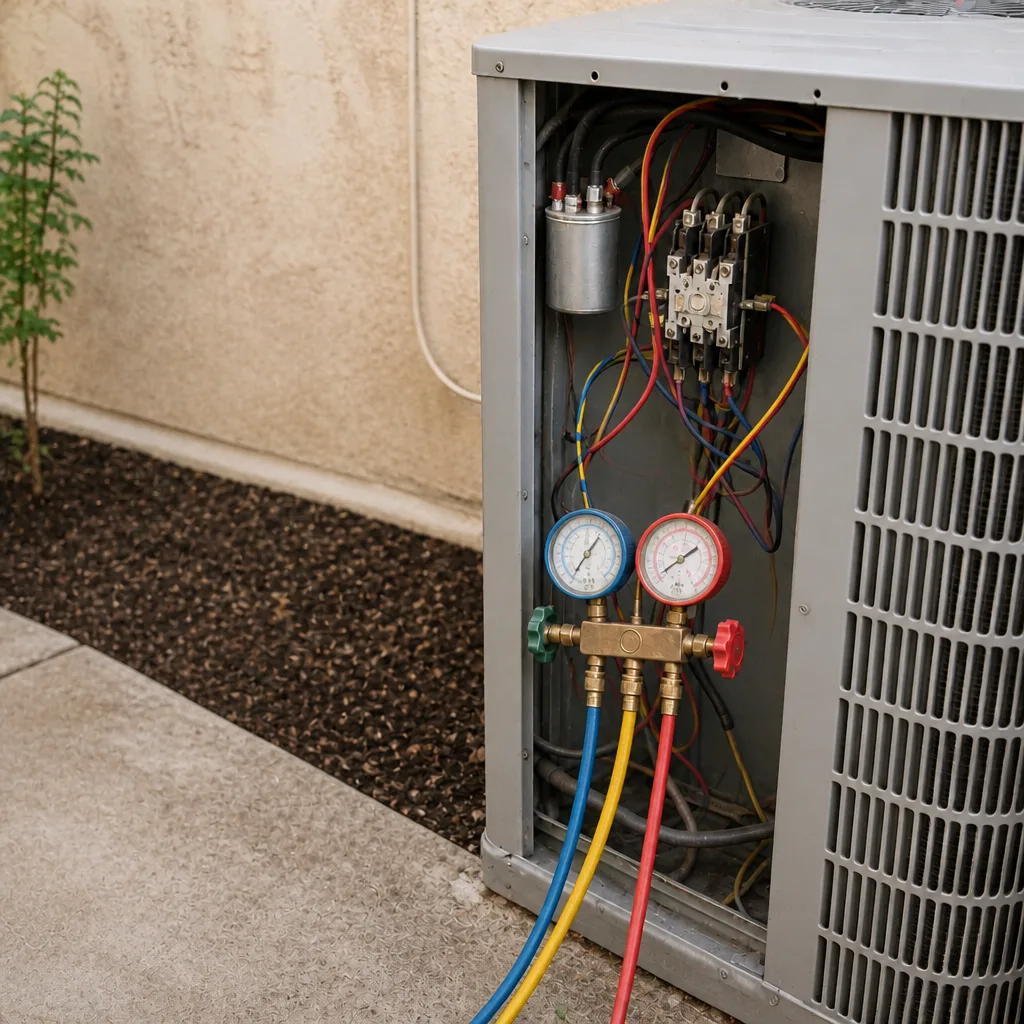
- Refrigerant recharge attempt: A DIY refrigerant kit runs $60 to $120 online, but buying it without EPA 608 certification is illegal, and it’s often the wrong refrigerant or an overcharge. A proper recharge with leak check runs $250 to $450. If you overcharge or introduce moisture, you’re looking at compressor replacement – $1,800 to $3,200 in Whitney – or a full system.
The math is lopsided. The capacitor is a legitimate DIY win for a careful homeowner. The refrigerant attempt trades a $250 to $450 job for a possible $3,000 one, and it doesn’t even solve the underlying leak. That’s not a skill question. It’s a risk-versus-reward question, and the reward isn’t there.
The Diagnostic Complexity Penalty
Here’s what nobody warns you about: calling a professional after a DIY attempt almost always costs more than calling first. We call it the diagnostic complexity penalty, and it’s real.
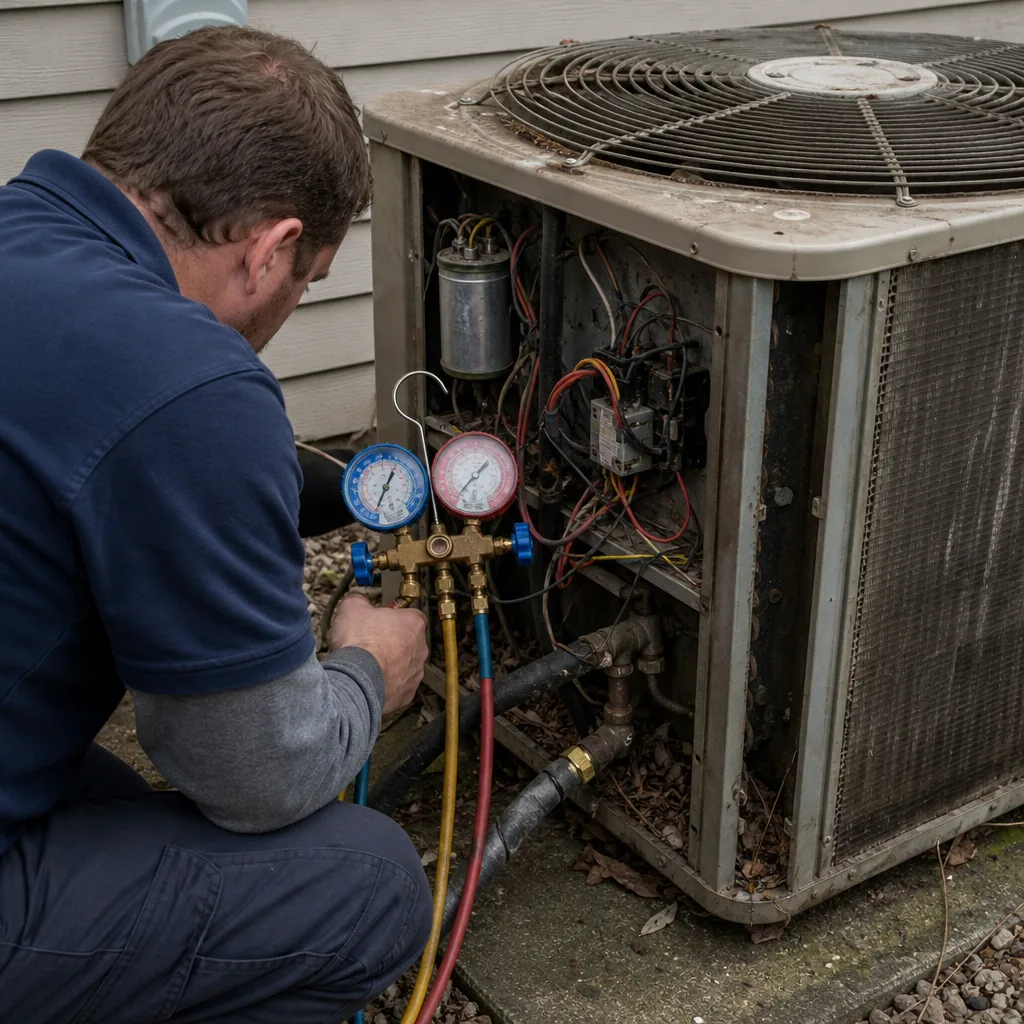
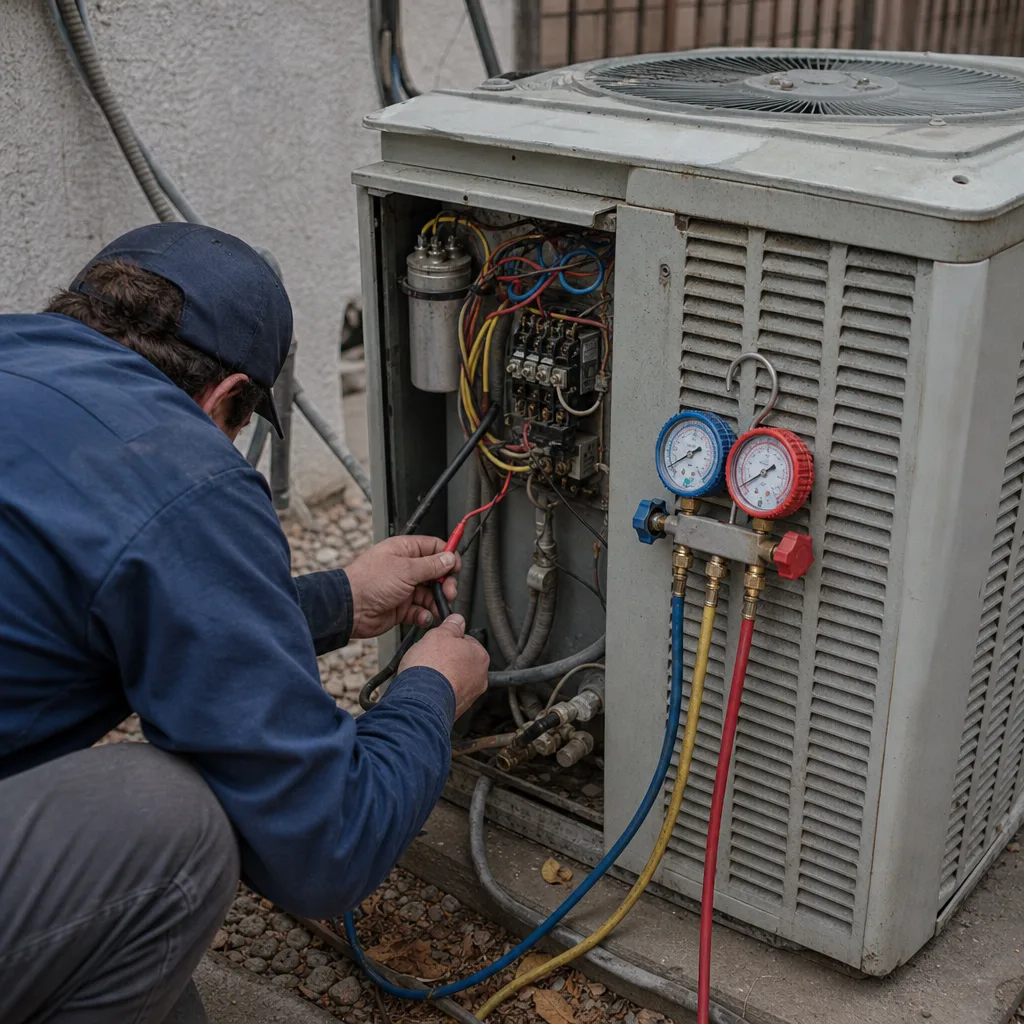
When a technician arrives at a system that hasn’t been touched, diagnosis is straightforward – the failure is the failure, and there’s one path to trace. When a homeowner has already swapped parts, added refrigerant, or rewired a control board, the technician is now diagnosing two problems: the original one, and whatever the DIY attempt introduced. That second problem is invisible. It means extra time, extra testing, and sometimes a component that has to be replaced just to get back to a known baseline before the actual repair begins.
We’ve walked into Whitney homes where a homeowner replaced a capacitor that wasn’t the problem, added refrigerant to a system with a leak, and reset a breaker three times trying to clear a fault. Each attempt layer added an hour to the diagnosis. The bill for the eventual fix ran higher than the original repair would have been. The lesson is plain: if you’re going to call, call first. The diagnostic is included in the estimate, and there’s no penalty for a system that hasn’t been pre-messed-with.
A Step-by-Step Decision Framework
Use this to sort any HVAC issue you run into. It takes about thirty seconds and will save you the wrong call.
- Does it involve refrigerant, gas, or the inside of the electrical panel? If yes, stop. That’s licensed and certified territory. Call a professional.
- Is it a filter, coil rinse, clearance, thermostat battery, or drain line? If yes, it’s safe DIY. Do it, and do it regularly.
- Is the system running but not cooling well? Check the filter and thermostat first. If those are clean and set right, it’s refrigerant or airflow – call.
- Is there no heat, no cooling, or a tripped breaker that keeps tripping? Call. Repeated breaker trips mean a fault is present; resetting it again risks the compressor.
- Is the system more than twelve years old and failing repeatedly? That’s a repair-versus-replace conversation, and it belongs with a technician who can quote both sides straight.
For any of those situations, Fireside Heating & Air Co. Whitney home is one call away, and a live person answers around the clock – including the 2 a.m. no-cooling emergency in the middle of a Whitney heat wave.
Common Mistakes to Avoid
- Resetting a tripping breaker more than once. A breaker that trips repeatedly is reporting a fault. Resetting it again can send a surge through a compressor that was already compromised. Call instead.
- Buying a capacitor by eyeballing the old one. The microfarad rating must match exactly. A close-but-wrong capacitor is worse than a dead one in desert heat, because it stresses the compressor while appearing to work.
- Attempting a refrigerant top-off with an online kit. It’s illegal without EPA 608 certification, and it doesn’t fix the leak. Homeowners in the Whitney Ranch area do this most often after a June failure – and it’s the mistake that voids the most warranties.
- Pressure-washing the condenser coil. The fins are thin aluminum. A pressure washer flattens them and blocks airflow permanently. A garden hose is all it needs.
- Skipping the filter for “three-month” intervals during summer. In Whitney, dust loads filters faster than the label promises. Check monthly in July and August.
- Blocking the outdoor unit with landscape fabric or a fence. Aesthetic cover-ups choke airflow and raise head pressure. Keep two feet clear on all sides.
- Calling a pro after three DIY attempts. By then, the diagnosis is buried under three layers of change. Call first and the answer comes fast.
See the difference
 Before
 After
 Before
 After
 Before
 After
When to Call a Professional
Call a professional if the system isn’t cooling, isn’t heating, trips a breaker, leaks water, makes a new noise, or smells like something burning. Call if the system is over a decade old and needs anything more than a filter. Call if you’ve already tried a DIY fix and the problem persists – the diagnostic complexity penalty makes the second call more expensive than the first would have been. In Whitney, with the system running continuously through the hottest months, waiting rarely works out in your favor. Fireside Heating & Air Co. Whitney offers free estimates in Whitney and answers every call with a live person, day or night. The number is (866) 329-8069. Every job is backed by the 90-Day Done Right Promise – done right, or we make it right, in writing.
Frequently Asked Questions
Some of it is legal, and some of it isn’t. Filter changes, coil rinsing, thermostat batteries, and clearing the outdoor unit are legal for any homeowner. Anything involving refrigerant requires EPA 608 certification, and gas line, electrical panel, or sealed system work requires a Nevada State Contractors Board license. If a task touches refrigerant or gas, it’s not a DIY job.
Attempting a refrigerant recharge without certification. It’s illegal, it doesn’t fix the underlying leak, and it voids most manufacturer warranties when the eventual repair is needed. In a Whitney summer, an overcharged system also runs hotter and can fail within days. Call Fireside Heating & Air Co. Whitney at (866) 329-8069 for a proper leak check and recharge – estimates are free.
Yes, if you’re careful and confident. It’s legal, the part costs $12 to $25, and the task is within reach for a homeowner comfortable working with the power off. The catch is matching the microfarad rating exactly. Get it wrong and the compressor can fail within days in desert heat – a $15 fix becomes a $2,000-plus repair. If you’re unsure, call us first.
No. Filter changes and routine cleaning don’t void coverage. What does void coverage is undocumented maintenance, unqualified refrigerant work, or a failed component tied to a DIY repair attempt on the sealed system. Keep records of any professional service and you’re protected.
Because the margin for error is smaller. Whitney’s 105 to 110-degree summers run the system continuously for months, so a component pushed past its design limit fails fast instead of degrading slowly. A miswired capacitor or an overcharged system that would limp through a mild summer fails within days here. Need a system checked before summer? Call (866) 329-8069 for a free estimate.
Usually, yes. A technician inheriting a half-finished job has to diagnose the original fault and whatever the DIY attempt introduced. That takes longer and sometimes requires replacing a component just to get back to baseline. Calling before you start is always cheaper than calling after. Our AC repair team in Whitney will quote it plain before any work begins.
The Bottom Line
DIY HVAC in Whitney comes down to one question: does this task touch refrigerant, gas, or the electrical panel? If it doesn’t, and it’s routine upkeep, doing it yourself saves real money and keeps the system running. If it does, the law, the warranty, and the desert heat all line up against you. Whitney’s sustained summer temperatures turn small mistakes into compressor failures in days, and the diagnostic complexity penalty makes the second call cost more than the first would have. The smart play is simple: handle the filters and the coil, and let a licensed technician handle everything else. Straight talk, a square deal, and the price quoted is the price paid.
Written by the team at Fireside Heating & Air Co. Whitney.
Ready to sort out your system? Call Fireside Heating & Air Co. Whitney at (866) 329-8069 for a free estimate. A live person answers every call, 24 hours a day, and every repair is backed by the 90-Day Done Right Promise. Current standing offers include $50 off any repair over $250 and a free second opinion on any written estimate.